
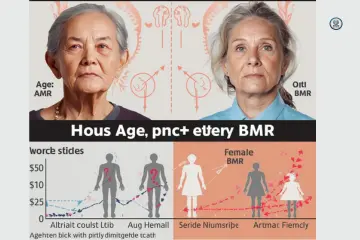
Rain taps against the window of my small flat in Sheffield as I sit with a lukewarm brew. I remember the first time I checked a calorie app after my thirtieth birthday. The number it gave me was lower than the year before. It felt a bit unfair, to be honest. Many of us wonder if age and gender affect BMR as we move through life. It is a common worry when clothes feel a bit tighter or energy levels dip. I have spent years looking into this to find the truth for myself. You are not just a set of declining numbers on a screen. Let us look at what actually changes as we grow older and how our biology plays its part.
Why This Question Comes Up So Often
People rarely ask about BMR in isolation. The question usually appears after a birthday, a stalled weight-loss attempt, or a confusing calculator result that suddenly feels unfair.
The Common Trigger Moments
It often starts when you turn 30, 40, or 50. You might see lower calorie targets on your phone than you did in your twenties. It is also common to compare numbers with a partner or friend and feel a bit lost.
A Familiar UK Scenario
It is a Sunday evening. You have a cup of tea beside the laptop while planning your week. You put your details into a website. The result is lower than you expected. A mild sense of disbelief sets in as you wonder where those extra calories went.
What BMR Measures Before Age or Gender Comes Into It
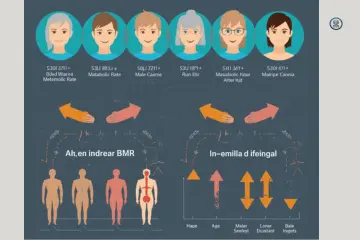
Before blaming age or gender, it helps to understand what BMR is actually counting. It is important to know what it completely ignores too.
Basal Metabolic Rate in Plain English
BMR is the energy your body uses at total rest. It covers breathing, circulation, and keeping your temperature steady. It does not count your steps, your gym sessions, or your busy days at work.
What BMR Is Not
Your BMR is not your total daily calorie allowance. It is also not a measure of your willpower. Think of it as the “idle” speed of a car engine. It is just the base level of fuel needed to keep the lights on.
How Age Affects BMR Over Time
BMR does change as the years go by. However, it does not happen suddenly, and it is not always for the reasons people assume.
What Actually Changes as We Age
The main change is a gradual loss of muscle mass. Our bodies also take a bit longer to recover from stress. It is a slow shift in how our cells turn over energy, not a “broken” system.
When BMR Decline Usually Starts
Most people notice subtle shifts after 30. Changes become clearer after 40 or 50. But here is the secret: this is strongly linked to how active you are, not just your birthday. If you stay strong, your BMR stays much higher.
Lifestyle vs Age: Which Matters More for BMR?
Two people of the same age can have very different metabolisms. The reason is usually down to what they do, not just their biology.
Movement Decline With Age
In the UK, we often sit more as we get older. Desk jobs and car travel mean we move less than we used to. In the winter, we stay inside where it is warm. This drop in daily movement is a huge factor.
Dieting History and Muscle Loss
If you have spent years on very low-calorie diets, you may have lost lean muscle. This lowers your resting energy needs over time. It makes it feel like your age is the problem when it might be your history with food.
The 2026 Truth: Why “Aging Out” of a Fast Metabolism is Mostly a Myth
For decades, we were told that our metabolism “falls off a cliff” at 30. Recent groundbreaking science has debunked this. In 2026, we now understand that age and gender affect Basal Metabolic Rate (BMR) in very specific, predictable ways.
1. The Four Phases of Human Metabolism
The most significant study in recent history (Science, 2021) analyzed 6,500 people and found that our “metabolic age” doesn’t match our chronological age.
| Life Stage | Age Range | Metabolic Trend |
| Infancy | 0–1 Year | Peak Speed: 50% higher than adults (per kg). |
| Development | 1–20 Years | Gradual Slowing: Declines by ~3% per year. |
| Adulthood | 20–60 Years | The Plateau: Remarkably stable; no “middle-age” dip. |
| Seniority | 60+ Years | The Decline: Drops by ~0.7% per year. |
2. The Gender Gap: It’s All About Lean Mass
On average, men have a BMR that is 5–10% higher than women of the same weight.
- The Reason: Men generally possess more Fat-Free Mass (FFM) due to higher testosterone levels. Muscle is metabolically “expensive” tissue; it requires more energy to maintain than fat.
- The Caveat: When researchers adjust for body composition (comparing a man and woman with the same amount of muscle), the “gender gap” in metabolism nearly disappears.
3. Why the “Middle-Age Spread” Happens
If metabolism is stable until age 60, why do people gain weight in their 40s?
- Lifestyle Shifts: Often, we move less as we age (lower NEAT).
- Hormonal Changes: Shifts in estrogen and testosterone can lead to a loss of muscle mass. Since muscle drives BMR, losing it “slows” your burn.
- The Takeaway: It’s not your age slowing you down; it’s likely a change in your body composition.
4. Menopause and Metabolism
While menopause involves significant hormonal shifts, research shows it doesn’t “break” the metabolism. It does, however, change fat distribution (moving it toward the abdomen) and makes it harder to maintain muscle. In 2026, the clinical recommendation for menopausal metabolic health is resistance training and increased protein, rather than extreme calorie restriction.
Pro Tip: If you’re over 40, don’t assume your BMR is lower. Calculate it using your current weight, but prioritize strength training to ensure your “Metabolic Floor” stays as high as it was in your 20s.
Metabolic Age vs. Chronological Age Comparison (2026)
Metabolic age is a comparison of your Basal Metabolic Rate (BMR) against the average BMR for your chronological age group. In 2026, due to shifts in average body composition and activity levels, the “average” baseline has adjusted. If your metabolic age is lower than your actual age, it indicates superior muscle-to-fat ratios and better cellular health.
2026 Metabolic Health Benchmarks
| Chronological Age | “Active” Metabolic Age (Goal) | “Average” 2026 Metabolic Age | “Sedentary” Metabolic Age (Risk) |
| 25 | 18–20 | 25 | 33+ |
| 35 | 28–30 | 35 | 43+ |
| 45 | 35–38 | 45 | 53+ |
| 55 | 45–48 | 55 | 63+ |
| 65 | 55–58 | 65 | 73+ |
How is it Calculated?
While medical clinics use DXA scans or Indirect Calorimetry, you can estimate your baseline using the Mifflin-St Jeor formula. If your current BMR matches the average for a younger bracket, that younger bracket is your metabolic age.
For Men:
BMR = (10 weight in kg) + (6.25 height in cm) – (5 age) + 5
For Women:
BMR = (10 weight in kg) + (6.25 height in cm) – (5 age) – 161
Why the Gap Exists in 2026
- The Muscle Factor: Muscle tissue is metabolically expensive. A 40-year-old with high lean mass can have the same BMR as an average 25-year-old.
- The Stress/Sleep Gap: Chronic high cortisol (from poor sleep or stress) can suppress thyroid function, artificially raising your metabolic age by slowing your BMR.
- The “Skinny Fat” Paradox: In 2026, we see many people with a “healthy” BMI but a high metabolic age because their lack of muscle mass results in a very low resting burn.
How to Lower Your Metabolic Age
- Resistance Training: Adding just 2kg of muscle can drop your metabolic age by 3–5 years over time.
- Protein Levelling: Consuming 1.6g to 2.2g of protein per kg of body weight supports the muscle mass that fuels your BMR.
- Cold Exposure: Short bursts of cold (showers or baths) can activate “brown fat,” which burns calories to generate heat, temporarily boosting metabolic rate.
How Gender Influences BMR
Gender differences in BMR are real. However, they are rooted in body composition rather than a lack of fairness.
Muscle Mass Differences
On average, men carry more lean muscle mass than women. Muscle is very “hungry” tissue. It uses more energy even when you are asleep. This is why men often have higher resting energy needs.
Body Size and Organ Demand
Taller and larger bodies require more energy to keep going. Since men are often taller, their base number starts higher. It is simply a matter of scale and how much “engine” there is to fuel.
Hormones, Gender, and Metabolism
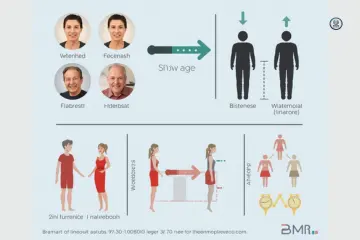
Hormones quietly shape how our bodies use energy. These effects can change quite a bit over time.
Female Hormonal Changes
The menstrual cycle can cause small shifts in energy use each month. Perimenopause and menopause bring more lasting changes. These can lead to shifts in where the body stores fat, which affects how we feel.
Male Hormonal Changes
Men see a gradual decline in testosterone as they age. This makes it harder to keep muscle mass. If a man stops lifting weights, his BMR will drop as his muscle fades away.
Age and Gender Effects on BMR at a Glance
Based on UK population data and nutrition research, this table highlights how age and gender influence BMR and where lifestyle plays a bigger role than biology.
| Factor | Effect on BMR | Notes |
| Increasing age | Gradual decrease | Mostly due to muscle loss |
| Male sex | Higher average BMR | Due to higher lean mass |
| Female sex | Lower average BMR | Can be boosted with habits |
| Menopause | Variable change | Highly individual |
| Activity level | Large impact | Often outweighs age |
Why BMR Calculators Change With Age and Gender
Many people notice these changes through apps first. It can feel a bit confronting to see the numbers drop.
Formula Inputs That Matter
Calculators use age as a key variable. They also use different maths for men and women. These formulas are based on large groups of people, so they are only estimates.
Why Calculator Drops Feel Sudden
When you turn 40, the app might drop your target by 50 calories overnight. It feels like a big jump, but your body did not change in one day. These are just labels, not absolute truths about your health.
Common Myths About Age, Gender, and BMR
Some ideas stick around because they sound logical, even when they are misleading.
“Metabolism Slows Dramatically After 30”
Recent research shows our metabolism stays quite steady from age 20 to 60. The “slow down” we feel is often just us moving less and eating more. Your biology is more resilient than you think.
“Women Are Doomed to Lower Metabolism”
Women are not “doomed.” While the average might be lower, a woman who lifts weights and stays active can have a higher BMR than a sedentary man. Your habits matter more than your gender.
British Expert Insight on Age, Gender, and BMR
UK nutrition pros often see people who are far too worried about their age.
Registered Dietitian Perspective
“Age and gender influence BMR, but lifestyle choices usually have a far greater impact than people expect. You can’t stop the clock, but you can definitely keep your engine running well with the right habits.”
— Dr. Sarah Schenker, UK Registered Dietitian
Focusing on what you can control is the best way to stay healthy.
A Real-Life UK Example
This is how these differences usually show up in our everyday lives outside of the lab.
Same Age, Different Outcomes
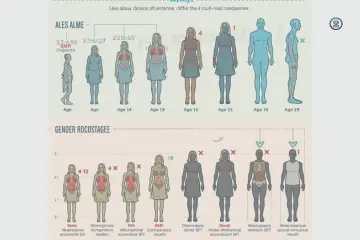
Imagine two people in their 40s living in Bristol. One walks to work and lifts weights twice a week. The other drives and sits all day. The active person will have a much higher calorie tolerance, regardless of their gender.
Emotional Reality
It is easy to feel “left behind” when you see a partner eating more than you. But comparing your numbers to someone else is rarely helpful. Once you understand the context of muscle and movement, the frustration fades.
What You Can Do at Any Age or Gender
While you cannot change your age or sex, you are not powerless against a slowing BMR.
Muscle-Preserving Habits
Resistance training is the best tool we have. Lifting weights or doing yoga helps keep your muscle mass. You also need to eat enough protein to give your body the blocks it needs to stay strong.
Movement Beyond Exercise
Never underestimate the power of a daily walk. Small wins like taking the stairs or doing some gardening help protect your BMR. This “non-exercise” movement adds up to a lot over a week.
When Changes in BMR Might Need Medical Input
Sometimes changes are a normal part of life. Other times, they deserve a closer look from a professional.
Potential Red Flags
If you feel extreme fatigue that does not go away, talk to someone. Being very sensitive to the cold or having sudden weight shifts can be a sign of a thyroid issue.
UK Healthcare Pathways
Your first step should be a GP appointment. They can run blood tests to check your hormone levels. They might also refer you to a NHS dietitian if you need extra help with your food.
The Bigger Picture on Age, Gender, and Metabolism
Age and gender influence BMR, but they do not decide your final outcome.
Long-Term Perspective
Look at your health trends over years, not just weeks. Habits compound over time. If you make small, good choices today, they will pay off for decades to come.
Letting Go of Comparison
Every body is different. Your personal baseline is what matters most. Understanding your own needs gives you the confidence to ignore the “perfect” numbers on social media.
Final Recommendation
You should not let your age or gender make you feel like your health is out of your hands. I have seen that while age and gender affect BMR, they are only a small part of the story. My advice is to focus on lifting a few weights and eating plenty of protein. This will help you keep your muscle and feel great as the years pass. It is much better than worrying about a calculator result.
FAQs
BMR often drops with age. Muscle mass falls and metabolism slows. You may burn fewer calories at rest than you did in your twenties.
Yes, gender affects BMR. Men often have more muscle, so their basal metabolic rate is higher. Women may burn fewer calories at rest.
Men tend to carry more lean muscle and less body fat. Muscle needs more energy, so their BMR is often higher each day.
Yes, ageing can still lower BMR. Hormones and muscle loss play a part. Regular strength work can help slow this drop.
Yes, hormones can affect BMR. Pregnancy, menopause, and monthly cycles may shift energy use. Small changes add up over time.
Tracking BMR helps older adults plan meals and activity. It shows how many calories you need and helps avoid weight gain.
Build muscle, walk daily, and eat enough protein. These habits support your basal metabolic rate and keep your metabolism steady.

Ehatasamul Alom is a dedicated health-tech enthusiast and the co-founder of BMRCalculator. With a passion for metabolic science, he focuses on providing accurate health data for the UK community. Ehatasamul ensures that every tool and guide aligns with NHS standards and public health research. His mission is to simplify complex biological data, helping British residents make informed decisions about their fitness, calorie needs, and long-term wellness. When not analyzing health trends, he explores the latest innovations in wearable fitness technology.