A brisk walk through a park in Sheffield often makes me think about how our bodies use fuel. Many people believe that lifting weights will turn their body into a calorie-burning furnace overnight. I used to think that way too. It is easy to get lost in the noise of fitness ads and gym talk. You might wonder how much your body composition really changes your daily needs. Understanding the role of muscle mass in BMR is key for anyone wanting to stay healthy. It is not just about looking fit; it is about how your body works at rest. Let us look at the facts without the usual gym jargon.
Why Muscle Mass Keeps Coming Up in BMR Conversations
Whenever metabolism is mentioned, muscle somehow enters the chat. It often comes with big promises that can be quite confusing.
The Popular Belief
Many people say that muscle burns loads more calories than fat. Fitness ads claim that adding a little muscle will let you eat anything you want. It sounds very convincing because we know that active people often eat more.
A Real UK Moment
You might be reading fitness advice on the train home. You wonder if lifting a few weights will finally “fix” your metabolism. It is a mix of hope and doubt. You want to know if the effort of training is worth the metabolic reward.
What BMR Actually Measures in the Body
Before we link muscle to your metabolic rate, we need to know what we are counting.
Basal Metabolic Rate in Plain English
BMR is the energy your body uses when you are doing absolutely nothing. It covers breathing, keeping your heart beating, and staying warm. It is the cost of staying alive while lying perfectly still.
What BMR Does Not Include
Your BMR does not count your daily steps. It does not include your gym sessions or even the effort of making a cup of tea. It is purely your “resting” fuel cost.
Muscle: Your Metabolic “Power Plant”
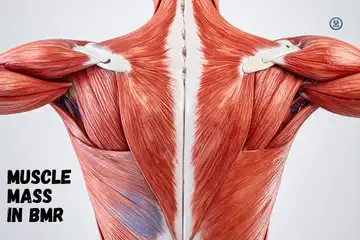
In 2026, we no longer look at weight loss as just “eating less.” Instead, we focus on building a more expensive body. Muscle mass is the primary driver of your Basal Metabolic Rate (BMR) because it is significantly more metabolically active than adipose tissue (fat).
1. The 3x Burn Advantage
Science consistently shows that lean tissue requires more energy just to exist. While you are sleeping, your muscle mass is working harder than your fat stores.
- 1kg of Muscle: Burns approximately 13 calories per day.
- 1kg of Fat: Burns approximately 4.5 calories per day.
By shifting your body composition—even if your total weight remains the same, you can effectively “speed up” your metabolism.
2. The Katch-McArdle Formula
While most calculators use the Mifflin-St Jeor formula, athletes and those with significant muscle mass in 2026 prefer the Katch-McArdle equation. This formula ignores age and gender, focusing entirely on Lean Body Mass (LBM).
BMR = 370 + (21.6 LBM_{kg})
3. Preventing the “Metabolic Crash”
When you diet without lifting weights, up to 25% of the weight lost can come from muscle. This effectively lowers your BMR, making it even harder to keep the weight off.
- The 2026 Strategy: Prioritize Protein (1.6g+ per kg) and Resistance Training. This protects your “metabolic motor” while you lose fat.
4. NEAT and the Muscle Effect
Muscle doesn’t just burn more at rest; it makes you more efficient during movement. This increases your Non-Exercise Activity Thermogenesis (NEAT), as your body requires more fuel to move that denser, more powerful tissue through daily tasks.
Expert Health Tip: If you want to raise your BMR, don’t just “do cardio.” Add two days of heavy lifting per week. The “afterburn” and the long-term metabolic cost of maintaining that muscle are far more effective for long-term health than any crash diet.
How Muscle Tissue Affects Resting Energy Use
Muscle does raise your BMR, but the change is more gradual than most people think.
Fat at Rest vs Muscle
Muscle is active tissue. It needs more energy to stay alive than fat tissue does. This is why having more lean mass can help you stay at a healthy weight over time. However, fat still uses a tiny bit of energy too.
The Actual Calorie Difference
One kilo of muscle burns about 10 to 13 calories a day at rest. One kilo of fat burns about 4 calories. The gap is real, but it is not a huge jump. It is a long-term benefit, not a quick fix for a big weekend of eating.
Muscle Mass and BMR: What the Numbers Really Show
Based on UK research, this table shows how muscle changes affect your resting needs.
| Body Composition Change | Effect on BMR | Practical Impact |
| +1 kg muscle | Small increase | Adds a tiny bit of flexibility over time |
| Muscle loss | Noticeable decrease | Lower calorie tolerance and more fatigue |
| Fat loss only | Minimal change | BMR stays mostly the same |
| Muscle gain + fat loss | Gradual rise | The best result for long-term health |
Why Muscle Loss Lowers BMR Faster Than Muscle Gain Raises It
Losing muscle is sadly much easier than building it. The cost to your metabolism shows up very quickly.
Dieting Without Resistance Training
If you eat very little and do not move, your body may break down muscle for fuel. This lowers your resting energy needs. You might find you are eating less but not losing any more weight. This is a common trap.
Illness, Injury, and Inactivity
A desk-heavy job or a long injury can lead to muscle loss. As we age, we naturally lose muscle if we do not use it. This makes our BMR drop over several decades.
Strength Training’s Indirect Impact on BMR
The biggest benefit of muscle is not just what it burns while you sleep.
Improved Insulin Sensitivity
More muscle helps your body use energy from food better. It reduces the risk of gaining fat. It also helps keep your appetite more stable throughout the day.
Higher Training and Recovery Demands
When you have more muscle, you can often train harder. Your body also uses energy to repair those muscles after a workout. This raises your total daily burn, even if your BMR only moves a little.
Muscle Mass, Age, and Metabolism in the UK Context
Getting older does not slow your metabolism by magic. It happens because our habits change.
Age-Related Muscle Loss (Sarcopenia)
After the age of 30, we can start to lose muscle. This is often because we sit more and lift less. This makes it feel like our metabolism is “breaking,” but it is mostly just muscle loss.
UK Lifestyle Factors
Many of us have office jobs. We spend less time doing manual labour than people did in the past. In the winter, we tend to stay inside more. These things all lead to less muscle use.
British Expert Advice on Muscle and BMR
UK pros tend to focus on steady, long-term health rather than quick trends.
Registered Dietitian Perspective
“Muscle mass supports metabolic health, but its biggest benefit is preserving energy needs during weight loss, not dramatically boosting calorie burn.”
— Dr. James Morton, UK Sports Nutritionist
It is better to think of muscle as a way to protect your metabolism while you lose fat.
Common Myths About Muscle and Metabolism
Some ideas just refuse to die, even when the maths does not support them.
“More Muscle = Eat Whatever You Want”
This is not true. Even with more muscle, you still need to be mindful of what you eat. Energy balance still applies to everyone.
“Cardio Kills Muscle and Metabolism”
Light cardio is great for your heart. It only hurts muscle if you do way too much and do not eat enough protein. Most people can do both without any issues.
Muscle Mass and BMR Calculators, Why Results Change
Most apps cannot see your muscle. This can lead to some confusing numbers.
Formula Limitations
Most calculators use your total weight. They do not know if that weight is muscle or fat. This means they might undercount the needs of an athlete or overcount for someone else.
Why Recalculations Shift Numbers
If you lose weight but also lose muscle, your BMR will drop more than expected. This is why it is important to track your strength, not just the scales.
Practical Ways to Protect Muscle and BMR
You do not need to be a bodybuilder to help your metabolism.
Training Basics
Try to do some form of resistance training two or three times a week. This could be lifting weights or using your own body weight. Consistency is much more important than how heavy the weights are.
Nutrition Basics
Eat enough protein. It is the building block for your muscles. Also, avoid very large calorie drops. If you eat too little, your body is more likely to burn muscle for energy.
A Real-Life UK Example
This is how muscle and BMR usually work together in real life.
A Typical Week
You work at a desk most of the day. You fit in two short gym sessions. Also, You might feel like your progress is slow. But those sessions are helping you keep the muscle you have.
Emotional Reality
It is normal to want faster results. You might feel relief when you realise that muscle is working quietly in the background. It is helping you stay healthy for the long run.
The Bigger Picture of Muscle Mass and BMR
Muscle supports your body in a quiet way. It does not make a huge splash every day.
What Muscle Really Gives You
Muscle gives you a bit more “wiggle room” with your food. it helps you recover faster from daily life. Most importantly, it protects you as you get older.
Sustainable Expectations
Think in months and years, not weeks. Focus on how strong you feel. Your BMR will stay steady if you keep your muscles active and well-fed.
Final Recommendation
You should focus on keeping your strength as you work on your fitness goals. I have found that the role of muscle mass in BMR is mostly about long-term stability. Try to add two days of lifting to your week. Eat plenty of protein and stay patient. This will help your body stay strong and keep your energy levels high. It is a slow process, but it is the most honest way to change your health.
FAQs
Muscle mass raises BMR because muscle burns more calories at rest than fat. More lean tissue means your body uses more energy all day.
Muscle needs constant fuel, even when you rest. This boosts your basal metabolic rate and helps you burn more calories without extra effort.
Yes, building muscle can lift BMR and daily calorie burn. This makes fat loss easier over time and supports steady, healthy progress.
Yes, beginners often see small BMR gains after strength training. New muscle growth increases energy use, even on rest days.
You don’t need huge gains. Even a little muscle mass can nudge BMR up. Small changes add up and improve metabolism over weeks.
Cardio burns calories fast, but muscle training raises BMR long term. A mix of both gives better results for fitness and metabolism.
Yes, track BMR to adjust food intake as muscle grows. It helps you eat enough to recover and avoid underfueling your workouts.

Ehatasamul Alom is a dedicated health-tech enthusiast and the co-founder of BMRCalculator. With a passion for metabolic science, he focuses on providing accurate health data for the UK community. Ehatasamul ensures that every tool and guide aligns with NHS standards and public health research. His mission is to simplify complex biological data, helping British residents make informed decisions about their fitness, calorie needs, and long-term wellness. When not analyzing health trends, he explores the latest innovations in wearable fitness technology.