Living in Bristol, I often chat with people who feel their energy is a bit off. They wonder why they feel cold while others are warm or why the scales seem stuck. Learning the signs of low or high bmr helped me understand my own health much better. It is like listening to the quiet hum of your body’s engine to see how well it runs. Once you know what to look for, you can give your body exactly what it needs to thrive.
Why People Start Wondering About Their BMR
Most of us only think about our internal burn when we stop feeling our best.
The Moment Something Feels “Off”
You might wake up feeling tired even after a long sleep. Perhaps you have noticed your weight moving in a way that does not match your meals. Some people find they are never hungry, while others cannot seem to stop snacking. These small clues are often the first hint that your base energy use has shifted.
UK Lifestyle Triggers
Our daily lives in Britain can hide these signs. We deal with long days at the office and grey, wet mornings. We sit for hours at desks or in traffic. When we feel sluggish, we often blame the weather or a busy week, but it might be your BMR talking to you.
What BMR Actually Controls in Your Body
Your BMR is the energy your body needs just to exist while you rest.
The Basics, Without the Lab Talk
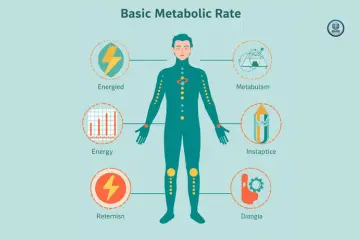
Even when you are still, your body is working hard. It uses energy to keep your heart beating and your lungs moving. It filters your blood through your organs and keeps your brain sharp. Also it works as a heater to keep your core temperature steady.
Why BMR Isn’t the Same as Metabolism
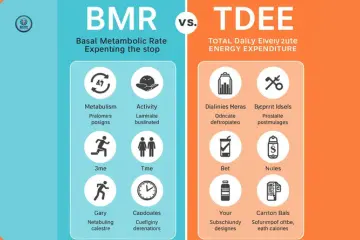
Think of BMR as the “rent” your body pays just to keep the lights on. Your total metabolism includes this rent plus the “spending money” you use for walking or exercise. BMR is the steady baseline that never stops running.
Common Signs of a Low BMR
A lower rate means your body is trying to be very careful with its fuel.
Physical Signs You Might Notice
If your BMR is low, you might feel the chill more than others. You might notice that your hair or skin feels a bit dry. Another big clue is slow recovery. If a light walk or a busy day leaves you wiped out for ages, your engine might be idling too slow.
Behavioural and Emotional Clues
It is not just about your body; it affects your mood too. You might feel a bit low or lack the spark to get moving. Some people feel a lot of guilt about food because they feel they “should” be burning more. It is a frustrating place to be, but it is very common.
Common Signs of a High BMR
A high rate means your body is a high-energy machine that burns fuel fast.
Physical Signals
People with a high BMR often feel quite warm. They might be the ones in a t-shirt while everyone else has a jumper on. You might have a very fast heart rate at rest or find that you sweat easily.
Everyday Behaviour Patterns
You likely have a very strong appetite and need to eat often to keep your mood steady. Some people find it quite hard to put on weight, even when they eat plenty. You might also feel a bit restless, like you always need to be “doing” something.
Low vs High BMR – Side-by-Side Comparison
Comparing the two helps you see where you might sit on the scale.
Typical Signs of Low and High BMR
| Sign | Low BMR | High BMR |
| Energy levels | Often low or sluggish | Usually high or restless |
| Feeling the cold | Very common | Rare; usually feel warm |
| Appetite | Low or very erratic | High and very regular |
| Weight change | Gains weight easily | Struggles to gain weight |
| Recovery | Slow and heavy | Quick and bouncy |
When These Signs Might Point to Something Else
Sometimes, the way we live mimics the signs of a BMR issue.
Lifestyle Factors That Mimic BMR Issues
If you do not sleep well, you will feel tired regardless of your BMR. High stress can also make your heart race or kill your appetite. Eating at odd times can confuse your body’s signals too. It is vital to look at your whole life, not just one number.
Medical Considerations (UK Context)
In the UK, we can always turn to the NHS if we are worried. Issues with the thyroid are a common cause of BMR changes. If you feel very unwell, it is best to book a chat with your GP. They can run simple tests to see if there is a medical reason for your symptoms.
How to Check Your BMR Without Guessing
You can get a good idea of your numbers using simple tools.
Using Online BMR Calculators
There are many UK-friendly tools that use your age, height, and weight. These give you a smart estimate to start with. Do not get hung up on a single result. It is much better to look at the trend over a few weeks.
What Calculators Can’t Tell You
A website cannot see how much muscle you have. It does not know if you are stressed or if you had a bad night’s sleep. Use the math as a guide, but always listen to how your body actually feels.
Red Flags: Is Your BMR Out of Sync?
In 2026, we understand that a Basal Metabolic Rate is more than just a number on a screen; it is a bio-feedback loop. If your BMR is significantly higher or lower than what the standard formulas predict, your body will leave “clues” in your daily health.
5 Signs Your BMR is Abnormally Low
A low BMR isn’t just about weight gain, it’s about energy conservation. When your body lacks the calories to fuel your “idling speed,” it starts “dimming the lights” on non-essential systems.
- Chronic Cold Intolerance: If you’re wearing a jumper in a 22°C room, your body is likely failing at thermogenesis, the process of burning calories to create heat.
- Thinning Hair and Brittle Nails: To protect your heart and brain, your metabolism stops sending nutrients to “cosmetic” tissues like hair follicles and nail beds.
- The “Brain Fog” Barrier: Your brain uses 20% of your BMR. If your baseline is low, cognitive processing speed drops, leading to persistent mental fatigue.
- Digestive Stagnation: A slow metabolism often correlates with slow gastric motility, leading to frequent bloating or constipation.
- The Weight Loss Wall: You are eating 1,200 calories and exercising, but the scale has not moved in 4 weeks. This is a classic sign of Metabolic Adaptation.
4 Signs Your BMR is Abnormally High
While many wish for a “fast metabolism,” a BMR that is too high can indicate overactive thyroid function or excessive systemic stress.
- Elevated Resting Heart Rate: If your heart beats consistently over 80 BPM while you are sitting calmly, your engine is “revving” too high.
- Constant Hyperactivity/Jitteriness: An abnormally high BMR can manifest as an inability to sit still or a feeling of “inner vibration.”
- Hyperhidrosis (Excessive Sweating): Your body is over-producing heat and must constantly work to cool itself down, even without physical exertion.
- Insatiable Hunger: You eat a full meal and feel physically empty 60 minutes later because your body is “burning through” fuel at a rate it cannot sustain.
The 2026 “Metabolic Pivot”
If you recognize more than three signs on either list, the standard “eat less, move more” advice will likely fail you.
- For Low BMR: You likely need a Reverse Diet, a strategic, slow increase in calories to “convince” your body it is no longer in a famine.
- For High BMR: You may need to screen for Hyperthyroidism or increase your intake of calorie-dense, healthy fats to prevent muscle wasting.
Pro Tip: Your BMR can be temporarily high due to illness or injury. Your body increases its energy expenditure to fight infections or repair tissue. Always perform your “symptom audit” when you are otherwise healthy.
British Expert Advice on Low and High BMR
I find it helpful to look at what the top professionals say.
UK Dietitian Insight
Dr Helen Bond, a leading UK-registered dietitian, notes that symptoms often matter more than labels. She suggests that we should focus on supporting our bodies gently. Instead of fighting your BMR, she advises eating well and moving in ways that feel good. This builds a strong, healthy system over time.
The 2026 Metabolic Recovery Plan
If you have spent years in a cycle of “yo-yo dieting” or extreme calorie restriction, you may have experienced Adaptive Thermogenesis. This is not “broken” metabolism, but rather a survival mechanism where your body becomes exceptionally efficient at conserving energy, often leading to a BMR that is 15–20% lower than it should be for your height and weight.
The goal of this recovery plan is to signal “safety” to your endocrine system (thyroid and leptin) and rebuild the metabolic engine you’ve pruned away.
Phase 1: The “Safety” Signal (Weeks 1–4)
Goal: Stop the “Starvation” alarm by stabilizing blood sugar and hormones.
- The “Reverse Diet”: Increase your daily calories by 100–150 kcal per week until you reach your calculated maintenance level. Do not jump straight to maintenance, or you will trigger rapid fat storage.
- Protein Anchoring: Aim for 1.8g to 2.2g of protein per kg of body weight. Protein has the highest Thermic Effect of Food (TEF), forcing your body to burn more energy just to digest it.
- Micronutrient Focus: Prioritize Iodine (seaweed, fish) and Selenium (brazil nuts) to support the conversion of T4 to T3 thyroid hormones.
- Hydration: Drink 3 litres of water daily. Dehydration is a common “hidden” cause of a sluggish BMR.
Phase 2: Engine Reconstruction (Weeks 5–8)
Goal: Replace lost “Lean Body Mass” (LBM) with metabolically expensive tissue.
- Switch Cardio for Resistance: Reduce high-intensity cardio, which can spike cortisol and further stall recovery. Focus on 3–4 days of heavy lifting (8–12 rep range).
- Sleep Hygiene: Target 8+ hours. Sleep deprivation can reduce fat loss by 55% and lower your BMR by disrupting insulin sensitivity.
- The 12-Hour Break: Implement a simple 12-hour overnight fast (e.g., 8 PM to 8 AM). This isn’t for calorie restriction, but to lower “background insulin noise” and improve metabolic flexibility.
Phase 3: Thermic Re-Activation (Weeks 9–12)
Goal: Reintroduce metabolic stressors that “spark” the engine.
- Strategic HIIT: Introduce one session per week of High-Intensity Interval Training to maximize the “Afterburn” (EPOC) effect.
- Cold Exposure: Use 2-minute cold showers or “winter walks” to stimulate Brown Adipose Tissue (BAT), which burns calories specifically to generate heat.
- NEAT Audit: Increase your non-exercise movement. If your body has adapted to your diet by making you “lazy” (fidgeting less, sitting more), aim for a non-negotiable 8,000–10,000 steps.
Signs Your Metabolism is Recovering
| Marker | Sign of Recovery |
| Body Temperature | You feel warmer throughout the day (especially hands and feet). |
| Hunger Cues | Return of a “morning appetite” (indicating your engine is starting up). |
| Energy Levels | Stable energy throughout the afternoon without needing a caffeine “prop.” |
| Resting Heart Rate | A slight increase back to your healthy baseline (if it was abnormally low). |
AI Peer Note: Recovering from years of crash dieting takes patience. You might see the scale go up slightly in the first 2 weeks. this is usually glycogen and water, not fat. Trust the process; you are building a more resilient “fire” that will eventually allow you to eat more while maintaining your weight.
A Real-Life Day That Makes These Signs Obvious
Think of a normal Tuesday in the UK. You wake up in a dark room. If you have a low BMR, you might struggle to get out from under the duvet because the air feels too cold.
By mid-afternoon at the office, you might feel a huge slump. If your BMR is high, you might be looking for a snack every two hours just to keep your brain focused. Understanding these patterns takes away the self-blame. You realize it is just biology, not a lack of will.
What to Do If You Suspect a Low or High BMR
If you think your rate is off, start with small, kind steps.
Practical First Steps
Check your sleep and make sure you are eating enough protein. Add some gentle movement, like a walk around the park. Avoid the trap of “crash dieting,” as this usually makes a low BMR even worse.
When to Get Professional Support
If you have tried the basics and still feel off, ask for help. A registered dietitian can look at your food patterns. Your GP can check your blood to ensure your hormones are in balance. There is no need to guess when experts are available.
Final Recommendation
From my own experience, the signs of low or high bmr are like a compass for health. I used to think I was just “lazy” on tired days. Now I know that my body was just asking for more rest or better fuel. Be patient with yourself. Your body wants to find a healthy balance, and now you know how to help it get there.
FAQs
Signs of low or high BMR can include changes in weight, mood, and energy. Noticing these shifts can help you adjust food and activity with more intent.
Common signs of low BMR include tiredness, feeling cold, slow weight loss, or weight gain. These signs can prompt you to review diet, sleep, and stress.
Common signs of high BMR include fast weight loss, warm body, hunger, and high energy. These signs can make you look at food intake and training goals.
Yes. Mood swings and low focus can be signs of low or high BMR. This can happen when energy use and intake do not match well for your lifestyle.
Sleep issues can show in both low and high BMR cases. Low BMR may cause sluggish days, while high BMR may link with restlessness or hunger at night.
Yes. Low BMR may dull hunger, while high BMR may raise appetite. Watching these changes can help you adjust meal size and timing to feel balanced.
If signs of low or high BMR persist, speak with a doctor or dietitian. They can run tests and guide you with safe steps so you do not guess alone.

Ehatasamul Alom is a dedicated health-tech enthusiast and the co-founder of BMRCalculator. With a passion for metabolic science, he focuses on providing accurate health data for the UK community. Ehatasamul ensures that every tool and guide aligns with NHS standards and public health research. His mission is to simplify complex biological data, helping British residents make informed decisions about their fitness, calorie needs, and long-term wellness. When not analyzing health trends, he explores the latest innovations in wearable fitness technology.