
Last Tuesday evening in Sheffield, a client sent me a panicked message. She’d been eating exactly her BMR calories for three weeks. Energy had crashed. Workouts felt impossible. “The calculator said 1,380,” she wrote. “Why do I feel awful?” This is exactly when not to rely on bmr calculations alone. BMR looks neat on paper. One number. One formula. Job done, right? Not quite. If you live in the UK and use calculator tools for weight loss or fitness goals, there are specific times when relying on BMR alone can quietly steer you wrong.
Understanding when not to rely on bmr prevents energy crashes, muscle loss, and the feeling that your body is somehow broken. This guide breaks down exactly those moments when BMR stops being helpful and starts becoming misleading.
What BMR Really Measures (And What It Doesn’t)
BMR stands for Basal Metabolic Rate. It estimates how many calories your body burns at complete rest. Lying still. No movement. No digestion and No daily life.
In the UK, many online tools use formulas based on research from organisations like the NHS. Data influenced by equations such as the World Health Organization predictive models. These formulas serve a purpose. But they have limits.
Here’s the catch that catches most people:
BMR assumes total rest. Complete stillness. Like you’re in a laboratory under controlled conditions. It ignores walking to Tesco. Ignores climbing stairs. Ignores stress affecting your hormones. Also, Ignores that you sleep poorly sometimes. Ignores that you are human, not a spreadsheet.
Unless you spend your day flat on the sofa like a Victorian fainting patient, BMR is not your daily calorie burn. It’s not even close.
When Not to Rely on BMR for Weight Loss
If you’re using a UK BMR calculator tool for fat loss, this is where people often go seriously wrong.
When You’re Actually Active
BMR does not include commuting to work. Your gym sessions. Chasing kids around the park in Leicester. Cleaning the kitchen at 9pm when everyone’s finally asleep.
For example, someone in Manchester who cycles to work and trains twice weekly might see a BMR of 1,450 calories. But their Total Daily Energy Expenditure (TDEE) could be 2,200+ calories. That’s a massive difference.
Cutting calories based on BMR alone creates extreme deficits. Energy crashes within days. Hormonal disruption follows within weeks. Muscle loss accelerates. Performance tanks.
A 2005 meta-analysis study on BMR showed that when controlling all factors of metabolic rate, there is still a 26% unknown variance between people. That variance matters enormously when you’re planning nutrition.
Dr Priya Shah, a UK-based sports nutritionist in Leeds, often tells clients: “BMR is your engine idling. But no one drives with the engine idling.” That line sticks because it’s true.
When Your Activity Varies Throughout the Week
Monday through Friday might be desk-bound in Bristol. Weekends bring hill walking. Your BMR stays the same. Your actual needs change by 400-600 calories between workdays and weekends.
Eating at BMR level ignores this reality completely. You under-fuel active days. You might over-fuel sedentary days. Neither supports your goals.
When Not to Rely on BMR During Pregnancy or Breastfeeding
BMR calculators are not designed for pregnancy. Not designed for postpartum recovery. Definitely not designed for breastfeeding.
During pregnancy, metabolic needs rise substantially. Thyroid hormone requirements increase very early in pregnancy, sometimes within the first five to six weeks. The NHS provides clear guidance that calorie needs increase gradually, especially in the third trimester.
Relying on standard BMR tools during this stage undershoots energy needs dramatically. Affects nutrient intake when you need nutrients most. Impacts recovery when your body is doing incredibly demanding work.
Breastfeeding increases energy needs by roughly 300-500 calories daily above pre-pregnancy levels. BMR calculators don’t account for milk production. They can’t.
This is not the time to treat your body like a maths equation. Professional guidance matters here more than any calculator.
When You Have a Medical Condition
BMR equations assume “average metabolic function.” They work reasonably well for people without significant health issues. Also, They fail miserably for many common conditions.
They do not account for thyroid disorders. PCOS (polycystic ovary syndrome). Type 2 diabetes. Chronic fatigue syndrome. Hormonal imbalances. Metabolic conditions.
Someone with hypothyroidism may burn considerably fewer calories than predicted. Researchers have observed BMRs as low as 700 Calories per day in patients with anorexia, and as high as 3700 Calories per day in exceptionally muscular athletes.
Someone with hyperthyroidism may burn significantly more. The calculator knows none of this.
If you’re under medical supervision in the UK, calorie planning should align with GP or specialist advice. Not just an online BMR tool that knows nothing about your health history.
Why Thyroid Function Changes Everything
Hypothyroidism is a common condition where the thyroid doesn’t make enough thyroid hormones. This directly affects metabolic rate. Standard BMR formulas can’t detect or adjust for this.
Testing thyroid function through blood tests (TSH and T4 levels) provides actual data. Calculator formulas provide population averages.
When You’re Strength Training Seriously
If you lift heavy three or four days weekly, BMR becomes especially unreliable. The standard formulas miss crucial information about your body composition.
Muscle tissue requires significant energy to maintain itself. Lean muscle tissue requires a lot of energy to maintain itself. Two people weighing the same in Birmingham can have dramatically different metabolic rates based on lean mass.
Standard BMR formulas estimate based on total body weight. They do not measure muscle versus fat. They ignore training adaptation. Also, They ignore that your body has changed through consistent strength work.
If you’re working toward body recomposition, muscle gain, or performance training, BMR alone is far too basic. It misses the entire point.
The Muscle Mass Blind Spot
Someone with 30% body fat at 70kg has completely different energy needs than someone with 20% body fat at the same weight. The second person has substantially more muscle mass. Their actual metabolic rate is higher.
BMR calculators see “70kg” and spit out the same number. This is why athletes often find calculator results laughably low.
BMR vs TDEE: Understanding the Real Difference
Before going further, clarity on this distinction prevents massive confusion and wasted effort.
BMR is your baseline at complete rest. TDEE (Total Daily Energy Expenditure) includes BMR plus activity, plus thermic effect of food (energy used digesting), plus exercise, plus non-exercise movement throughout the day.
Here’s a practical comparison based on UK fitness practice:
| Factor | BMR | Real Daily Energy Needs (TDEE) |
|---|---|---|
| Includes movement | No (complete rest only) | Yes (all daily activity) |
| Includes exercise | No | Yes |
| Accounts for lifestyle | No | Yes (partially) |
| Good for weight planning alone | No | Yes |
| Good as a starting point | Yes | Yes |
| Reflects actual burn | No | Much closer to reality |
If you’re building UK-based health planning, this distinction is absolutely critical. Using BMR when you need TDEE causes dangerous under-fueling.
When Not to Rely on BMR If Your Sleep Is Poor
Sleep changes metabolism in measurable ways. Short sleep raises hunger hormones. BMR calculations will not be perfectly accurate in their measurements when sleep deprivation affects hormonal balance.
Short sleep lowers insulin sensitivity too. Increases cravings for high-calorie foods. Reduces energy available for movement. All of this changes your actual metabolic reality.
If you’re sleeping five hours nightly in London because of shift work, your real metabolic response will not match your predicted BMR. Your body adapts to chronic stress. Formulas don’t.
Chronic Sleep Debt Matters
One poor night doesn’t wreck metabolism. Chronic sleep debt over weeks and months absolutely does. Leptin and ghrelin (hunger hormones) shift. Cortisol stays elevated. Metabolic efficiency changes.
BMR calculator doesn’t ask about sleep quality. It can’t adjust for this massive variable.
When Stress Is High (And Cortisol Is Doing Its Thing)
High stress profoundly affects appetite, fat storage patterns, recovery capacity, and energy expenditure. None of this shows up in BMR calculations.
Imagine a typical stressful week: Deadlines piling up at work in Glasgow. School run chaos every morning. Cold, grey November weather. Poor sleep from worry. Your energy output and intake patterns shift dramatically.
Your BMR remains static in the calculator. Real life does absolutely not remain static.
Chronic stress elevates cortisol long-term. This changes where fat gets stored (tends toward abdominal). Changes appetite signals. Changes how efficiently you use energy.
Why Cortisol Derails Calculator Predictions
Elevated cortisol can increase appetite while simultaneously making fat loss harder. You might eat more despite calculator targets. Your body prioritises storing energy as protection against perceived threat.
The calculator knows nothing about your stress levels. Can’t factor them in. Yet they’re affecting actual metabolism significantly.
When You’re Over 50
Metabolism changes with age. This isn’t controversial. It’s well-documented physiology.
After 40-50, lean mass typically declines without intervention. Hormonal shifts occur naturally. Recovery from exercise slows. All of these affect metabolic rate.
Many BMR formulas underrepresent these shifts. Or they average them so broadly that individual variation gets lost completely.
Someone in Bristol training twice weekly at 55 has very different needs than what generic equations suggest. Their muscle mass might be much higher than average for their age. Their BMR is genuinely higher. The calculator underestimates badly.
Perimenopause and Menopause Effects
Women going through perimenopause or menopause experience significant hormonal changes. These directly affect metabolic rate through multiple pathways.
Menopause leads to a decrease in lean muscle mass, which typically decreases BMR. The calculator uses age as a variable. But it can’t capture the complexity of individual hormonal changes.
When You’re Recovering From Illness or Injury
Injury and illness can reduce daily activity dramatically while simultaneously increasing metabolic demand through inflammation and healing processes.
If you break your ankle and move far less, your real calorie needs may drop below your previous TDEE. Makes sense. But they don’t necessarily drop to BMR. Recovery requires energy.
Inflammation is metabolically expensive. Tissue repair uses substantial resources. Immune function demands energy. Your body is working hard even when you’re resting more.
This is exactly when working with a qualified UK dietitian helps more than any calculator possibly can. They assess your specific situation. Adjust for current needs. Monitor recovery.
When You’re Trying to Reverse Diet or Heal Metabolism
If you’ve dieted aggressively before, your body adapts. This is called metabolic adaptation. Your body becomes more efficient at using energy.
BMRs decrease during weight loss to a level that’s about 5-10% lower than we’d expect to observe in people with similar characteristics at energetic maintenance. This is normal adaptation, not damage.
Standard BMR tools do not account for diet history. They can’t know you’ve been in aggressive deficits for months or years. They give you a population-average number.
That matters enormously. Someone with extensive dieting history genuinely needs different planning than someone at the same weight who’s never dieted. Their actual metabolic rate may be notably lower than predicted.
Why Diet History Changes Everything
Your body remembers restriction. Metabolic adaptation means lower resting energy burn. Increased hunger signaling. Reduced spontaneous movement (NEAT drops unconsciously).
The calculator asks for weight, height, age, and gender. Nothing about your history. This creates dangerously inaccurate results for anyone with substantial dieting background.
Common Situations Where BMR Misleads
Here’s a practical reference list. Do not rely solely on BMR calculations if any of these apply:
- You exercise more than 2-3 times weekly
- You’re pregnant or breastfeeding
- You have thyroid or other hormonal conditions
- You’re over 50 and strength training regularly
- You’re recovering from illness or injury
- You sleep under 6 hours regularly most nights
- You’re managing high chronic stress
- You’re actively building muscle mass
- You have significant dieting history
If even one applies, BMR is just the starting point. Not the answer.
What to Use Instead of Just BMR
If you’re building or using UK health planning tools, consider these better approaches:
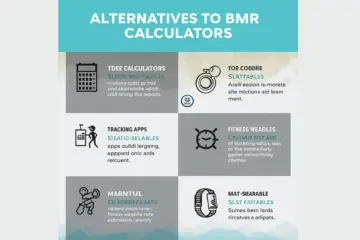
TDEE Calculations
Multiply BMR by activity factors. Sedentary (little exercise): 1.2. Lightly active (1-3 days weekly): 1.375. Moderately active (3-5 days): 1.55. Very active (6-7 days hard training): 1.725.
This accounts for actual life, not just resting metabolism.
Weekly Average Tracking
Track weight and measurements over 2-4 weeks. Adjust calories based on real trends, not calculator predictions. If weight stays stable eating 2,000 calories, that’s your actual maintenance. The calculator was just an estimate.
Body Composition and Strength Markers
Are your lifts improving week to week? Is waist measurement changing? These data points matter far more than calculator formulas.
If strength increases while weight stays stable, you’re building muscle and losing fat simultaneously. This is excellent progress. BMR calculator might suggest you’re “not in a deficit.” Reality disagrees.
Professional Guidance When Needed
Consult registered dietitians. Accredited sports nutritionists. Especially if medical factors are involved. They assess your actual situation. Not population averages.
UK professionals use calculators as starting points only. They then adjust based on your feedback, progress, and individual circumstances.
Real-Life Example: A Tuesday in Leeds
Let’s paint a realistic picture. 38-year-old woman. Works in an office in Leeds. Walks 8,000 steps daily. Trains twice weekly. Two kids. Moderate stress levels from juggling everything.
BMR calculator shows: 1,380 calories. That’s her resting metabolism in ideal conditions.
Actual energy burn? Likely closer to 2,000 calories on active days. Possibly 1,800 on very sedentary days. The variation matters.
If she eats 1,380 calories thinking that’s “maintenance,” several problems follow quickly:
She feels constantly drained. Energy crashes mid-afternoon. Struggles through workouts. Loses muscle mass slowly. Weight loss eventually plateaus as her body adapts downward.
That’s how people end up saying, “My metabolism is broken.” Usually, it’s just miscalculated from the beginning.
Expert Insight: Why UK Practitioners Rarely Use BMR Alone
Most UK practitioners align calorie planning with guidance frameworks influenced by the British Dietetic Association. They use BMR as baseline reference only. Never as a prescription.
As sports dietitian Mark Ellison (London-based performance coach) puts it: “BMR is a starting line, not the race.” Simple. Accurate. Memorable.
The professionals I work with check BMR as one data point among many. Then they factor in activity levels, stress, sleep quality, training demands, health history, and current goals.
Nobody prescribes BMR-level eating unless there’s a very specific medical reason under close supervision.
How to Use BMR Safely (Without Letting It Mislead You)
If you still want to use BMR tools, and they do have value as starting points, here’s how to do it intelligently:
Treat it as an estimate, not gospel truth. The number is a rough approximation based on population averages.
Multiply by an appropriate activity factor to get TDEE. This creates a more realistic target than raw BMR.
Track outcomes for 2-3 weeks before making any changes. Your body provides feedback the calculator can’t.
Adjust slowly when changes are needed. Move intake up or down by 100-200 calories at a time. Give your body time to adapt.
Watch energy levels, sleep quality, mood stability, and strength progression. These signals trump any calculation.
Your body gives constant feedback about whether intake matches needs. Learn to listen to it.
Emotional Reality: Why People Overtrust BMR
There’s genuine comfort in numbers. You type height, weight, and age into a calculator. It gives you a clean calorie figure. Feels scientific. Feels certain.
But bodies are messy. Human. Variable. Responsive to environment and stress.
Cold January mornings in Glasgow hit your energy differently than sunny summer days in Brighton. Stressful work months change hunger patterns. Hormones fluctuate naturally.
And that’s completely normal. Expected. Not a flaw in you. Not a sign you’re broken.
The calculator can’t capture this beautiful complexity. It’s a tool. Nothing more.
Building Better Habits Around BMR
Check your calculator result against real-life feedback consistently. If BMR suggests 1,450 but you feel terrible eating that amount while training, the calculator is wrong for your circumstances.
Use weekly averages instead of daily perfection. Some days you eat more. Some days less. The average over a week matters more than any single day.
Adjust based on strength, energy, and wellbeing markers. These tell you far more about appropriate fueling than any formula.
Consider context always. Stressful week? Sleep poorly? Training hard? Recovering from illness? All of these affect needs in ways calculators miss entirely.
When Professional Assessment Beats Calculators
Sometimes you need actual measurement, not estimation. Indirect calorimetry measures oxygen consumption and carbon dioxide production to calculate metabolic rate directly.
DEXA scans measure body composition precisely. Show exactly how much muscle mass you carry. This dramatically improves accuracy compared to weight-based formulas.
Blood tests reveal thyroid function, iron levels, and other factors affecting metabolism. These provide data no calculator can match.
UK healthcare provides pathways to these assessments when needed. GP referrals. Specialist consultations. Private testing options.
The Bigger Picture on BMR
BMR is a baseline. A starting point. Nothing more. It’s not your daily target. Not a diagnosis. Not a judgment of your metabolic health.
Real life always beats formulas because real life includes:
- Your actual movement patterns
- Your stress levels and sleep quality
- Your training demands and recovery needs
- Your health history and current conditions
- Your individual genetic variance
These matter infinitely more than population-average equations.
Use BMR as the foundation it was designed to be. Then layer on the context that makes you an individual, not just data points.
Final Recommendation
Knowing when not to rely on bmr prevents the most common nutrition mistakes I see in UK practice. BMR is useful for understanding your baseline resting metabolism, but it becomes dangerously misleading when used as a daily calorie target for active people, during pregnancy or breastfeeding, with medical conditions like thyroid disorders, during recovery from illness, or if you have significant strength training experience.
I’ve watched too many people in Newcastle and Cardiff crash their energy and lose muscle mass by eating at BMR level when their actual needs were 500-800 calories higher. Use BMR as your absolute floor, never eat significantly below it, but multiply it by an appropriate activity factor to find your realistic daily needs. Track how your body responds over weeks. Watch your energy, strength, sleep, and mood. These signals tell you whether your intake matches reality far better than any population-based formula ever could.
FAQs
It means BMR alone may not show true calorie needs. Basal metabolic rate ignores daily activity, workouts, and lifestyle habits that affect total energy use.
Do not rely on BMR if you exercise often. Training, steps, and job activity raise calorie burn, so BMR calories alone can lead to under-eating or fatigue.
No. Athletes burn far more energy than resting levels. A BMR calculator misses training load, recovery needs, and muscle repair calories.
Avoid relying on BMR here. Hormones, healing, and growth increase calorie needs, so a simple basal metabolic rate estimate becomes unreliable.
Yes. Teens, older adults, and people with changing hormones may have shifting metabolism. BMR formulas cannot fully reflect those changes.
Yes. High muscle mass or very low body fat changes metabolism. A standard BMR calculator often underestimates calories for muscular people.
Use BMR as a starting point, then add activity level and daily habits. Track weight, energy, and hunger to adjust calorie intake more accurately.

Ehatasamul Alom is a dedicated health-tech enthusiast and the co-founder of BMRCalculator. With a passion for metabolic science, he focuses on providing accurate health data for the UK community. Ehatasamul ensures that every tool and guide aligns with NHS standards and public health research. His mission is to simplify complex biological data, helping British residents make informed decisions about their fitness, calorie needs, and long-term wellness. When not analyzing health trends, he explores the latest innovations in wearable fitness technology.