
Typing your details into a BMR calculator and staring at a number that feels completely off is one of the most confusing moments in any health journey. I’ve been through this myself, sat at my desk in Bristol, convinced something was broken. The result looked far too low. Yet the tool was working perfectly fine. Understanding why my BMR calculator seems wrong changed everything for me, and I want to walk you through the same process. Most people misread the result, compare it to the wrong number, or enter data that has small but costly errors. This guide covers every reason it happens, with honest examples and practical steps to make sense of it all.
Why Does My BMR Calculator Seem Wrong?
Let me be direct with you. A BMR calculator does not measure your metabolism. It estimates it using a mathematical formula built from population data. So when you ask why my BMR calculator seems wrong, the honest answer is often that it is not wrong at all. It is just misunderstood.
Here is what usually causes the confusion:
- Most online calculators use different formulas, so results vary between websites
- Age, body composition, hormones, and health conditions all affect metabolism
- Calculators cannot see inside your body they work from averages
- Small mistakes in your data entry create surprisingly large differences
- People often compare BMR to the wrong number, like their fitness tracker total
Each of these reasons matters. And each one deserves a proper explanation, which is exactly what this article gives you.
A Real-Life Example
Picture two people in Manchester, both aged 25, both weighing 70 kg and standing 175 cm tall. On paper, they are identical. A standard BMR calculator gives them the same result.
Now here is the thing one is a desk worker with average muscle tone. The other does strength training four times a week. Their lean body mass is completely different. Their actual metabolic rates could differ by 150 to 300 calories per day, yet the calculator assigns them the same number.
This is the core limitation of most free online tools. They do not account for body composition. They take your weight as a whole, not the breakdown of muscle and fat. Muscular individuals often find their BMR result looks too low, while people carrying more body fat may see a figure that looks too high.
That frustration is valid. But it points to a tool limitation, not a broken calculator.
What Is BMR and How Is It Actually Calculated?
Understanding Basal Metabolic Rate in Simple Terms
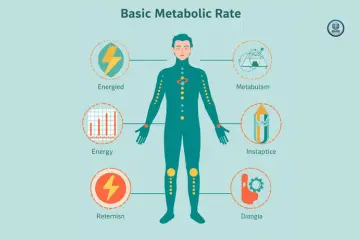
BMR stands for Basal Metabolic Rate. It is the number of calories your body burns while you are completely at rest. Not watching telly, not walking to the kitchen fully at rest, in a neutral temperature, after a night of sleep, in a fasted state.
Your body burns energy constantly, even when you are doing nothing. It keeps your heart beating, your lungs breathing, your cells repairing, and your core temperature stable. All of that requires fuel. BMR is the measure of that fuel cost.
To understand it better, I recommend reading this beginner-friendly breakdown of what BMR means which covers the full concept clearly.
The key thing to remember is this: BMR is a baseline. It is not your full daily energy need. It is just the floor.
BMR vs RMR vs Daily Calorie Needs
These three terms confuse almost everyone, including people who have been tracking their nutrition for years.
BMR is measured under very strict conditions complete rest, fasted, temperature-controlled environment. Very few people ever measure true BMR.
RMR (Resting Metabolic Rate) is measured at rest but without the strict fasting and environmental controls. RMR is typically 10 to 20% higher than BMR and is what most calculators actually estimate, even when they call it BMR.
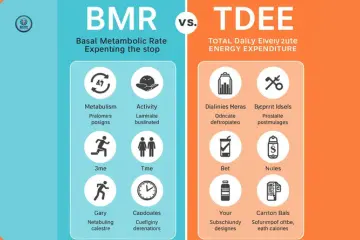
TDEE (Total Daily Energy Expenditure) is your full picture. It includes BMR or RMR plus all the energy you burn through movement, digestion, and activity.
Most people need TDEE for practical planning. If you are looking at BMR alone, you are only seeing part of the equation. You can use this BMR and TDEE calculator to see both figures side by side and understand the difference clearly.
The Most Common BMR Formulas Used Online
There are four formulas used most often. Each produces a different result from the same inputs. This alone explains a huge chunk of why different calculators give you different answers.
Mifflin-St Jeor Equation: Developed in 1990, this is the most widely used formula today. It tends to be the most accurate for the general population and is preferred by many registered dietitians.
For men: BMR = (10 × weight in kg) + (6.25 × height in cm) − (5 × age) + 5
For women: BMR = (10 × weight in kg) + (6.25 × height in cm) − (5 × age) − 161
Harris-Benedict Equation: Created in 1919 and revised in 1984. It was the standard for decades but tends to overestimate slightly, particularly for people with higher body fat.
Katch-McArdle Formula: This one uses lean body mass rather than total weight. It is the most accurate for athletes and muscular individuals but requires knowing your body fat percentage.
Cunningham Formula: Similar to Katch-McArdle, it is built around lean mass and is popular in sports science settings.
To explore how these formulas compare on a reliable platform, have a look at this guide on finding the most reliable BMR calculator available in the UK.
9 Reasons Your BMR Calculator May Look Wrong
1. Different Calculators Use Different Equations
This is the single most common reason people get confused. You try three calculators and get three different numbers. Nothing is broken. They are simply using different formulas.
The Mifflin-St Jeor equation and the Harris-Benedict equation can produce results that differ by 50 to 100 calories or more for the same inputs. Neither is wrong in an absolute sense. They are different models, built from different research populations, using slightly different assumptions.
If you want consistency, stick to one reputable calculator that clearly states which formula it uses. That way your numbers are comparable over time.
2. You Entered Incorrect Measurements
This sounds obvious, but it happens more than you think. A small error in your inputs creates a surprisingly large shift in the result.
Common data entry mistakes include:
- Entering weight in pounds when the calculator expects kilograms, or vice versa
- Rounding height incorrectly (a difference of 5 cm changes the result noticeably)
- Using last year’s weight instead of your current weight
- Mixing up metric and imperial units midway through the form
Always double-check your entries. Use your most recent measured weight, not an estimate. And confirm whether the calculator expects metric or imperial before you type anything in.
3. Body Fat Percentage Was Not Considered
Standard BMR calculators only take your total weight. They have no idea how much of that weight is muscle and how much is fat. Muscle burns more calories at rest than fat does. This matters a lot.
Two people both weighing 75 kg can have dramatically different metabolic rates if one has 20% body fat and the other has 35%. A formula that ignores this will give them the same BMR, even though their real-world calorie needs are very different.
If you know your body fat percentage, a Katch-McArdle based calculator will give you a far more meaningful result. You can check your body fat using this body fat percentage calculator before entering it into a BMR tool.
The role of muscle mass in BMR is significant and often underestimated muscular people consistently see underestimates from standard tools.
4. Your Age Affects Metabolism
Age is not just a number when it comes to metabolism. As we get older, we naturally lose muscle mass a process called sarcopenia. Less muscle means a lower resting metabolic rate, even if body weight stays the same.
Most BMR formulas adjust for age by subtracting a small amount per year. A 60-year-old and a 25-year-old of identical height and weight will receive meaningfully different BMR estimates, and rightly so.
If your result looks lower than you expected, your age may be a significant contributing factor. This is completely normal physiology, not a calculator error. For a deeper look at this, read about how BMR slows with age and what it means for your calorie planning.
5. Your Biological Sex Changes the Result
Men and women have different average muscle-to-fat ratios at the same weight. Men typically carry more lean mass, which raises resting calorie expenditure. This is why BMR formulas apply different constants based on biological sex.
A man and a woman of the same weight, height, and age will receive different BMR estimates. That difference is intentional and reflects genuine physiological differences in body composition.
Hormonal differences also play a role. Testosterone supports muscle maintenance, and oestrogen influences fat distribution. Both affect the metabolic rate over time. If you are curious about how these factors interact, this article on how age and gender affect BMR explains it clearly.
6. You Are Comparing BMR to Calories Burned During Daily Life
This is one of the most widespread misunderstandings I see. People get their BMR result say, 1,600 kcal and then compare it to what their Fitbit says they burned, which might be 2,200 kcal. They assume the BMR calculator is wrong because the numbers do not match.
They are not meant to match. BMR and total daily calorie burn are completely different measurements.
BMR only covers the energy your body needs at complete rest. Your Fitbit is estimating your total expenditure across the whole day, including steps, workouts, and digestion. That is TDEE territory. For planning your actual calorie intake, you need a TDEE calculator rather than just a BMR figure.
The difference between BMR and active calories is something worth understanding before you make any decisions about your diet.
7. Medical Conditions Can Affect Metabolism
Certain health conditions cause real, measurable changes to metabolic rate. No calculator can account for these without clinical input.
Conditions that commonly affect BMR include:
- Hypothyroidism: An underactive thyroid significantly reduces metabolic rate. People with this condition often find standard BMR estimates look too high compared to how their body actually behaves.
- Hyperthyroidism: An overactive thyroid raises metabolic rate. BMR results may look too low.
- Polycystic ovary syndrome (PCOS): Can influence insulin sensitivity and energy regulation.
- Cushing’s syndrome: Affects cortisol and metabolism directly.
- Recovery from illness or surgery: Metabolic rate can shift during healing phases.
If you suspect a medical condition is affecting your metabolism, please speak to your GP rather than relying solely on an online tool. A proper clinical assessment gives you far more useful information. You can also learn more about what causes BMR to change suddenly to understand whether your symptoms warrant medical attention.
8. Recent Weight Changes Can Influence Accuracy
Your body adapts to weight changes over time. When you lose weight, your BMR drops partly because you have less mass to maintain, and partly because of metabolic adaptation. Your body becomes more efficient.
This means a BMR result calculated at your previous weight is no longer accurate. Similarly, if you have recently gained weight, your previous BMR figure will underestimate your current needs.
The general advice is to recalculate your BMR every time your weight changes by 3 to 5 kg, or at least every few months if you are actively working towards a body composition goal.
9. Online Calculators Cannot Measure Your Actual Metabolism
This is perhaps the most important point of all. BMR calculators are estimation tools. They apply a mathematical formula to your inputs and return a statistical prediction. They do not and cannot measure what is actually happening inside your cells.
Research by metabolic scientists including Eric Ravussin at Pennington Biomedical Research Center has consistently shown that individual metabolic rates vary significantly even among people of identical size, age, and sex. Genetics, gut microbiome composition, hormonal fluctuations, and sleep quality all influence resting energy expenditure in ways that no equation can fully capture.
As one widely cited insight in metabolic research notes: no equation can perfectly predict an individual’s metabolic rate direct testing remains the gold standard.
The limitations of BMR calculators are well documented, and understanding them helps you use these tools more wisely.
BMR Calculator Results Explained With Examples
As someone who regularly analyses calorie calculators and metabolic equations, I’ve noticed that users often understand BMR better when they can compare real examples side by side. The table below shows estimated BMR values using the Mifflin-St Jeor formula for different individuals at the same weight and height.
| Person Type | Age | Weight | Height | Estimated BMR |
|---|---|---|---|---|
| Office Worker | 25 | 70 kg | 175 cm | Around 1,700 kcal |
| Active Runner | 25 | 70 kg | 175 cm | Similar BMR (same formula inputs) |
| Muscular Athlete | 25 | 70 kg | 175 cm | Often Higher (when Katch-McArdle used) |
| Older Adult | 60 | 70 kg | 175 cm | Usually Lower (around 1,530 kcal) |
Notice that the office worker and active runner receive the same estimate from a standard formula, despite almost certainly having different lean mass levels. The muscular athlete only gets a higher result if a body-fat-adjusted formula is used. The older adult receives a lower estimate because age reduces the formula output.
This illustrates why a single number does not tell the whole story. For a comparison between BMR and daily maintenance calories, this article on BMR vs calorie maintenance is well worth reading.
Why Similar People Can Have Different Results
Even when all input variables match, real-world metabolic rates vary. The main drivers of this variation include:
- Muscle mass Even small differences in lean tissue meaningfully change resting calorie burn
- Genetics Inherited metabolic tendencies influence how efficiently your body uses fuel
- Hormones Thyroid hormones, cortisol, and insulin all affect energy expenditure
- Lifestyle factors Sleep quality, chronic stress, and dietary patterns all play a role
For those curious about how these differences play out between BMR for athletes vs sedentary people, the gap can be quite significant even when total body weight is the same.
Is My BMR Calculator Wrong or Am I Misunderstanding the Number?
Common Expectations vs Reality
Many people in the UK expect a BMR result to match their smartwatch calories or daily calorie target. In practice, these numbers represent completely different things.
| What People Expect | What BMR Actually Shows |
|---|---|
| Daily calories burned | Calories burned at rest only |
| Exercise calories included | Exercise is excluded entirely |
| Exact metabolic measurement | A statistical estimate from a formula |
| Weight loss calorie target | Baseline energy needs only |
The gap between expectation and reality is where most frustration comes from. Your BMR result is not a diet plan. It is not your maintenance calorie target. It is simply the energy floor your body needs to function at absolute rest.
Signs Your BMR Estimate Is Probably Reasonable
You can feel fairly confident in your result if:
- Two or three reputable calculators using the same formula give you similar numbers
- The result aligns with your general body size and age group
- The figure falls within broadly expected ranges (typically 1,200 to 2,200 kcal for most adults)
Signs Something May Be Off
Treat your result with more scepticism if:
- The number seems implausibly low (below 1,000 kcal for a healthy adult)
- The result seems very high compared to multiple other tools
- You notice an obvious data entry error on review
- The calculator glitched or did not load properly
In these cases, simply re-enter your details carefully and cross-check with a second reputable tool.
Which BMR Formula Is Most Accurate?
Mifflin-St Jeor Formula
For the general population, the Mifflin-St Jeor equation is the most widely recommended. Studies have shown it to be more accurate than the original Harris-Benedict equation for most healthy adults. Many registered dietitians in the UK and NHS-affiliated nutritionists use it as their default.
Its main limitation is that it does not account for body composition. For average individuals, this matters less. For very muscular people or those with high body fat, the result can be misleading.
Harris-Benedict Formula
The Harris-Benedict equation was the gold standard for most of the 20th century. The revised version from 1984 is still used in some clinical and hospital settings. It tends to overestimate slightly for sedentary individuals, which is something worth bearing in mind if you use a tool that applies this formula.
Katch-McArdle Formula
If you know your body fat percentage, this formula is far superior for active individuals, bodybuilders, and athletes. It calculates BMR based on lean body mass alone, stripping out the fat tissue that contributes little to resting energy expenditure.
Using this formula requires accurate body fat data. An inaccurate body fat estimate fed into Katch-McArdle will produce an inaccurate BMR result. So measure carefully, or use a tool that helps you estimate it first.
How to Check Whether Your BMR Estimate Is Accurate
Compare Results From Multiple Trusted Calculators
Use two or three well-known calculators that state which formula they apply. Enter your data consistently. A reasonable variation between Mifflin-St Jeor and Harris-Benedict results is around 50 to 100 kcal. If two calculators using the same formula give very different results, check your inputs.
Track Your Weight for Several Weeks
This is the most practical real-world check available to most people. Eat at a consistent calorie level for two to four weeks and monitor your weight. If your weight stays stable, your intake roughly matches your maintenance calories (TDEE). You can then work backwards to estimate your BMR.
This approach takes longer but gives you personalised data that no calculator can replicate. Combine it with this BMR weight loss calculator to understand what a realistic deficit looks like for your situation.
Use Professional Metabolic Testing
Indirect calorimetry is the clinical gold standard for measuring resting energy expenditure. It analyses the gases you breathe out to calculate how much fuel your body is burning. Sports science labs, some private hospitals, and specialist nutrition clinics offer this service.
It costs money, but if accuracy is important to you perhaps for managing a medical condition or optimising athletic performance it is worth considering. How doctors estimate metabolism is a useful read if you want to understand what professional assessment involves.
Review Your Health Factors
Before assuming your calculator is at fault, review the following:
- Are you taking any medications that affect metabolism?
- Have your hormone levels been checked recently?
- Is your sleep quality poor? Chronic sleep deprivation suppresses metabolic rate.
- Are you under high levels of stress? Elevated cortisol affects energy regulation.
These factors sit outside what any calculator can assess. They belong in a conversation with your GP or a registered dietitian.
BMR Calculator vs TDEE Calculator: Which One Should You Use?
When to Use a BMR Calculator
BMR is useful when you want to understand your baseline. It helps you grasp the minimum your body needs to survive. It is also useful in educational settings, when comparing yourself across different time periods, or as a starting point before calculating your full energy needs.
When to Use a TDEE Calculator
For almost all practical health and nutrition goals, TDEE is what you need. Whether you are trying to lose weight, maintain your current weight, or build muscle, your total daily energy expenditure is the number that guides your calorie target.
Use the TDEE calculator to factor in your actual activity level. The resulting figure gives you a far more actionable starting point than BMR alone.
Why Most People Need TDEE, Not Just BMR
One of the biggest mistakes I see is people using BMR as their daily calorie target. That is far too low for almost anyone who is active. Eating at BMR level for extended periods can lead to fatigue, muscle loss, and metabolic slowdown. Here is how the three measurements compare:
| Measurement | Includes Activity? | Best Use |
|---|---|---|
| BMR | No | Baseline metabolism only |
| RMR | Mostly no | Resting energy estimate |
| TDEE | Yes | Daily calorie planning and goal setting |
If you are using BMR as the basis for your daily eating, please switch to TDEE. Your body needs the full picture, not just the floor. You can learn more about this in the detailed comparison of BMR vs TDEE for practical weight management.
Frequently Asked Questions
Why is my BMR so low?
Several factors can produce a lower-than-expected BMR result. Age reduces the formula output older adults burn less at rest due to muscle loss. Being shorter and lighter also reduces BMR. If you are female, the formula applies a lower constant than it does for males. And if you have below-average muscle mass, your actual metabolic rate may genuinely be on the lower end. A very low result may also suggest a data entry error, so always double-check your inputs. For guidance on identifying whether your result is truly low, this article on signs of low or high BMR is a useful starting point.
Why does every BMR calculator give a different answer?
Each calculator applies a different formula, rounds numbers differently, and may use slightly different versions of the same equation. The Mifflin-St Jeor and Harris-Benedict equations alone can produce results that differ by 50 to 100 kcal. This variation is normal and expected. It is not a sign that any particular tool is faulty.
Can my smartwatch measure BMR?
No. Wearable devices estimate total calorie expenditure using heart rate, movement data, and personal characteristics like age and weight. They do not measure basal metabolic rate. Their total calorie figures are TDEE estimates, not BMR figures, and they carry their own significant margin of error.
Does building muscle increase BMR?
Yes, and meaningfully so. Muscle tissue burns more calories at rest than fat tissue does. Adding lean mass through resistance training raises your resting energy expenditure over time. This is one of the most effective long-term strategies for supporting a healthy metabolism. Learn more about how to increase BMR naturally through diet, exercise, and lifestyle changes.
Should I eat my BMR calories only?
This is generally not a good idea. Eating at BMR level means consuming far fewer calories than your body actually uses throughout the day. Over time, this can cause nutrient deficiencies, muscle loss, fatigue, and metabolic adaptation. Most people should eat at or near their TDEE, with a modest deficit for weight loss. If you are unsure how to structure this, reading about how to eat based on BMR gives a practical framework.
Can medical conditions affect BMR?
Yes, significantly. Thyroid disorders, hormonal imbalances, and several other conditions can raise or lower metabolic rate in ways that standard calculators cannot predict. If you suspect a medical cause, speak to your GP. Online tools are not a substitute for clinical assessment when health conditions are involved.
Understanding Why Your BMR Calculator Seems Wrong
The Most Important Things to Remember
Most confusion around BMR calculators comes down to a handful of core misunderstandings. Let me summarise the key points simply:
BMR calculators produce estimates, not measurements. They apply population-level formulas to your personal data. The result is a starting point, not a definitive answer. Different formulas produce different results, and this is expected behaviour, not a flaw.
Body composition matters enormously. Two people of identical weight can have very different real-world metabolic rates if their muscle-to-fat ratio differs. Standard tools that ignore body fat will underestimate for muscular people.
Comparing BMR to your daily calorie burn or fitness tracker total is a category error. They measure different things entirely. For real-world planning, TDEE is the relevant figure.
Medical conditions, age, hormones, sleep, and stress all influence your metabolism in ways that no formula can fully capture. If something feels significantly off and you have ruled out input errors, a conversation with a healthcare professional is the right next step.
Consistent tracking over several weeks reveals far more than any single calculator result. Use the number as a guide, then observe how your body actually responds.
You can always explore related topics through the common BMR myths article to clear up other misconceptions that may be affecting how you interpret your results.
Next Steps for Readers
Here is what I suggest you do right now:
Double-check your inputs in the calculator weight, height, age, and unit type. Then try the same data in a second tool that uses the same formula. Compare the results. If they are close, your estimate is likely sound. If they differ significantly, check which formula each tool uses.
Next, calculate your TDEE rather than relying on BMR alone. Then monitor your actual weight response over two to four weeks at a consistent calorie intake. That real-world data will tell you more than any equation ever could.
If you want to go further, consider BMR calculator alternatives such as indirect calorimetry or working with a registered dietitian for a more precise assessment.
Final Recommendation
After years of working with metabolic data and helping people make sense of their health numbers, my honest recommendation is this: stop expecting a BMR calculator to be perfect, and start using it as one input among several. The question of why my BMR calculator seems wrong usually has a straightforward answer different formulas, a small data entry error, or a misunderstanding of what the number actually represents.
Use a trusted UK tool like bmrcalculator.uk that clearly states its methodology, cross-check with a TDEE estimate, and then observe how your body actually responds to your calorie intake over time. Real-world feedback beats any formula. If accuracy matters greatly perhaps for a medical reason or a serious athletic goal invest in professional metabolic testing rather than relying solely on an online estimate. Treat the calculator as a starting point, not a verdict.

Ehatasamul Alom is a dedicated health-tech enthusiast and the co-founder of BMRCalculator. With a passion for metabolic science, he focuses on providing accurate health data for the UK community. Ehatasamul ensures that every tool and guide aligns with NHS standards and public health research. His mission is to simplify complex biological data, helping British residents make informed decisions about their fitness, calorie needs, and long-term wellness. When not analyzing health trends, he explores the latest innovations in wearable fitness technology.