Have you ever wondered how many calories your body burns without doing anything? It is a common question among teenagers who play sports, exercise, or simply want to understand how their bodies work. Learning about BMR for teenagers explained can help make sense of daily energy needs, but there is one important difference between teens and adults: the teenage body is still growing.
When I looked into the science behind teenage metabolism, one thing became clear. A teenager’s calorie needs are about much more than body weight or exercise. Growth, puberty, hormones, sleep, and daily movement all play a part. In this guide, I’ll break down what BMR means, how it is estimated, why adult calculators can be misleading, and how teenagers can get enough energy to stay healthy.
What Does BMR Mean for Teenagers?
BMR stands for Basal Metabolic Rate. It is the amount of energy your body needs to carry out basic functions while you are at complete rest.
Even when you sleep or sit quietly, your body keeps working. Your heart pumps blood, your lungs take in oxygen, and your brain stays active. Your body also maintains its temperature and repairs cells.
All these jobs need energy. Your body gets that energy from food.
For teenagers, BMR is only one part of the daily energy picture. Their bodies also need fuel for growth, school, exercise, and other daily activities.
BMR vs RMR: Are They the Same?
You may also come across the term Resting Metabolic Rate (RMR). It is closely related to BMR, but the two are not quite the same.
BMR is measured under very strict resting conditions. RMR is usually measured under less strict conditions.
Both help describe how much energy the body uses at rest.
| Term | Simple meaning |
|---|---|
| BMR | Energy used for basic body functions at complete rest |
| RMR | Energy used while resting under normal testing conditions |
| TDEE | Total energy used throughout the day |
| EER | Estimated daily energy intake needed to meet energy needs |
The main thing to remember is that BMR does not include everything you do during the day.
Walking to school, playing football, attending sports practice, and even moving around at home all use extra energy.
Why Is BMR Different During the Teenage Years?
Teenage years bring some major changes. The body grows, bones develop, muscles change, and hormones become more active.
These changes affect how much energy a teenager needs.
An adult’s energy needs are mainly linked to maintaining the body and supporting daily activity. A teenager also needs energy to support normal growth and development.
Growth Spurts Increase Energy Needs
One of the biggest changes during adolescence is rapid growth.
Some teenagers grow several centimetres in a relatively short period. Their bodies need extra energy to build bone, muscle, and other tissues.
This is why calorie needs can change from one stage of adolescence to another.
A teenager who is growing quickly may need more food than someone of the same age who is growing at a slower rate.
The National Academies’ 2023 dietary reference report accounts for growth when estimating energy requirements for children and adolescents. It also considers age, body size, and activity level.
How Puberty Affects Metabolism
Puberty brings changes in hormones, body composition, and physical development.
Boys and girls may experience these changes at different times. Even teenagers of the same age can be at very different stages of development.
Some may gain more muscle. Others may experience changes in body fat and height.
These changes can affect resting energy needs.
| Factor | How it affects energy needs |
|---|---|
| Age | Energy needs change as development progresses |
| Growth spurts | More energy supports new tissue growth |
| Muscle mass | Lean tissue contributes to resting energy use |
| Body size | Larger bodies generally need more energy |
| Puberty | Hormonal and physical changes affect development |
This is why I would be careful about comparing one teenager’s BMR with another’s.
Two 15-year-olds can have very different bodies, growth patterns, and energy needs.
How Is BMR for Teenagers Explained in a Calculator?
BMR calculators usually ask for details such as age, sex, height, and weight.
They then use a mathematical formula to estimate resting energy expenditure.
However, there is something important to understand before using one.
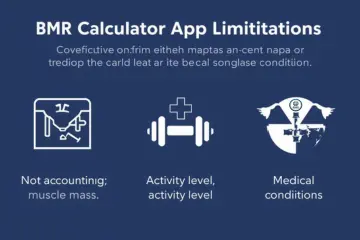
A formula designed for adults is not automatically suitable for teenagers.
Why Adult BMR Formulas Can Give Misleading Results
One popular adult formula is the Mifflin-St Jeor equation.
It uses age, height, weight, and sex to estimate resting energy expenditure. However, the original study included adults aged 19 to 78.
This means it was not originally developed to estimate the needs of growing teenagers.
Using an adult equation for someone under 19 may produce a result that does not properly reflect their stage of growth.
For younger people, age-specific equations are available. For example, the Schofield and Oxford equations include versions for children and adolescents.
Research has also examined different ways to estimate resting energy expenditure in young people. No single prediction equation works perfectly for everyone.
What Information Goes Into a Teen Energy Estimate?
A suitable energy estimate needs more than a weight measurement.
Here are the main details that help build a better picture.
| Information | Why it matters |
|---|---|
| Age | Helps account for development |
| Height | Gives information about body size |
| Weight | Helps estimate energy needs |
| Sex | Used in many established prediction equations |
| Activity level | Accounts for movement and exercise |
| Growth stage | Helps explain changing energy demands |
The National Academies’ 2023 guidelines provide Estimated Energy Requirement (EER) equations for children and adolescents aged 3 to 18.
These equations account for physical activity and an allowance for growth. They are different from adult equations.
You can read the National Academies’ Dietary Reference Intakes for Energy for more detail.
How Much Energy Does a Teenager Need Each Day?
This is one of the most common questions about teenage metabolism.
There is no single calorie requirement that works for every teenager.
A person’s daily energy needs depend on their age, body size, growth, activity, and other individual factors.
BMR Is Not Your Daily Calorie Requirement
This is where a lot of confusion starts.
Some teenagers see a BMR result and assume that number represents how much they should eat every day.
That is not correct.
Your body needs extra energy for movement, exercise, digestion, and growth.
Your total daily energy expenditure includes these different sources of energy use.
| Energy use | Everyday example |
|---|---|
| Resting energy | Breathing and keeping the heart working |
| Physical activity | Walking, running, and playing sports |
| Daily movement | Climbing stairs and doing chores |
| Digestion | Breaking down food |
| Growth | Building new bones, muscles, and tissues |
The EER approach is especially useful in this age group because it estimates daily energy needs rather than treating resting energy as the whole requirement.
Does Activity Level Change Teenage Energy Needs?
Yes. A teenager who plays sports most days may need more energy than someone who spends much of the day sitting.
However, exercise is not the only thing that matters.
Walking, cycling, school activities, housework, and other everyday movement also contribute to energy use.
Consider these examples:
| Lifestyle | Daily energy considerations |
|---|---|
| Mostly sitting | Lower activity-related energy use |
| Regular walking | Additional energy from daily movement |
| Sports several days a week | More energy for training and recovery |
| Frequent intense training | Greater need to support activity and recovery |
These are general comparisons, not fixed calorie categories.
A teenager’s growth stage can make a big difference, even when their activity levels are similar.
What Should Teenagers Eat to Support Healthy Metabolism?
Understanding BMR is useful, but food quality matters too.
Teenagers need a balanced mix of carbohydrates, protein, fats, vitamins, and minerals. These nutrients support growth, energy, brain function, bone health, and muscle development.
Rather than focusing on calorie numbers, I would start with building regular, balanced meals.
Why Protein, Carbohydrates, and Healthy Fats Matter
Each main nutrient has a different job.
Protein helps build and repair muscles and other tissues. Carbohydrates provide energy for school, exercise, and everyday activities.
Healthy fats support hormone production, brain function, and the absorption of certain vitamins.
Cutting out one of these food groups without medical advice can make it harder to meet nutritional needs.
| Nutrient | Helpful food sources | Main role |
|---|---|---|
| Protein | Eggs, fish, beans, chicken | Builds and repairs tissues |
| Carbohydrates | Rice, oats, bread, potatoes | Provides energy |
| Healthy fats | Nuts, seeds, olive oil, fish | Supports cells and hormones |
| Calcium | Milk, yoghurt, fortified foods | Builds strong bones |
| Iron | Lentils, meat, beans, leafy greens | Helps carry oxygen |
| Vitamin D | Eggs, oily fish, fortified foods | Supports bone health |
Why Calcium, Iron, and Vitamin D Deserve Attention
These nutrients are especially important during the teenage years.
Calcium supports growing bones. Vitamin D helps the body absorb calcium. Iron helps carry oxygen around the body.
Teenagers who do not get enough iron may feel tired or weak. This can affect school, sports, and everyday activities.
Teenagers who menstruate may have a higher risk of low iron because of blood loss.
Iron-rich foods include meat, eggs, beans, lentils, and leafy green vegetables.
If there are concerns about nutrient deficiencies, a healthcare professional can advise whether testing or supplements are needed.
The Royal Children’s Hospital Melbourne provides useful guidance on nutrition for teens and young people.
Common BMR Mistakes Teenagers Should Avoid
BMR calculators can be useful for learning about energy, but they can also create confusion.
The problem often comes from treating an estimate as a strict rule.
Here are some common mistakes worth avoiding.
Thinking a Lower BMR Is Better
A lower BMR is not automatically a sign of better health.
Your body needs energy to function properly. Trying to force your metabolism to burn fewer calories is not a healthy goal.
A teenager should focus on normal growth, good nutrition, and physical health.
Using an Adult Calculator Without Checking Its Formula
Some online calculators accept teenage ages but use formulas developed for adults.
Just because a calculator accepts an age does not mean its result is suitable.
Check whether it uses an equation designed for children or adolescents.
| Common mistake | Better approach |
|---|---|
| Using an adult BMR equation | Look for age-specific methods |
| Treating BMR as an eating limit | Understand total energy needs |
| Comparing results with friends | Consider individual growth |
| Skipping meals | Eat regular, balanced meals |
| Trusting one calculator result | Seek suitable guidance |
Cutting Calories to Change Body Weight Quickly
This is a mistake I would take seriously.
Teenagers are still developing. Eating too little can make it harder to get the nutrients and energy needed for normal growth.
Very restrictive diets, fasting, and meal skipping are not good ways to manage teenage metabolism.
The Royal Children’s Hospital advises against dieting during the teenage years and encourages a balanced eating pattern instead.
If a teenager is worried about their weight, a GP or registered dietitian can help assess the situation without relying on a random online calorie target.
How Sleep, Exercise, and Daily Habits Support Teenage Health
BMR is only one part of metabolism. Daily habits also affect how well a teenager feels and functions.
Good habits can support energy, concentration, recovery, and physical development.
Does Sleep Affect Teenage Metabolism?
Sleep is important for growing bodies.
It supports physical recovery, brain function, learning, and normal hormone activity.
Poor sleep can affect appetite, mood, and energy levels.
Most teenagers need around 8 to 10 hours of sleep each night.
A regular sleep routine can make it easier to stay focused at school and feel ready for daily activities.
Does Exercise Increase BMR?
Exercise increases the energy your body uses during physical activity.
Strength training can also help develop muscle, which contributes to resting energy expenditure.
However, exercise does not guarantee a large increase in BMR.
The main benefits of regular activity include stronger muscles and bones, better fitness, and improved overall health.
Teenagers should choose activities they enjoy rather than feeling forced to follow strict workout plans.
Walking, cycling, swimming, dancing, and team sports can all help build an active routine.
When Should Parents or Teenagers Seek Professional Advice?
An online BMR result cannot tell you whether a teenager is growing well or getting enough nutrition.
Sometimes, a person’s energy needs are affected by health conditions, medications, or other factors that a simple formula cannot account for.
It is worth speaking with a GP or registered dietitian when:
- A teenager loses weight quickly without an obvious reason.
- They feel tired or weak most of the time.
- They regularly skip meals or avoid many foods.
- Their growth pattern causes concern.
- Eating or body weight becomes a source of stress.
- Exercise starts to interfere with normal eating and recovery.
These signs do not automatically mean there is a medical problem. However, they deserve attention.
Why Teenagers Need Age-Specific Growth Checks
BMI is another measure people sometimes confuse with BMR.
BMI means Body Mass Index. It compares weight with height, but it does not measure metabolism.
For teenagers, BMI is interpreted differently from adult BMI.
The CDC uses age- and sex-specific BMI percentiles for children and teenagers aged 2 to 19. This helps account for normal growth and development.
A healthcare professional can look at growth patterns, health history, and other factors rather than relying on one measurement.
You can find more information through the CDC Child and Teen BMI Calculator.
Frequently Asked Questions About BMR for Teenagers Explained
Here are some common questions that can help clear up confusion about teenage metabolism and daily energy needs.
What Is a Normal BMR for a 15-Year-Old?
There is no single normal BMR for every 15-year-old.
Resting energy needs vary based on body size, sex, growth, and body composition. A suitable age-specific equation or professional assessment can provide a better estimate.
Can Teenagers Use an Online BMR Calculator?
Yes, but they should use caution.
Choose a calculator that uses an age-appropriate equation. Adult formulas may not give suitable estimates for growing teenagers.
A calculator should also be treated as an educational tool, not a guide for restricting food.
Does BMR Increase During Puberty?
Resting energy needs can change during puberty as the body grows and body composition changes.
However, the amount varies from person to person. Growth and development also increase total energy needs.
Can Eating More Increase BMR?
Eating enough food supports normal body functions and growth.
However, eating more does not automatically raise your BMR. Your resting energy needs depend on several factors, including body size and body composition.
Should Teenagers Count Calories Every Day?
Most teenagers do not need to count calories every day.
Regular meals, balanced food choices, and attention to hunger and fullness are usually more useful habits.
A healthcare professional may recommend a specific nutrition plan when there is a medical reason.
Is a High BMR Better Than a Low BMR?
Not necessarily.
A higher BMR simply means the body uses more energy at rest. It does not automatically mean someone is healthier, fitter, or stronger.
Final Thoughts
Understanding BMR for teenagers explained comes down to one simple idea: the teenage body needs energy for more than basic survival. It also needs fuel for growth, puberty, learning, movement, and everyday development. That is why adult BMR formulas and strict calorie targets may not be suitable for this age group.
My biggest takeaway is to focus on healthy growth rather than chasing a particular metabolic number. Eat regular, balanced meals, get enough sleep, enjoy physical activity, and ask a healthcare professional about any concerns. A BMR estimate can teach you something about the body, but it should never become a reason to eat less than you need.

Ehatasamul Alom is a dedicated health-tech enthusiast and the co-founder of BMRCalculator. With a passion for metabolic science, he focuses on providing accurate health data for the UK community. Ehatasamul ensures that every tool and guide aligns with NHS standards and public health research. His mission is to simplify complex biological data, helping British residents make informed decisions about their fitness, calorie needs, and long-term wellness. When not analyzing health trends, he explores the latest innovations in wearable fitness technology.