
Picture a chilly morning in Manchester, still tucked under the duvet before the kettle has even clicked on. Your body is already hard at work. Your heart is beating, your lungs are filling and emptying, and your brain is ticking over, all before you have taken a single step. That quiet, constant effort is what learning how to calculate BMR is really about. Basal metabolic rate is an estimate of the energy your body needs just to keep you alive and ticking over at rest. It is not the same thing as your daily calorie target, and mixing the two up is where most people go wrong. In this guide, I will walk you through the maths by hand, explain the science in plain English, show you how to use a BMR calculator properly, and help you turn that single number into something genuinely useful for everyday life.
What Is Basal Metabolic Rate (BMR)?
Before you touch a calculator, it helps to know what the number in front of you actually represents. BMR sounds like a mouthful of science, but the idea behind it is refreshingly simple.
What does BMR mean in simple terms?
Basal metabolic rate is the energy, measured in kilocalories, that your body needs each day to run its essential physiological functions while completely at rest. This covers everything your organs and cells do automatically, without any conscious input from you. It is usually shown as kcal per day because that is the unit most people recognise from food labels. You will often see “calories” and “kilocalories (kcal)” used interchangeably in everyday nutrition talk, and for practical purposes that is fine, since a food calorie is technically a kilocalorie anyway. If any of this still feels new, our BMR for beginners guide covers the fundamentals at a gentler pace.
What processes use energy at rest?
Your body does not clock off at 5pm. Even while you are watching telly or fast asleep, it keeps spending fuel on:
- Breathing
- Heart function and blood circulation
- Brain activity
- Maintaining body temperature
- Supporting internal organs like the liver and kidneys
- Basic cellular repair and maintenance
None of this requires you to lift a finger. It happens whether you are dozing on the sofa or lying awake worrying about the washing up.
Is BMR the same as metabolism?
Not quite. Metabolism is the broad, ongoing process of converting food into usable energy and building blocks for the body. BMR is one specific measurement within that wider picture, focused purely on rest. Resting energy expenditure sits close to BMR but is measured under slightly less strict conditions, and daily energy expenditure covers everything you burn across a full day, including movement. If you want a deeper breakdown of these overlapping terms, our guide on BMR vs metabolism explains the distinction in more depth. There is also active metabolic rate, or AMR, which sits closer to TDEE. Our BMR vs AMR comparison unpacks that one separately.
BMR vs RMR vs TDEE: Why the Terms Matter
This trio causes more confusion than almost anything else in this space. Someone enters the same details into two different tools and ends up with “BMR” on one screen and “RMR” on the other, wondering why the numbers do not match.
What is BMR?
Strictly speaking, true basal metabolic rate requires controlled laboratory conditions: a fasted state, complete physical rest, and a stable, comfortable room temperature. Since almost nobody measures BMR that precisely at home, online calculators give you a practical estimate instead, built from validated formulas rather than a lab test.
What is RMR?
Resting metabolic rate is a slightly looser cousin of BMR. It measures energy use while resting but without the same strict fasting and stillness requirements. Many consumer tools use “BMR” and “RMR” almost interchangeably, which is technically a bit sloppy, but for everyday calorie planning the difference rarely matters much.
What is TDEE?
Total daily energy expenditure, or TDEE, is the figure most people actually want. It builds on BMR by adding your daily movement, exercise, and the energy cost of digesting food. Our BMR vs TDEE explained article goes into more detail if you want the full picture.
The simple relationship
Think of it as a chain: BMR, then daily movement, then exercise, then digestion, all adding up to TDEE. BMR is the starting point, not the finishing line.
BMR, RMR and TDEE comparison table
I find a table clears this up faster than paragraphs ever could, so here is a simple one to bookmark.
| Term | What it means | Includes exercise? | Main use |
|---|---|---|---|
| BMR | Estimated energy needed for essential body functions | No | Metabolic estimate |
| RMR | Energy used while resting | No structured exercise | Practical resting estimate |
| TDEE | Total energy used in a typical day | Yes | Daily calorie planning |
What Information Do You Need to Calculate BMR?
Most BMR formulas look intimidating only until you break them into pieces. You genuinely need just a handful of details, and getting these inputs right matters far more than how fast you press the buttons on a calculator.
Age
Age is included because energy needs shift gradually across the decades, partly due to changes in muscle and organ mass. That said, age alone does not decide someone’s metabolic rate, which is why two 40 year olds can have quite different results.
Sex
Common predictive equations use sex-specific constants, largely reflecting average differences in body composition between men and women. Standard formulas will never perfectly represent every individual, but they remain a sensible starting point.
Height
Taller frames generally carry more tissue to support, which is why height affects the estimate. Metric equations use centimetres, so if you only know your height in feet and inches, you will need to convert it first.
Body weight
Most equations rely on current body weight in kilograms. Keep in mind that daily fluctuations from water and food intake can shift the number on the scale, so try to weigh yourself under similar conditions each time. A reliable set of digital scales like these makes this far easier to keep consistent.
Body composition
Lean body mass, fat mass and muscle mass all influence energy needs. Two people of identical weight can have quite different BMR figures if their body composition differs, since muscle burns more energy at rest than fat. A smart body composition scale like this one can give you a rough read on these numbers at home, though a proper clinical assessment is always more precise.
Quick BMR input checklist
- Age
- Sex
- Height
- Weight
- Optional body-fat percentage, depending on the equation
The Mifflin-St Jeor Equation Explained
This is the heart of the science in this article, so it deserves proper attention. The Mifflin-St Jeor equation is widely used across nutrition and fitness circles to estimate resting energy expenditure. It came from a 1990 study built on data collected from 498 healthy adults aged between 19 and 78, which gives it a solid research foundation compared with some older formulas.
Mifflin-St Jeor formula for men
BMR = (10 x weight in kg) + (6.25 x height in cm) minus (5 x age) + 5
Mifflin-St Jeor formula for women
BMR = (10 x weight in kg) + (6.25 x height in cm) minus (5 x age) minus 161
What does each part of the formula mean?
- 10 x weight: your weight contribution
- 6.25 x height: your height contribution
- 5 x age: the age adjustment, subtracted because energy needs tend to fall with age
- Plus 5 or minus 161: the sex-specific constant
Why does the formula use kilograms and centimetres?
The equation was built using metric units, which happens to suit UK readers rather well since kilograms and centimetres are standard on our GP scales and height charts. Most online calculators handle any imperial conversions automatically, so you rarely need to do the maths by hand.
Why is Mifflin-St Jeor often used?
It has a solid research basis, is simple enough to apply without special equipment, and works as a practical predictive equation for general adult use. Even so, it should always be treated as an estimate rather than a guaranteed figure, since no formula accounts for every individual quirk of biology.
How to Calculate BMR Step by Step
Now let’s bring the science down to earth with one consistent example you can follow with a calculator app or a scrap of paper beside your morning tea.
Step 1: Gather your measurements
- Age: 35 years
- Weight: 70 kg
- Height: 170 cm
- Sex: Female
Step 2: Insert the numbers into the formula
BMR = (10 x 70) + (6.25 x 170) minus (5 x 35) minus 161
Step 3: Complete each calculation
- 10 x 70 = 700
- 6.25 x 170 = 1,062.5
- 5 x 35 = 175
Step 4: Calculate the final estimate
Adding it together: 700 + 1,062.5 minus 175 minus 161 gives an estimated BMR of 1,426.5 kcal per day.
What does the final number mean?
That figure is an estimated resting energy requirement, expressed in kcal per day. It is not a recommended food intake, and it does not include any normal daily movement, exercise, or the energy cost of digesting meals. Treat it as a baseline, not a diet plan.
Manual calculation vs using a BMR calculator
You can work through the formula by hand, use a dedicated online BMR calculator, build a spreadsheet, or use a mobile app. If you would rather jump straight to a tool built for your own numbers, try our women’s BMR calculator or our men’s BMR calculator. A tool is handy for speed, while understanding the underlying formula helps you actually interpret what the result is telling you.
Which BMR Formula Should You Use?
Mifflin-St Jeor is not the only option out there. Various equations were developed in different populations and periods, which explains why calculators sometimes disagree with each other.
Mifflin-St Jeor equation
Generally considered the best-known modern option for general adult estimates. It uses age, sex, height and weight, making it a solid choice for a general-purpose tool.
Harris-Benedict equation
An older predictive equation with original and revised versions. Because it was built on different population data, results can differ somewhat from Mifflin-St Jeor.
Katch-McArdle equation
This one uses lean body mass rather than total weight, which can be genuinely useful when you have accurate body-fat data from something like a body fat percentage calculator. The catch is that its accuracy depends entirely on how good your body composition figures are.
Oxford equation
Another predictive approach, developed from population-level data. Different equations suit different groups, and none of them claims to be perfect for every single person.
BMR formula comparison table
Rather than drowning you in equations, here is a quick reference to help you choose sensibly.
| Formula | Main inputs | Best suited to | Main limitation |
|---|---|---|---|
| Mifflin-St Jeor | Age, sex, height, weight | General adult estimates | Still an estimate |
| Harris-Benedict | Age, sex, height, weight | Traditional calculations | Older equation |
| Katch-McArdle | Lean body mass | People with reliable body-fat data | Needs accurate body composition |
| Oxford | Age, sex, weight, height | Population-based estimates | Individual accuracy varies |
Why Do BMR Calculators Give Different Results?
People often search this exact question after seeing two different numbers on two different sites. The answer is usually far less dramatic than it feels. Your metabolism has not suddenly changed because one website gave you 1,480 kcal and another gave you 1,530.
Different equations
Mifflin-St Jeor, Harris-Benedict, Katch-McArdle and the Oxford equation all use slightly different maths, so small variations between tools are entirely normal.
Different input assumptions
Rounding, unit conversion errors, sex selection and body-fat estimates can all nudge the final number. Entering height in the wrong unit is a surprisingly common culprit.
BMR vs RMR terminology
A calculator’s label can quietly change what the number represents, since some tools use BMR and RMR loosely rather than strictly.
Different activity calculations
Even when two tools produce a similar BMR, their TDEE results can diverge sharply depending on which activity multiplier they apply.
What should you do if calculators disagree?
- Check which equation each tool uses.
- Confirm your height and weight units are correct.
- Use the exact same personal data in both tools.
- Compare the numbers as estimates, not exact measurements.
- Pick a reputable calculator and stick with it consistently, such as our own most reliable BMR calculator guide.
How Accurate Is a BMR Calculation?
Accuracy is where genuinely useful BMR content separates itself from clickbait. A formula can be scientifically sound and still be off for a particular person by a meaningful margin. Predictive equations estimate energy expenditure, they do not directly measure it, and understanding that gap matters. For a fuller discussion, our piece on the limitations of BMR calculators is worth a read, as is our honest look at when not to rely on BMR alone.
Why BMR equations cannot be perfectly accurate
Several factors sit outside what any formula can capture, including individual biological variation, body composition differences, genetics, hormonal factors, underlying health conditions, medication, and simple measurement error.
Estimated BMR vs measured metabolic rate
Indirect calorimetry is the gold standard for measuring resting energy expenditure directly. It works by analysing oxygen consumption and carbon dioxide production during rest, giving a much closer read on actual energy use. It is not normally needed for everyday calorie planning, since it requires specialist equipment usually found in clinical or research settings. Our article on how doctors estimate metabolism explains this in plain terms.
When is an estimated BMR useful?
An estimate is genuinely helpful for weight-management planning, general nutrition education, fitness planning, setting an initial calorie estimate, and tracking changes over time.
The golden rule of BMR accuracy
Treat your BMR as a starting estimate, then let real-world results add the context a formula simply cannot provide.
What Factors Can Change Your BMR?
Your BMR is not a fixed number stamped on your forehead at birth. It shifts as your body changes, and some of those shifts are within your control while others are not.
Body size
Height, weight and overall body mass all play a direct role in the estimate, since larger bodies generally need more energy to maintain.
Lean body mass
Muscle tissue, organs and other fat-free tissues drive a large share of resting energy use. Our guide on the role of muscle mass in BMR explains why building strength can genuinely nudge this figure upward.
Age
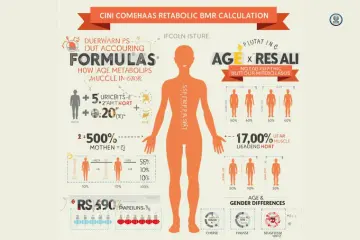
General trends show BMR gradually declining with age, partly linked to changes in body composition, though the effect is not identical for everyone. See why BMR slows with age for more on the mechanics behind this, and our piece on how age and gender affect BMR for the fuller picture.
Hormones and thyroid function
Thyroid hormones play a basic role in regulating metabolic rate, and certain medical conditions can genuinely affect energy expenditure. A calculator cannot diagnose anything, so avoid drawing medical conclusions from a number on a screen. If your energy levels or weight shift unexpectedly, our guide on why BMR changes suddenly covers the medical causes worth knowing about.
Pregnancy and breastfeeding
Standard BMR calculations were not built with pregnancy or breastfeeding in mind, so they may not offer personalised guidance during these stages. Speaking with a GP or midwife is the sensible route here.
Illness and medication
Some conditions and medicines can affect weight and energy needs in ways a generic formula simply cannot account for. If something feels off, a GP visit is worth more than another online calculation.
How to Calculate TDEE After Finding Your BMR
This is where most readers really want to end up. People calculate BMR because they want to know how many calories they actually need in a normal day, and BMR is only one piece of that puzzle.
What is total daily energy expenditure?
TDEE combines your BMR or resting energy expenditure with physical activity, structured exercise, non-exercise activity thermogenesis (NEAT), and the thermic effect of food. Our dedicated TDEE calculator pulls all of this together automatically once you have your BMR.
Apply an activity factor
| Activity level | Typical description | Example |
|---|---|---|
| Sedentary | Little planned exercise | Desk job, limited movement |
| Lightly active | Some movement or light exercise | Regular walking |
| Moderately active | Regular exercise | Training several times weekly |
| Very active | Frequent hard exercise | High training load |
| Extremely active | Very high daily demand | Physical job plus intense training |
Why activity multipliers are only estimates
“Moderately active” can mean quite different things to different people. A single gym session does not automatically make someone highly active, since daily steps and job demands matter just as much, and NEAT can vary enormously from person to person. A basic step calculator or a fitness tracker like this one can help fill in that gap with real data rather than guesswork. It is also worth understanding the split between BMR and active calories, and how the picture changes when you compare BMR for athletes vs sedentary people.
Real-life UK example
Picture a 35 year old office worker in Leeds who walks to the train station, sits at a desk most of the day, then attends three evening gym sessions each week. Their genuine activity level may differ quite a bit from someone who trains three times weekly but drives everywhere and barely moves outside the gym. Context matters more than the multiplier label alone.
How to Use BMR for Weight Loss or Weight Gain
This section needs to stay practical but careful. BMR can absolutely help create a sensible starting point for calorie planning, but it should never be used to justify extreme restriction. The NHS explains that calorie balance, activity levels and sustainable habits all matter together in weight management.
Using BMR to support weight loss
Estimate your BMR, estimate your TDEE, create a sensible calorie deficit, track your progress over time, and adjust gradually rather than drastically. Our guide on using BMR for weight loss walks through this process step by step, and our calorie deficit calculator can help you set a sensible target. Weighing your portions with a set of digital kitchen scales like these makes tracking far more accurate than eyeballing meals. For everyday food swaps, our list of low calorie British snacks and our guide on how to eat based on your BMR are both handy starting points.
Using BMR to support weight gain
Start from your estimated daily needs, then add calories gradually rather than all at once. Prioritise balanced, nutrient-rich foods, and include strength training where appropriate, perhaps with a simple set of resistance equipment like this, to support muscle growth alongside the extra fuel.
BMR is not your calorie target
This deserves its own warning: never set your daily food intake equal to your BMR. You also need energy for movement, digestion and exercise, so your genuine daily needs are almost always higher than BMR alone suggests.
UK health context
The NHS uses average reference figures of around 2,000 kcal per day for women and 2,500 kcal per day for men. These are population averages rather than personalised BMR targets, since individual needs vary with age, body size and activity levels.
Common Mistakes When Calculating BMR
The formula itself is not difficult, but small slip ups can produce a very different result. I will admit there is a little humour here too, since accidentally entering 170 inches instead of 170 centimetres would certainly create an interesting metabolic estimate.
Mixing pounds and kilograms
To convert pounds to kilograms, divide by 2.2046. Skipping this step is one of the most common errors in home calculations, so a dual-unit digital scale like this one can remove the guesswork entirely.
Mixing inches and centimetres
Metric formulas need centimetres, so multiply your height in inches by 2.54 to convert correctly before plugging it into the equation.
Using the wrong equation
Never mix constants from different formulas. Pick one complete equation and use every part of it consistently.
Confusing BMR with TDEE
BMR is your resting estimate, while TDEE is the broader daily energy estimate that includes movement. Mixing the two up leads to eating far less than you actually need.
Treating the result as exact
Every predictive equation carries a margin of error, so interpret your result sensibly rather than treating it as gospel. Our full rundown of common BMR calculation mistakes covers several more traps worth avoiding.
Recalculating every day
Daily fluctuations in weight do not require constant recalculation. Our article on when to recalculate your BMR explains when it genuinely makes sense to run the numbers again, usually after a meaningful change in weight or circumstances.
How to Use a BMR Calculator Correctly
A good BMR calculator should make the maths easier, not hide the science behind it. You should always know what information you are entering, which formula is running behind the scenes, and what the result actually means.
Enter accurate personal information
Use your current weight, double check your height, enter your correct age, and select the sex input that matches the formula being used.
Check the calculator’s formula
Look out for Mifflin-St Jeor, Harris-Benedict, Katch-McArdle, or any other named equation, and understand which one you are working with. Our breakdown of BMR calculator alternatives compares several options side by side.
Read the result in context
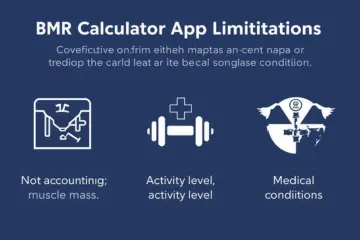
Ask yourself whether the figure is BMR, RMR or TDEE, and whether an activity multiplier has already been applied. It is worth reading our notes on BMR calculator app limitations before trusting any single app completely.
Use the result as a starting point
Record your result, estimate your daily needs, track your real-world trend, review after several weeks, and make small changes rather than dramatic ones. A simple food diary alongside a reliable digital scale like this one gives you far more useful data than the number alone.
Worldwide Expert Advice on Calculating BMR
Adding a professional perspective strengthens the trustworthiness of any BMR discussion, so it is worth leaning on established, verifiable guidance rather than invented quotes.
Expert view on predictive BMR equations
Registered dietitians and exercise physiologists generally agree that predictive equations are useful screening tools, not substitutes for direct metabolic measurement such as indirect calorimetry. The British Dietetic Association, the professional body for UK dietitians, consistently emphasises that any calorie estimate should be interpreted alongside a person’s individual health history, activity pattern and goals rather than taken as an isolated number.
Expert advice for everyday BMR calculator users
The consistent themes across professional nutrition guidance are straightforward: understand which equation you are using, keep your measurements consistent, avoid chasing false precision down to the last calorie, and pay attention to longer-term trends rather than single readings.
Recommended expert reference
For anything beyond general estimation, particularly medical or clinical concerns, speak with a registered dietitian through the British Dietetic Association or your GP. Our about page outlines the qualifications behind our own editorial team, and our editorial policy explains how we fact check content like this.
A Practical BMR Calculation Example for UK Readers
Let’s bring everything together in one realistic scenario, so you finish this section thinking “right, I can actually do this myself.”
The fictional person
A 35 year old woman, 70 kg, 170 cm tall, working an office-based job, walking regularly and exercising three times a week.
Calculate BMR
Using Mifflin-St Jeor: (10 x 70) + (6.25 x 170) minus (5 x 35) minus 161, giving an estimated BMR of 1,426.5 kcal per day.
Estimate TDEE
Applying a moderately active multiplier of roughly 1.55 gives an estimated TDEE of around 2,211 kcal per day. This remains an estimate, not a precise measurement, and our daily calorie intake calculator can help refine it further with more personal detail.
Interpret the result
The BMR figure reflects resting energy needs alone, while the TDEE figure reflects a fuller picture of daily energy use. Neither number guarantees future weight change on its own, since real life involves far more variables than any single formula.
What to do next
Track typical food intake, monitor body-weight trends using a set of accurate scales like these, consider your genuine activity levels, review progress after several weeks, and seek professional support when needed.
Frequently Asked Questions About Calculating BMR
What is the easiest way to calculate BMR?
An online BMR calculator using a recognised equation is the quickest method, while working through the manual formula helps you understand the science behind the number.
Which BMR formula is most accurate?
No predictive equation is perfect for everyone. Mifflin-St Jeor is a widely used and well-researched option, but individual accuracy still varies from person to person.
Is BMR the same as the calories I should eat?
No. BMR estimates resting energy needs only. Daily calorie needs are generally higher, since they include normal activity and other forms of energy expenditure.
Can I calculate BMR without knowing my body-fat percentage?
Yes. Mifflin-St Jeor does not require body-fat percentage, which is part of why it remains so popular for general use.
Why is my BMR different from my friend’s?
Differences in age, height, weight, sex, body composition and individual physiology all contribute to different results, even between people who look fairly similar on paper.
Can BMR change over time?
Yes. Changes in body weight, body composition, age and health can all affect your estimated or measured resting energy expenditure over months and years.
Should I eat below my BMR to lose weight?
Generally, no. BMR should not be treated as a simple calorie floor or target. Weight-loss plans should consider total energy needs and individual circumstances, ideally with guidance from a professional such as those referenced through our FAQs page.
How often should I recalculate BMR?
Recalculate after meaningful changes in weight or body composition rather than constantly chasing small daily fluctuations. Weighing in weekly on a consistent scale like this one makes it far easier to spot a genuine trend.
Can a BMR calculator diagnose a slow metabolism?
No. A calculator only provides an estimate. It cannot diagnose a medical condition or confirm any metabolic disorder, so speak with a GP if you have genuine concerns. Our guide to common BMR myths clears up several related misconceptions, and our list of signs of low or high BMR explains what genuine warning signs actually look like.
Sources, Evidence and Further Reading
Scientific sources
The original Mifflin-St Jeor research remains especially useful for understanding how the equation was developed and its intended purpose as a predictive method. Peer-reviewed research comparing predictive equations with measured resting energy expenditure offers further context on where these formulas hold up well and where they fall short.
UK health guidance
NHS calorie guidance, NHS weight-management advice and NHS healthy eating guidance are all useful for putting personal calorie estimates into a wider, practical health context. They remind us that average calorie figures are population level guidance, not a substitute for an individual’s own BMR calculation.
Final Recommendation
After years of working through these formulas with real people, my honest advice is to treat your BMR as a helpful starting point, never as a strict rulebook. Calculate it properly using an equation like Mifflin-St Jeor, build your TDEE on top of it, and then let your own results over several weeks guide any changes. I have seen far too many people get discouraged chasing an exact number that no formula can truly promise.
Keep your measurements consistent using something dependable like this digital scale, weigh yourself sensibly rather than obsessively, and remember that learning how to calculate BMR is simply the first step toward understanding your own body a little better. Beginners in particular benefit from our notes on why tracking BMR matters early on, and once your basics are sorted, our guide on how to increase BMR naturally is a sensible next step. If you take one thing from this guide, let it be patience with the process rather than perfection with the maths.

Ehatasamul Alom is a dedicated health-tech enthusiast and the co-founder of BMRCalculator. With a passion for metabolic science, he focuses on providing accurate health data for the UK community. Ehatasamul ensures that every tool and guide aligns with NHS standards and public health research. His mission is to simplify complex biological data, helping British residents make informed decisions about their fitness, calorie needs, and long-term wellness. When not analyzing health trends, he explores the latest innovations in wearable fitness technology.