The first time I looked at a blood test, one line stopped me. It said “eGFR,” and I had no idea how the lab got that number. I wanted to know how to calculate GFR with creatinine myself, so I could understand what the report was telling me.
It turned out to be simpler than it looks. You need a creatinine value, an age, and a few constants. In this guide, I’ll show you the formula, walk through real examples, and explain what the result means. I’ll also cover the traps that can make a good number look bad, especially if you lift weights or take supplements.
How to Calculate GFR With Creatinine: The Quick Version
To calculate GFR with creatinine, you plug your serum creatinine, age, and sex into an equation. Most labs now use the CKD-EPI 2021 equation. It gives you an estimated GFR, written as eGFR.
An estimate is the key word. It’s a smart guess from a blood marker, not a direct measurement of your kidneys.
GFR, eGFR, and Creatinine: What’s the Difference?
GFR stands for glomerular filtration rate. It describes how much blood your kidneys filter each minute. Measuring it directly takes special tests that most people never get.
Creatinine is a waste product from muscle. Your kidneys clear it from your blood. When the creatinine level rises, filtering may be slowing. The eGFR turns that creatinine number into an estimate of GFR.
Why This Number Matters (Especially If You Train)
Kidney function matters for everyone. But it matters in a few extra ways if you follow high-protein diets, take supplements, or track your body closely.
Muscle makes creatinine. So a muscular person can have a higher creatinine without any kidney problem. I’ll explain that more later, because it’s the most common source of confusion I see.
Which Equation Should You Use?
Several equations exist. Each one was built for a certain purpose.
Here’s a quick comparison so you can pick the right one for your situation.
| Equation | Inputs Needed | Common Use |
|---|---|---|
| CKD-EPI 2021 | Creatinine, age, sex | Standard lab eGFR for adults |
| Cockcroft-Gault | Creatinine, age, weight, sex | Estimating drug dosing |
| MDRD | Creatinine, age, sex | Older lab reports |
For most people asking how to calculate GFR with creatinine, CKD-EPI 2021 is the right answer. The National Kidney Foundation lists it as the recommended method for adults, and it doesn’t use race as a variable.
CKD-EPI 2021: The One Most Labs Use
This is the equation behind the eGFR on most adult lab reports today. It uses creatinine, age, and sex only. You’ll find the full formula in the steps below.
Check your own lab report, though. Some labs still use older equations, so the method listed on your report matters.
Cockcroft-Gault: Why It Still Shows Up
Cockcroft-Gault is an older formula. It adds body weight and gives a result in mL/min, without adjusting for body size.
Doctors and pharmacists still use it for some drug dosing. I’ll show a short example later in this article.
What Happened to the Race Coefficient?
The 2009 CKD-EPI equation included a coefficient for race. The 2021 update removed it. The change was published by Inker and colleagues in the New England Journal of Medicine in 2021.
If you see an old online calculator with a “Black” or “non-Black” checkbox, it’s probably using the 2009 version. Use a calculator built on the 2021 equation instead.
What You Need Before You Start
You don’t need much to learn how to calculate GFR with creatinine. But getting the inputs right is half the work.
A wrong unit or a wrong age will wreck your result, no matter how careful your math is. You need three things: your serum creatinine from a blood test report, your age in years on the test date, and the sex used by the equation (female or male).
Get Your Creatinine Units Right
In the United States, labs usually report creatinine in mg/dL. Many other countries use µmol/L. The CKD-EPI equation expects mg/dL.
To convert µmol/L to mg/dL, divide by 88.4. For example, 88 µmol/L is about 1.0 mg/dL. Check this against a current reference if you’re unsure. I got this wrong once and got a number that looked absurd.
Use Standardized Creatinine Values
The equation assumes your lab uses a standardized creatinine method. Most modern labs do. If your report comes from an unusual source, ask the lab.
You don’t need to do anything special here. Just know that the formula depends on reliable lab data.
How to Calculate GFR With Creatinine Step by Step
Here’s the full CKD-EPI 2021 equation for how to calculate GFR with creatinine. It looks scary, so I’ll break it into pieces.
eGFR = 142 × min(Scr/κ, 1)^α × max(Scr/κ, 1)^−1.200 × 0.9938^Age × 1.012 (if female)
The formula below matches the version published by the National Kidney Foundation and the NIDDK. Still, verify it against one of those sources before using it for any medical decision.
| Term | Meaning |
|---|---|
| Scr | Serum creatinine in mg/dL |
| κ (kappa) | 0.7 for females, 0.9 for males |
| α (alpha) | −0.241 for females, −0.302 for males |
| min / max | Pick the smaller or larger of Scr/κ and 1 |
Step 1: Convert Creatinine to mg/dL
If your report already shows mg/dL, skip this step. If it shows µmol/L, divide by 88.4.
Write down the result. You’ll use it again in the next steps.
Step 2: Pick Your κ and α Values
Choose the constants based on sex. Females use κ = 0.7 and α = −0.241. Males use κ = 0.9 and α = −0.302.
I keep these on a sticky note. I used to look them up every time, and that wasted a lot of minutes.
Step 3: Divide Creatinine by κ
Take your creatinine and divide it by κ. This gives you a ratio.
For example, a woman with a creatinine of 1.0 mg/dL gets 1.0 ÷ 0.7, which is about 1.43.
Step 4: Apply the Min and Max Rules
This is the step that confused me most. You compare the ratio to 1. Then you use two separate terms.
If the ratio is above 1, the min term becomes 1, and the max term uses your ratio. If the ratio is below 1, the min term uses your ratio, and the max term becomes 1. Any number raised to a power with a base of 1 stays 1, so one of the two terms always drops out.
Step 5: Multiply Everything Together
Multiply 142 by the min term, the max term, and 0.9938 raised to your age. If you’re female, multiply by 1.012 as well.
The answer is your eGFR in mL/min/1.73 m².
A Full Worked Example: Woman, Age 50, Creatinine 1.0
Let’s do it together. A 50-year-old woman has a creatinine of 1.0 mg/dL.
The ratio is 1.0 ÷ 0.7, or about 1.43. That’s above 1, so the min term equals 1. The max term is 1.43 raised to −1.200, which is about 0.652. Then 0.9938 raised to 50 is about 0.733.
Now multiply: 142 × 1 × 0.652 × 0.733 × 1.012. The result is about 69 mL/min/1.73 m².
A Second Example: Man, Age 50, Creatinine 1.0
Now try a man with the same age and creatinine. The ratio is 1.0 ÷ 0.9, or about 1.11.
The max term is 1.11 raised to −1.200, which is about 0.881. Multiply 142 × 0.881 × 0.733. You get about 92.
Same creatinine, very different eGFR. That’s because the equation expects men to have more muscle and higher baseline creatinine.
More Examples to Check Your Math
Use these to test your own calculation. I computed them with the CKD-EPI 2021 equation and rounded to whole numbers.
| Person | Creatinine (mg/dL) | Estimated eGFR |
|---|---|---|
| Woman, 50 | 1.0 | About 69 |
| Man, 50 | 1.0 | About 92 |
| Man, 70 | 1.0 | About 81 |
| Woman, 45 | 1.2 | About 57 |
| Man, 70 | 1.6 | About 46 |
Rounding can change the last digit. If you’re within one or two points, your math is probably fine.
The Spreadsheet Shortcut
Doing this by hand is a good way to understand it. For regular use, a spreadsheet saves time.
Put creatinine in cell B2 and age in cell A2. For a woman, use this formula:
=142*MIN(B2/0.7,1)^-0.241*MAX(B2/0.7,1)^-1.2*0.9938^A2*1.012For a man, use this one:
=142*MIN(B2/0.9,1)^-0.302*MAX(B2/0.9,1)^-1.2*0.9938^A2Test it with the examples above before trusting it.
How to Calculate GFR With Creatinine Using Cockcroft-Gault
Sometimes you need a different number. Drug dosing is the usual reason, and a pharmacist may ask for creatinine clearance.
The formula uses weight in kilograms and creatinine in mg/dL.
CrCl = [(140 − age) × weight] ÷ (72 × creatinine), then multiply by 0.85 if female
Here’s an example. A 50-year-old woman weighs 70 kg and has a creatinine of 1.0. That’s (90 × 70) ÷ 72, which is 87.5. Multiply by 0.85 and you get about 74 mL/min.
Notice that this isn’t the same as her CKD-EPI result of about 69. The two equations measure slightly different things. Don’t swap them. Use whichever one your clinician or drug label asks for.
What Does Your eGFR Number Mean?
Once you finish how to calculate GFR with creatinine, the next question is what the number means. The KDIGO guideline groups eGFR into stages.
These groups help doctors describe kidney function. They don’t diagnose anything by themselves.
| Stage | eGFR (mL/min/1.73 m²) | General Description |
|---|---|---|
| G1 | 90 or higher | Normal or high |
| G2 | 60 to 89 | Mildly decreased |
| G3a | 45 to 59 | Mild to moderate decrease |
| G3b | 30 to 44 | Moderate to severe decrease |
| G4 | 15 to 29 | Severely decreased |
| G5 | Below 15 | Kidney failure range |
These cutoffs match the KDIGO staging I’m familiar with. Confirm them against the current guideline if you’re using them for anything important.
One Number Is Not a Diagnosis
A single low reading doesn’t mean chronic kidney disease. As far as I know, doctors generally look for reduced function lasting more than three months. They often check urine for albumin, too.
So if your first result looks low, don’t panic. Repeat testing and a clinician’s review matter far more than one calculation.
Normal Creatinine Ranges Vary
Many labs list a normal range around 0.6 to 1.1 mg/dL for women and 0.7 to 1.3 mg/dL for men. Ranges differ by lab, so use the one printed on your report.
Also, a creatinine inside the “normal” range can still match a reduced eGFR in an older adult. That surprised me when I first ran the numbers.
Why Your Creatinine Can Mislead You
This is the part most calculators skip. The equation assumes an average amount of muscle. If you aren’t average, the estimate can drift.
Here are common situations that can change creatinine without changing true kidney function.
| Situation | Possible Effect on Creatinine |
|---|---|
| High muscle mass | Higher baseline creatinine |
| Creatine supplements | Can raise creatinine modestly |
| Large cooked meat meal | Can raise it temporarily |
| Dehydration | Can raise it temporarily |
| Very low muscle mass | Lower creatinine, may hide a problem |
| Some medicines (such as trimethoprim or cimetidine) | Can raise it without lowering true GFR |
Effects vary by person. Treat this table as a list of things to mention to your clinician, not a set of rules.
Muscle Mass and the Gym Crowd
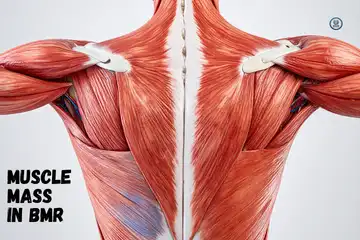
Muscle produces creatinine. So a big, muscular person may show a higher creatinine and a lower eGFR than their kidneys really deserve.
I’ve seen this confusion often in fitness circles. The equation can’t see your muscle. It only sees your blood number.
Creatine Supplements and Your Lab Results
Creatine is a popular supplement. It’s converted to creatinine in the body. Research suggests it can raise serum creatinine a little without harming kidney function in healthy people. The evidence isn’t settled for everyone, though.
If you take creatine, tell your doctor before a blood test. Ask whether you should pause it first. Don’t stop prescribed medicine on your own.
When Cystatin C Can Help
Cystatin C is another blood marker. It doesn’t depend on muscle the way creatinine does. There’s a CKD-EPI 2021 equation that uses it, either alone or combined with creatinine.
Guidelines suggest it can help when creatinine seems unreliable. Ask your doctor if that might apply to you.
Mistakes I Made When I Calculated GFR by Hand
Learning how to calculate GFR with creatinine by hand taught me a lot. My first attempts gave nonsense numbers. A few errors repeated until I built a checklist.
These are the ones I’d watch for.
| Mistake | Better Approach |
|---|---|
| Using µmol/L in the formula | Divide by 88.4 to get mg/dL first |
| Mixing up male and female constants | Write κ and α on a sticky note |
| Applying both min and max with the same ratio | Remember one term always becomes 1 |
| Typing 0.9938 × age instead of 0.9938 to the power of age | Use the exponent button or a spreadsheet |
| Using an old calculator with a race box | Choose a 2021 race-free tool |
The exponent mistake was mine. I multiplied instead of raising to a power, and my eGFR came out at 0.4. That should have been my first clue.
Sanity Check Your Result
Before you trust any answer, ask whether it makes sense. Adult eGFR values are usually in the tens or hundreds, not decimals.
Compare your result to the table of examples above. If you’re far off, recheck your units first.
When eGFR Isn’t Reliable
The method for how to calculate GFR with creatinine works best for stable kidney function in adults. It’s less reliable in some cases.
If any of these apply, talk to a clinician before relying on a calculated number.
Sudden Kidney Injury
Creatinine takes time to rise. If your kidneys change quickly, the equation can lag behind reality. That’s why it isn’t meant for acute kidney injury.
Pregnancy
Pregnancy changes kidney function and creatinine levels. Standard equations aren’t designed for it.
Children
The 2021 CKD-EPI equation is for adults. Children use different methods, such as the bedside Schwartz equation. Don’t use an adult formula for a child.
Very Large or Very Small Bodies
The eGFR is adjusted to a standard body size of 1.73 m². For people far from that size, clinicians sometimes adjust the result. This matters for drug dosing in particular.
How to Calculate GFR With Creatinine More Accurately: Prepare for the Test
The formula can only be as good as the blood test behind it. A few simple habits can make your creatinine value more reliable.
I learned this after comparing results from different days. The same person can get slightly different numbers depending on food, hydration, and training.
Timing, Hydration, and Training
Dehydration can raise creatinine for a while. A very hard workout the day before may also nudge it up in some people. Your doctor or lab may give you specific prep instructions, so follow those first.
If you have no instructions, keep things normal and consistent. Test under similar conditions each time, so you can compare results fairly.
Tell Your Doctor About Supplements and Medicines
Mention creatine, protein powders, and any prescription or over-the-counter medicines before your blood draw. Some of them can change creatinine or affect the kidneys.
It’s a quick conversation, and it can prevent a confusing result. Never stop a prescribed medicine on your own.
Look at Trends, Not Single Results
One eGFR value gives you a snapshot. Several results over months give you a story.
I keep a simple log with the date, creatinine, and eGFR. If the numbers stay steady, that’s reassuring. If they keep sliding, that’s the cue to talk with a clinician.
Everyday Habits That Support Healthy Kidneys
Math tells you where you stand. Habits shape where you go next.
I’m not a doctor, and your situation may differ, so treat these as general points to discuss with a professional.
Blood Pressure and Blood Sugar
High blood pressure and diabetes are widely recognized as major risk factors for kidney problems. Keeping them in a healthy range is one of the most practical things you can do.
Regular checkups make this easier. Many people don’t feel anything until numbers drift well off target.
Pain Relievers and Over-the-Counter Medicines
Frequent use of some pain relievers, such as NSAIDs, can be hard on the kidneys in certain people. Ask your pharmacist or doctor what’s safe for you.
Protein, Supplements, and Your Kidneys
This one comes up a lot in fitness circles. For people with healthy kidneys, the evidence on high-protein diets harming them is mixed, and I’m not certain where the research stands today.
If you already have reduced kidney function, protein advice is often different. Ask your doctor or a registered dietitian before changing your diet.
Quick Answers to Common Questions
Here are short answers to questions people often ask about how to calculate GFR with creatinine.
What Is the Easiest Way to Calculate GFR With Creatinine?
Use a calculator based on the CKD-EPI 2021 equation. Enter your creatinine in mg/dL, your age, and your sex. Then cross-check the result by hand once, so you understand it.
What Is a Normal GFR?
A GFR of 90 or higher is generally treated as normal range. GFR also tends to decline with age, so a slightly lower number in an older adult isn’t always a concern. Your doctor can interpret it in context.
Is It Worth Learning How to Calculate GFR With Creatinine by Hand?
Yes, once. Doing it by hand shows you which inputs drive the result. After that, a calculator or spreadsheet is faster and less error-prone.
Can I Calculate GFR Without My Age?
No. Age is a required input in the CKD-EPI equation. The result changes with every year of age.
Does an eGFR of 60 Mean Kidney Disease?
Not by itself. Doctors usually want more evidence, such as repeat results over time and a urine test. A single value near the line is a reason to follow up, not a diagnosis.
Is My Online Calculator Accurate?
It can be, if it uses the 2021 equation and the right units. Test it against the example table above. If your calculator disagrees by more than a point or two, try another tool.
Final Thoughts
Here’s what I learned. Knowing how to calculate GFR with creatinine is easy once you break the equation into five steps. The hard part is interpreting the number. Units, muscle mass, supplements, and hydration can all change the result, so context matters more than math.
My honest advice is to use the calculation to understand your lab report, not to diagnose yourself. Do the math once by hand. Then use a trusted calculator for the rest. If your number looks low, repeat the test and talk to your doctor. This article is educational, not medical advice, so please verify the formula and cutoffs against a current source such as the National Kidney Foundation or NIDDK.

Ehatasamul Alom is a dedicated health-tech enthusiast and the co-founder of BMRCalculator. With a passion for metabolic science, he focuses on providing accurate health data for the UK community. Ehatasamul ensures that every tool and guide aligns with NHS standards and public health research. His mission is to simplify complex biological data, helping British residents make informed decisions about their fitness, calorie needs, and long-term wellness. When not analyzing health trends, he explores the latest innovations in wearable fitness technology.