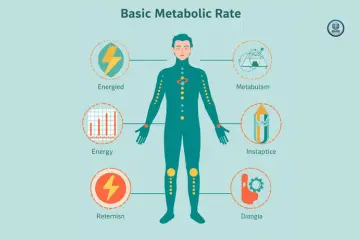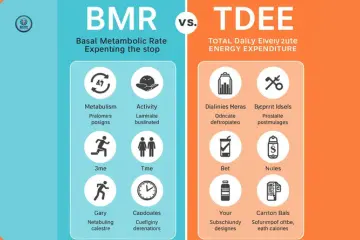

Picture sitting on the sofa in Manchester on a cold Sunday morning, mug of tea in hand, doing absolutely nothing that looks like exercise. Your heart is still beating, your lungs are still working, and your brain is still busy behind the scenes. Your body is quietly using energy the whole time. Understanding how BMR is different from metabolism starts right here, with that quiet, invisible effort. Metabolism is the big picture, the entire system your body runs on, while BMR is just one measurement within that wider picture, focused purely on rest. BMR relates to the energy your body needs for basic functions while still, whereas metabolism covers a much wider range of processes involved in using and managing energy every single day.
BMR vs Metabolism: What Is the Difference?
Here is the direct answer readers usually want first. Think of metabolism as the whole engine system, while BMR is simply the energy demand of keeping that engine ticking over at idle. It is not a perfect scientific analogy, but it is an easy one to remember on a busy Tuesday.
What is metabolism?
Metabolism is the collection of chemical processes that keep your body alive and functioning. It covers turning food into usable energy, building and repairing tissues, breaking down nutrients, storing energy, supporting cells and organs, and generally managing energy use throughout the body every hour of the day.
What is BMR?
Basal Metabolic Rate is an estimate of the energy required to support essential functions while your body sits in a basal resting state. This includes breathing, circulation, maintaining body temperature, supporting your organs and basic cellular activity, all things your BMR calculator tries to capture in one tidy number.
The simplest way to remember the difference
Metabolism is the complete process of how the body handles energy. BMR is an estimate of how much energy the body needs at rest for basic functions. Keep that single sentence in your back pocket and most of the confusion clears up.
Is BMR the Same as Metabolism?
This is one of the most searched questions in this space, and the honest answer is no, though the two ideas are genuinely related.
Why people confuse BMR and metabolism
Phrases like “I have a slow metabolism”, “my BMR is low”, “I need to boost my metabolism” or “my metabolism burns 1,500 calories” get thrown around loosely online. These phrases can mislead people into thinking BMR and metabolism are one and the same, when BMR is really just a slice of the bigger picture. Our guide on BMR vs metabolism tackles this exact confusion in more depth.
BMR is one component of energy expenditure
The wider picture includes BMR, physical activity, exercise, NEAT and the thermic effect of food. Each one adds up to something bigger than BMR alone could ever explain.
Quick comparison table
This table is worth bookmarking, since it clears up the terminology faster than any paragraph could manage.
| Term | What it means | Example |
|---|---|---|
| Metabolism | All the body’s chemical processes linked to life and energy | Using nutrients to fuel cells |
| BMR | Energy needed for basic functions at rest | Breathing and circulation |
| RMR | Energy used while resting under less strict conditions | Resting quietly |
| TDEE | Total energy used across a typical day | BMR plus movement plus food processing |
BMR and RMR are closely related but measured under different conditions, while TDEE represents a much broader daily energy estimate. Our BMR vs TDEE guide expands on that last relationship if you want the fuller story.
What Does Your Metabolism Actually Do?
Metabolism is not simply a “fat-burning switch” waiting to be flicked on. It is a constant network of processes that keeps you alive, whether you notice it or not.
Anabolism: Building and storing
Anabolism describes how the body uses smaller molecules to build larger structures. This covers building muscle proteins, repairing tissue, creating new cells and storing energy for later use.
Catabolism: Breaking down and releasing
Catabolism works the other way, breaking larger molecules into smaller components. This includes breaking down carbohydrates, releasing stored energy and breaking down fat stores when your body genuinely needs the fuel.
How anabolism and catabolism work together
Metabolism genuinely involves both processes happening constantly, side by side, rather than one switching off while the other runs. Your body shifts the balance between building and breaking down depending on whether you have just eaten, whether you are exercising, or whether you are simply asleep. Understanding this constant back and forth is part of why our guide on BMR for athletes vs sedentary people shows such different results between very different lifestyles.
A simple food-to-energy example
Picture eating a bowl of porridge with milk and berries on a chilly morning, weighed out on a simple kitchen scale like this one if you like to keep an eye on portions. Your body digests the food, absorbs the nutrients, and uses or stores that energy depending on what you need right then. That entire story, start to finish, is metabolism in action.
What Does BMR Actually Measure?
Anyone using a BMR calculator needs to understand exactly what their result represents. The number is genuinely useful, but it is not a complete measurement of everything your body does with energy across a day.
The basic functions included in BMR
BMR covers heart function, breathing, brain activity, temperature regulation, organ function and cellular maintenance, all the quiet background tasks your body handles without asking permission. Monitoring your resting heart rate with a fitness tracker like this one can give you a small window into some of this activity, though it will never capture the full picture on its own.
What BMR does not include
BMR does not represent your complete daily calorie expenditure. It does not fully account for walking to work, running, cycling, cleaning the house, gardening, gym sessions or digesting food. Our piece on the limitations of BMR calculators covers this gap in more detail.
Why a BMR calculator gives only an estimate
Online calculators use predictive equations based on factors such as age, sex, height and weight. Actual BMR measurement requires controlled laboratory conditions, so calculator results should be treated as estimates rather than exact personal measurements, a point our guide on when not to rely on BMR alone explains well.
How BMR Fits Into Your Total Daily Energy Expenditure
This is the bridge between BMR and everyday life. Your body does far more across 24 hours than simply keeping your heart beating.
BMR
BMR forms the resting baseline, the floor beneath everything else you do during the day.
Thermic effect of food
This is the energy your body spends digesting, absorbing and processing whatever you have eaten.
Exercise activity
Running, swimming, cycling, gym training and sport all sit here, adding deliberate, planned effort on top of your resting baseline.
NEAT: The movement you barely notice
Non-Exercise Activity Thermogenesis covers walking around the office, taking the stairs, shopping, gardening, housework and even fidgeting. It adds up more than most people realise.
How the pieces fit together
BMR plus the thermic effect of food plus physical activity plus NEAT together form your broader daily energy expenditure. Exact formulas and proportions vary between people and should never be treated as fixed universal numbers. Mayo Clinic similarly describes daily energy use as involving basal needs, food processing and movement together.
BMR vs RMR: Are They Really Different?
Readers researching BMR often stumble across RMR too, and the terms are close enough to genuinely cause confusion.
What is BMR?
BMR is measured under stricter conditions, typically requiring a fasted state and complete physical rest.
What is RMR?
Resting Metabolic Rate is a related measure of resting energy use, but under less strict conditions than true BMR.
Why RMR may be slightly higher
RMR testing can allow for a wider range of low-effort conditions, which sometimes nudges the figure up slightly compared with a stricter BMR reading.
BMR vs RMR table
Here is a side by side comparison worth keeping handy.
| Feature | BMR | RMR |
|---|---|---|
| Full name | Basal Metabolic Rate | Resting Metabolic Rate |
| Measures | Basic energy needs at rest | Resting energy needs |
| Testing conditions | More strict | Less strict |
| Everyday use | Often estimated with equations | Common in practical settings |
| Relationship | Baseline concept | Closely related measure |
Cleveland Clinic notes that BMR and RMR are similar but not identical, with RMR allowing for low-effort activities that are excluded from stricter BMR conditions. Our own comparison of BMR vs AMR is worth a look too if you want the full family of related terms in one place.
BMR vs Metabolic Rate: What Does “Fast Metabolism” Mean?
Here is a common myth worth tackling directly. Someone who eats a large lunch and stays slim may claim to have a “fast metabolism”, but the reality is genuinely more complex than that.
What people mean by a fast metabolism
The phrase may refer to higher energy expenditure, higher activity levels, greater body size, more lean mass, or simply differences in appetite and food intake between individuals.
What people mean by a slow metabolism
This may describe lower energy expenditure, lower activity, changes in body composition, or plain individual differences that have nothing to do with anything being “wrong”.
Why “slow metabolism” is often oversimplified
Weight is affected by many factors, including food intake, physical activity, genetics, hormones, sleep, stress, medication and body composition. Mayo Clinic notes that metabolism influences energy needs, but it is not usually the sole explanation for weight gain. Our list of common BMR myths covers several more misconceptions in this exact space.
What Factors Affect Your BMR?
BMR is genuinely personal. Two people can enter the same café, order the same tea, and still have quite different energy needs because their bodies are simply different.
Body size
Larger bodies generally require more energy to maintain, since there is more tissue for the body to support and repair.
Lean muscle mass
Body composition matters here, since muscle tissue is more metabolically active than fat. Our guide on the role of muscle mass in BMR explains why this genuinely counts.
Age
Changes in body composition and muscle mass can affect energy needs as people age, which our article on why BMR slows with age explores in more depth, alongside our related piece on age affecting BMR and sarcopenia. This is also part of why we recommend recalculating your BMR after any meaningful change in weight or years.
Sex
Many predictive equations use sex as an input because average body composition genuinely differs between groups.
Genetics
Individual variation plays a role here too, though genetics do not determine absolutely everything about your energy needs.
Hormonal and health factors
Thyroid function, hormonal changes and certain medical conditions can all influence energy expenditure in ways worth understanding rather than guessing at.
BMR factors table
Here is a quick summary of everything covered above in one place.
| Factor | Possible influence on BMR |
|---|---|
| Body size | Larger bodies generally need more energy |
| Lean mass | More lean tissue can increase resting energy needs |
| Age | Energy needs may change with age |
| Sex | Used in many BMR equations |
| Genetics | Contributes to individual variation |
| Health and hormones | Some conditions can affect energy expenditure |
How Do BMR Calculators Estimate Your Metabolism?

This section connects the educational content to the actual tool. You should understand exactly what you are calculating before pressing “Calculate”.
What information does a BMR calculator need?
Typically age, sex, height and weight, the same handful of inputs used across our men’s BMR calculator and women’s BMR calculator.
The Mifflin-St Jeor equation
This is a commonly used predictive equation. It estimates BMR rather than directly measuring it, which is an important distinction to hold onto.
The Harris-Benedict equation
This is another established predictive approach, though it was built on older data than Mifflin-St Jeor.
Why two BMR calculators may give different results
Different equations, different assumptions, rounding, data entry errors and BMR versus RMR calculations can all explain why two tools disagree. Our article on BMR calculator alternatives compares several options side by side, and our notes on BMR calculator app limitations are worth reading before trusting any single app fully. A set of accurate bathroom scales like these at least keeps your weight input consistent across whichever tool you choose.
Calculator result vs laboratory measurement
A calculator gives an estimate. Indirect calorimetry can measure resting energy expenditure under genuinely controlled conditions, though this equipment sits well outside what most people need for everyday planning.
Can You Use BMR to Understand Your Metabolism?
Yes, but only to a point. This is where readers should stop expecting one number to explain their entire metabolism.
What a BMR result can tell you
It can help you estimate baseline energy needs, understand resting energy expenditure, compare changes over time, and start a sensible calorie-planning discussion.
What a BMR result cannot tell you
It cannot fully tell you how many calories you burn in a whole day, exactly how quickly you will lose weight, whether you have a medical condition, whether your metabolism is “healthy”, or how much you should eat without considering activity. Our guide on how your BMR calculator works explains these boundaries clearly.
The key distinction
BMR is a number. Metabolism is a system. That single line is worth remembering more than any formula in this entire guide.
Does BMR Determine How Much You Weigh?
Weight and metabolism are genuinely linked, but the relationship is not as simple as “high BMR equals slim” and “low BMR equals overweight”.
Why BMR can influence energy needs
Resting energy expenditure contributes significantly to total daily energy use, so it is not irrelevant, just incomplete on its own.
Why BMR alone does not determine body weight
Energy intake, activity, food choices, appetite, genetics, environment, sleep and lifestyle all play a genuine role alongside BMR.
Weight-loss example
Sarah, aged 38, lives in Birmingham and works at a desk. Her BMR calculator gives her an estimated BMR of 1,400 kcal. This does not mean she should eat 1,400 kcal a day, since she still walks, works, cooks and shops throughout her week. Her TDEE will be higher than her BMR alone, and her weight-loss calorie target should be based on her overall energy needs rather than that single resting figure. Our TDEE calculator is the natural next step for anyone in Sarah’s position, alongside a weight calculator and a body fat percentage calculator to build a fuller picture over time. Tracking her progress on a reliable set of scales like this one would give her far more useful data than the BMR figure alone.
Can You “Boost” Your BMR or Metabolism?
The phrase “boost your metabolism” sells everything from protein bars to questionable powders. The genuine science is far less dramatic than the marketing suggests.
Building and maintaining muscle
Resistance training is one of the more reliable ways to support resting energy expenditure over time, since muscle tissue demands more energy than fat. A simple set of resistance bands like these is an easy, affordable way to start at home.
Staying physically active
Walking, cycling, strength training and general daily movement all add up, even without a single dramatic “boost” involved.
Eating enough protein
Protein supports muscle maintenance, satiety and a genuine thermic effect during digestion. Our protein calculator can help you settle on a sensible daily target, and pairing it with a macro calculator rounds out the rest of your plate. A food scale like this one makes hitting those targets far more accurate than guesswork.
Getting enough sleep
Sleep plays a genuine part in healthy weight management, connecting closely to appetite regulation and recovery. Some people find a sleep tracker like this one useful for spotting patterns worth adjusting.
What not to rely on
Detox teas, “fat-burning” foods, miracle supplements, metabolism pills and extreme diets deserve genuine scepticism. No single food or supplement can dramatically change your BMR, whatever the packaging promises.
Worldwide Expert Advice on BMR and Metabolism
Expert voices belong here to clarify the science, not simply to decorate the page with names. The best expert advice in this space is refreshingly simple: do not confuse one metabolic measurement with the whole metabolic system.
Dr Kevin D. Hall: energy balance is complex
Kevin D. Hall, PhD, is a researcher known for his work on metabolism, energy balance and obesity. His research on energy intake, energy expenditure and body-weight regulation shows why the body is not a simple calculator that spits out a fixed answer.
Dr Giles Yeo: genes and appetite matter
Dr Giles Yeo, a UK-based geneticist and obesity researcher, has focused much of his work on genetics and appetite regulation. His research helps explain why “willpower” alone is an incomplete explanation for body weight.
Dr Marcio Griebeler: BMR is only part of daily energy use
Cleveland Clinic’s expert explanations reinforce the idea that BMR represents basic energy needs, while activity adds substantially to total calorie expenditure across a normal day.
Suggested expert takeaway
Rather than reaching for an unverified direct quote, the safer and more accurate summary is this: a BMR estimate can help you understand resting energy needs, but it should not be treated as a complete measure of your metabolism.
BMR and Metabolism Myths You Should Stop Believing
This section adds genuine value on its own and pairs naturally with our dedicated common BMR myths article for anyone wanting more.
Myth: BMR and metabolism mean exactly the same thing
Fact: they are closely related, but metabolism is genuinely broader than BMR alone.
Myth: A low BMR means you cannot lose weight
Fact: BMR affects energy needs but does not make weight loss impossible.
Myth: A high BMR guarantees weight loss
Fact: food intake and total energy expenditure still matter just as much.
Myth: Eating certain foods dramatically raises BMR
Fact: some foods have a genuine thermic effect, but no ordinary food acts as a magic metabolic switch.
Myth: Everyone has a “slow metabolism”
Fact: weight management genuinely involves many factors working together.
Myth vs fact table
| Myth | Reality |
|---|---|
| BMR is your whole metabolism | BMR is one part of energy expenditure |
| BMR equals daily calorie burn | Daily expenditure includes movement and food processing |
| Low BMR prevents weight loss | Weight loss remains possible |
| Metabolism can be massively “boosted” | Changes are often modest |
| Calculator results are exact | They are estimates |
How to Use a BMR Calculator Without Misreading the Result
This is the practical, tool-focused section. You should leave here knowing what to actually do with your number, rather than staring at it like a confusing exam result.
Step 1: Enter accurate information
Double check your weight, height, age and sex before hitting calculate, ideally using a reliable digital scale like this one for consistent readings.
Step 2: Read the result correctly
BMR does not equal your daily calorie allowance, however tempting it is to treat it that way.
Step 3: Estimate TDEE
Use your activity level to move from resting needs towards a fuller daily energy expenditure figure, ideally with our daily calorie intake calculator.
Step 4: Set your goal
Depending on your aim, weight loss, weight maintenance or weight gain will each call for a slightly different approach from here.
BMR tool pathway
BMR Calculator leads to TDEE Calculator, which leads to Calorie Calculator, which leads to goal setting. Our calorie calculator sits right in the middle of that journey.
A Day in the Life of Your Metabolism
Sensory detail makes this science genuinely memorable, so let’s follow one fictional person from waking up to bedtime.
7:00 am, waking up
BMR supports basic functions even before breakfast has crossed your mind.
8:00 am, breakfast
The body processes food, adding the thermic effect of food on top of the resting baseline.
9:00 am, commuting
Walking to the station or cycling adds genuine physical activity to the day’s total. A step counter or fitness tracker like this one makes this easy to see in real numbers.
1:00 pm, working
Even desk work uses energy, while small movements throughout the day contribute to daily expenditure without you noticing.
6:00 pm, walking home
NEAT and any planned activity add further to total daily energy use by this point.
10:30 pm, sleeping
The body continues using energy while resting, quietly returning to that basal baseline overnight.
The full day in one view
| Part of the day | Energy process |
|---|---|
| Sleeping | Basal energy needs |
| Eating | Digestion and food processing |
| Walking | Physical activity |
| Working | Basal needs plus movement |
| Exercise | Planned activity |
| Household tasks | NEAT |
BMR, Metabolism and Weight Loss: What Matters Most?
Let’s bring this back to practical health advice. The goal here is not to have you obsessing over metabolic numbers every single day.
Understand your baseline
Use BMR as a starting estimate, not a fixed rulebook, ideally through our most reliable BMR calculator.
Look at your whole day
Consider TDEE and daily activity together rather than fixating on the resting figure alone.
Focus on sustainable habits
Prioritise balanced meals, regular activity, adequate protein, fibre-rich foods, sleep and long-term consistency over any quick fix. NHS guidance notes that calorie intake matters for weight management and recommends reducing calorie intake in a safe and sustainable way when trying to lose weight. Our guides on using BMR for weight loss and eating based on your BMR both walk through this in practical, plate-level detail, and our list of common BMR calculation mistakes helps you avoid the most frequent slip ups along the way.
The simple framework
Metabolism is the big system. BMR is the resting energy baseline. TDEE is the broader daily energy expenditure. Calorie balance is the relationship between energy consumed and used. Four short definitions, one much clearer picture.
When Should You Speak to a GP About Your Metabolism?
A calculator can estimate BMR, but it genuinely cannot diagnose a metabolic disorder. This section exists to protect readers and build trust.
Speak to your GP if you have
Unexplained weight changes, persistent tiredness, significant changes in appetite, symptoms of a possible hormonal or thyroid problem, or any concerns about your health that a calculator simply cannot address.
Do not self-diagnose a “slow metabolism”
An online calculator cannot diagnose hypothyroidism, Cushing’s syndrome or other genuine medical conditions, so treat any such suspicion as a reason to see a professional rather than a reason to search harder online.
When professional advice is especially important
People with medical conditions, special dietary needs, eating disorders or a history of eating disorders, or complex nutritional requirements should seek tailored advice. NHS guidance recommends professional support before making significant lifestyle changes in these situations. Our beginners guide to tracking BMR also flags when it makes sense to loop in a professional early on.
Frequently Asked Questions About BMR and Metabolism
Is BMR the same as metabolism?
No. Metabolism is the wider set of chemical processes involved in energy use and life. BMR estimates the energy needed for basic functions at rest.
What is the main difference between BMR and metabolism?
BMR is a measure or estimate of resting energy expenditure. Metabolism is the broader process by which the body uses and manages energy throughout the day.
Does BMR tell me how many calories I burn each day?
No. BMR only covers basic resting energy needs. Daily energy expenditure also includes activity and food processing, best captured through a BMR to TDEE calculator.
Is a low BMR the same as a slow metabolism?
Not necessarily. A BMR estimate is only one part of your overall metabolic picture, as our guide on signs of low or high BMR explains further.
Can I increase my BMR?
You cannot easily change every factor that affects BMR, but maintaining or building lean muscle through resistance training may genuinely influence resting energy expenditure over time. Our article on how to increase BMR naturally has practical steps.
Is BMR or TDEE more important for calorie planning?
TDEE is generally more useful for estimating total daily calorie needs, since it accounts for far more than resting energy expenditure alone.
Why do BMR calculators give different results?
They may use different equations or definitions, such as BMR or RMR, and every predictive equation is an estimate rather than an exact measurement.
What is the difference between BMR and RMR?
They are closely related measures of resting energy use, but BMR is assessed under stricter conditions than RMR.
Does metabolism slow down with age?
Energy expenditure can change with age, partly due to changes in body composition and muscle mass, but the process is genuinely more complex than age alone, as our piece on how age and gender affect BMR explains.
Can a BMR calculator tell me if I have a slow metabolism?
No. A calculator estimates energy needs. It cannot diagnose a medical condition or determine whether your metabolism is clinically abnormal.
Sources and Further Reading
Recommended sources
This guide draws on NHS guidance, GOV.UK resources, Cleveland Clinic explanations, Mayo Clinic information, peer-reviewed metabolic research and major academic medical centres, favouring reputable organisations over influencer content throughout.
Evidence and editorial standards
This article distinguishes BMR from metabolism, BMR from RMR, and BMR from TDEE throughout. It avoids exaggerated “metabolism boosting” claims, avoids presenting calculator estimates as exact, avoids offering medical diagnosis based on BMR results, and uses UK terminology alongside NHS guidance wherever relevant. If you are tracking your own numbers over time, a consistent set of scales like this one helps keep your data genuinely comparable week to week.
Final Recommendation
Having spent years explaining how BMR is different from metabolism to people who just want a straight answer, my honest advice is this: stop treating your BMR number as the whole story. It is a useful starting point, nothing more, and your genuine metabolism is a much bigger, more dynamic system than any single calculation can capture.
Calculate your BMR properly, build your TDEE on top of it, and then focus your energy on steady habits like balanced meals, regular movement and decent sleep rather than chasing a “faster metabolism” that does not really exist in the way adverts suggest. I have watched this simple shift in thinking help far more people than any supplement ever has. Treat the number as a helpful guide, not a verdict on your body.

Ehatasamul Alom is a dedicated health-tech enthusiast and the co-founder of BMRCalculator. With a passion for metabolic science, he focuses on providing accurate health data for the UK community. Ehatasamul ensures that every tool and guide aligns with NHS standards and public health research. His mission is to simplify complex biological data, helping British residents make informed decisions about their fitness, calorie needs, and long-term wellness. When not analyzing health trends, he explores the latest innovations in wearable fitness technology.