
Tracking daily health targets often leads to confusing fitness numbers. Sitting in my kitchen in Manchester last week, I checked my fitness watch after a short morning walk. The device screen showed two very different calorie totals. Understanding bmr vs calories burned helps you make sense of these stats without any stress. BMR is the energy your body needs just to stay alive at rest. Total calories burned includes that baseline figure plus all your steps and workouts. Let us break down how these two metrics work together.
BMR and calories burned are closely connected, which is exactly why they are so easy to confuse. Your BMR represents calories your body uses at rest, while “calories burned” can describe energy used during exercise, movement or your entire day. Think of BMR as the energy bill that keeps the lights on. Calories burned during a full day include that bill plus everything else your body gets up to.
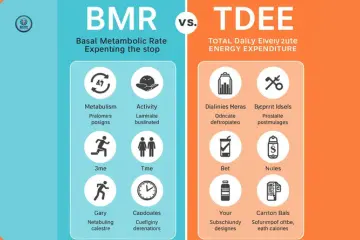
BMR vs Calories Burned at a Glance
The most important distinction is that BMR represents one part of calorie expenditure. A person’s total calories burned during a day can include resting energy use, physical activity and energy used to process food. This comparison answers the main search intent quickly before introducing more detailed terms and calculator methods.
Quick BMR vs Calories Burned Comparison Table
This quick comparison table outlines the core differences between baseline metabolic burn and total energy expenditure. It gives you a clear snapshot of how these metrics function in daily life.
| Feature | BMR | Calories Burned |
| Main meaning | Energy used for basic body functions | Energy used by the body |
| Happens while resting | Yes | Yes |
| Includes exercise | No | Can |
| Includes walking | No | Can |
| Includes daily movement | No | Can |
| Represents total daily expenditure | No | Sometimes |
| Common unit | kcal per day | kcal or calories |
| Calculator result | Usually estimated | Estimated or measured using various methods |
The Simple Difference Between BMR and Calories Burned
BMR is calories burned at a baseline resting level. Calories burned can refer to many types of energy expenditure. Exercise calories are only one type of calories burned. Your total daily calorie burn is usually higher than your BMR. BMR is one building block of total daily energy expenditure.
Why the Phrase “Calories Burned” Can Be Confusing
The phrase can refer to:
- Calories burned during exercise
- Calories burned while walking
- Calories burned at rest
- Total calories burned during a day
Always check what a calculator, smartwatch or fitness app actually means by “calories burned” before adjusting your daily eating targets.
What Is BMR?
BMR stands for Basal Metabolic Rate. It estimates the energy required to keep essential bodily functions working under basal resting conditions. Most online BMR calculators do not directly measure metabolism. Instead, they estimate it using predictive equations based on personal information.
What Does BMR Measure?
BMR relates to essential functions such as:
- Breathing
- Blood circulation
- Heart function
- Brain activity
- Organ function
- Temperature regulation
- Cellular processes
Does BMR Mean Calories Burned?
Yes, but only in a specific context. BMR represents calories the body uses for essential functions under resting conditions. It should not be confused with all calories burned during normal daily life.
What Does a BMR Calculator Use?
Common calculator inputs include:
- Age
- Sex
- Height
- Weight
Why Age Matters
Common BMR prediction equations account for age-related patterns in energy expenditure, as lean muscle mass often decreases with age.
Why Height and Weight Matter
Body size is an important factor when estimating baseline energy needs, as larger bodies require more energy to support essential systems.
Why Individual Results Can Differ
Two people with similar calculator inputs may not have identical measured metabolic rates. Factors can include:
- Body composition
- Individual physiology
- Health status
- Measurement conditions
What Does “Calories Burned” Actually Mean?
Your body burns energy throughout the day. However, the number displayed by a device or calculator depends on what type of energy expenditure is being estimated. This section prevents a common mistake: assuming that only a workout burns calories.
Calories Burned at Rest
Your body continues using energy while you:
- Sleep
- Sit
- Read
- Watch television
- Work at a desk
Calories Burned During Exercise
Activities that increase energy burn include:
- Walking
- Running
- Cycling
- Swimming
- Strength training
- Football
- Martial arts
Calories Burned Through Everyday Movement
Non-Exercise Activity Thermogenesis (NEAT) covers everyday movements. Examples include:
- Cleaning
- Shopping
- Gardening
- Standing
- Taking the stairs
- Walking around the workplace
Calories Burned Digesting Food
The Thermic Effect of Food (TEF) refers to the energy your body uses to:
- Digest food
- Absorb nutrients
- Process nutrients
BMR vs Exercise Calories Burned
Many people searching for this topic actually want to compare their BMR with the number displayed after a workout. These are very different measurements, even though both involve calories.
BMR Continues Throughout the Day
Baseline metabolic processes continue regardless of whether you exercise or rest on the sofa.
Exercise Creates Additional Energy Expenditure
A workout adds activity-related energy expenditure beyond resting needs.
Why a Workout Does Not Replace Your BMR
- Your BMR is not switched off during exercise.
- Your body continues to perform essential functions.
- Exercise increases total energy expenditure.
BMR vs Exercise Calories Table
This table illustrates how specific activity components stack on top of your baseline metabolic rate. It clarifies why workout numbers are separate from baseline resting needs.
| Measurement | What It Represents |
| BMR | Baseline energy expenditure at rest |
| Walking calories | Energy associated with walking |
| Exercise calories | Additional activity-related energy use |
| Total daily calories burned | Combined daily energy expenditure |
BMR vs Total Calories Burned Per Day
A person’s total daily calorie expenditure is commonly described as Total Daily Energy Expenditure (TDEE). BMR is only one part of that larger calculation. This is one of the most important concepts for anyone using calorie or weight-management tools.
What Is TDEE?
TDEE estimates the total energy a person uses during a day. It can include:
- Resting energy expenditure
- Physical activity
- Exercise
- Everyday movement
- Thermic effect of food
How BMR Fits Into TDEE
Use the simplified concept:
BMR + activity-related expenditure + energy used processing food = total daily energy expenditure
This is a conceptual model rather than a simple formula that produces an exact individual result.
Why Total Calories Burned Are Usually Higher Than BMR
Most people:
- Move
- Stand
- Walk
- Work
- Exercise
- Digest food
Even a quiet day involves more than basal metabolic conditions.
BMR vs Total Daily Calories Burned Table
Comparing daily activities against baseline burn shows how every movement contributes to total energy output. Use this table to spot where your daily energy goes.
| Type of Energy Use | Included in BMR? | Included in Total Daily Burn? |
| Breathing | Yes | Yes |
| Heart function | Yes | Yes |
| Sleeping | Baseline energy use | Yes |
| Walking | No | Yes |
| Exercise | No | Yes |
| Housework | No | Yes |
| Food digestion | Not generally treated as BMR | Yes |
How Many Calories Does Your Body Burn at Rest?
The answer varies between people. Body size, age, sex and other factors can influence predicted resting energy expenditure.
Using a BMR Calculator
The typical calculation process includes:
- Enter age.
- Enter sex.
- Enter height.
- Enter weight.
- Choose the calculator equation where applicable.
Mifflin-St Jeor Equation
The Mifflin-St Jeor equation is a commonly used formula for estimating resting energy needs.
Why the Result Is Still an Estimate
- Prediction equations use population data.
- Individual results can vary.
- Online tools do not directly measure metabolism.
Harris-Benedict Equation
Different equations, such as the Harris-Benedict formula, can provide slightly different estimates.
Why Different BMR Calculators Give Different Answers
- Formula selection
- Rounding
- Measurement units
- Input accuracy
- Individual variation
How Are Exercise Calories Burned Calculated?
Exercise calorie calculators usually estimate energy expenditure rather than directly measuring every calorie your body uses. A brisk walk through a windy Edinburgh street and the same walk on a calm, flat path may not demand exactly the same amount of energy.
Factors That Affect Exercise Calories Burned
- Body weight
- Exercise type
- Duration
- Intensity
- Terrain
- Individual fitness
Exercise Intensity
Gentle walking burns fewer calories per minute than brisk walking, jogging, running, or high-intensity training.
Exercise Duration
Longer activity generally increases the total energy used during a session.
Why Two People Can Burn Different Calories Doing the Same Workout
- Body size
- Exercise intensity
- Efficiency of movement
- Individual physiology
BMR vs Calories Burned: A Real-Life Daily Example
Imagine a person living in Birmingham who works in an office, walks to the train station and attends an evening gym session.
Morning: Calories Burned Before Leaving Home
While sleeping, waking and eating breakfast, the body continues using energy for essential functions.
Commute: Movement Adds Energy Expenditure
Activity builds up through:
- Walking
- Climbing stairs
- Carrying a bag
Working Day: Small Movements Continue
Office tasks add to movement burn:
- Standing
- Walking to meetings
- Moving around the office
- Taking a lunch break
Evening: Exercise Adds More Calories Burned
A planned workout session adds a distinct block of activity expenditure.
Daily Energy Use Table
This timeline highlights how distinct energy expenditure categories build upon each other throughout a normal working day. It serves as an illustrative practical guide.
| Part of the Day | Main Energy Expenditure |
| Sleeping | Resting energy expenditure |
| Sitting at breakfast | Mostly resting energy expenditure |
| Walking to the station | Physical activity |
| Office movement | NEAT |
| Gym session | Exercise energy expenditure |
| Eating meals | Thermic effect of food |
Is Your BMR Included in Calories Burned?
Yes, but the answer depends on what the calculator or device means by “calories burned”. This distinction is particularly important when comparing smartwatch figures with online BMR and TDEE calculators.
Resting Calories Are Part of Daily Calories Burned
Total daily energy expenditure includes energy used for resting body functions.
Active Calories Are Additional
Activity-related calories are generally the energy associated with movement beyond resting energy expenditure.
Active Calories vs Total Calories
Many wearable devices distinguish between active calories and total calories. Always check the specific definitions used by your device because calculation methods differ between manufacturers.
BMR vs Active Calories Burned
Active calories and BMR measure different parts of daily energy use and should not simply be swapped.
What Are Active Calories?
Active calories are an everyday term for energy associated with physical movement and exercise.
Does Walking Burn Active Calories?
Yes. Walking requires energy beyond resting expenditure and counts as active calorie burn.
Does Exercise Increase Your Total Daily Calories Burned?
Physical activity contributes directly to total daily energy expenditure, raising your overall calorie output for that day.
Why Activity Does Not Always Produce a Perfectly Predictable Calorie Total
- Activity compensation
- Changes in daily movement
- Changes in appetite
- Individual variation
Should You Add BMR and Exercise Calories Together?
The answer depends on the calculation method being used. Double counting energy expenditure is a common problem when people combine numbers from several apps.
When Adding Figures Can Cause Double Counting
Some TDEE estimates already account for regular activity. For example:
- A TDEE calculator may include exercise through an activity multiplier.
- Adding all exercise calories again may inflate the estimate.
When Activity Calories Are Calculated Separately
Some approaches begin with a resting estimate and separately estimate activity expenditure.
A Safer Way to Use Multiple Calculators
- Understand what each number represents.
- Check whether activity is already included.
- Avoid combining estimates blindly.
- Treat the result as a starting estimate.
- Compare estimates with longer-term real-world trends.
BMR vs Calories Burned for Weight Loss
Weight management involves the relationship between energy intake and energy expenditure, but individual body-weight responses are dynamic rather than perfectly predictable.
Why BMR Alone Is Not Your Total Daily Calorie Burn
BMR does not normally account for:
- Walking
- Exercise
- General movement
- Other components of daily expenditure
Why Total Daily Energy Expenditure Matters
Estimated TDEE provides a broader starting point for understanding overall daily energy needs than BMR alone.
Understanding Energy Deficit
Consuming less energy than the body uses over an extended period contributes to weight loss over time.
Why the Same Calorie Plan Can Affect People Differently
- Body size
- Activity levels
- Changes in metabolism
- Food intake accuracy
- Lifestyle changes
BMR vs Calories Burned for Weight Maintenance
Maintenance calories relate more closely to total daily energy expenditure than BMR alone. If average energy intake broadly matches average energy expenditure over time, body weight may remain relatively stable.
Why BMR Is Not Maintenance Calories
BMR is baseline energy use. Maintenance needs reflect broader daily expenditure including movement and digestion.
Using TDEE as a Maintenance Estimate
A TDEE calculator provides an initial estimate for finding maintenance intake.
Why Scale Weight Can Change Without Fat Gain
- Water retention
- Salt intake
- Food volume
- Glycogen storage
- Digestive contents
How Accurate Are BMR and Calories-Burned Calculators?
Both types of calculators can be useful, but neither should automatically be treated as a laboratory-grade measurement.
Accuracy of BMR Calculators
BMR equations predict rather than directly measure. Individual results can differ based on body composition and genetic factors.
Accuracy of Exercise Calorie Calculators
Exercise tools rely on average formulas for specific activities, which may not match your exact effort or efficiency.
Accuracy of Smartwatches and Fitness Trackers
Potential limitations include:
- Sensor accuracy
- Heart-rate estimation
- Movement tracking
- Manufacturer algorithms
Measured vs Estimated Energy Expenditure
Indirect Calorimetry
Resting energy expenditure can be measured in controlled settings using respiratory gas analysis.
Doubly Labelled Water
Doubly labelled water is a research method used to assess total energy expenditure over longer periods in free-living conditions. These approaches are very different from entering your details into a free online calculator.
Expert Perspective on Calories Burned and Metabolism
Kevin D. Hall, PhD, has conducted extensive research on metabolism, body composition, energy expenditure and mathematical models of body-weight change through the US National Institute of Diabetes and Digestive and Kidney Diseases (NIDDK).
What Kevin Hall’s Work Shows About Energy Balance
Dr Hall’s research highlights how diet and physical activity interact dynamically with changes in body weight and energy expenditure over time. The NIDDK Body Weight Planner was developed from these mathematical models to demonstrate that energy balance shifts as body mass changes, rather than remaining static.
Expert-Informed Practical Advice
- Use BMR as a baseline estimate.
- Look at total daily expenditure for broader calorie planning.
- Avoid assuming every exercise-calorie estimate is exact.
- Track longer-term patterns where appropriate.
- Update estimates when body weight or activity changes.
Common BMR and Calories-Burned Mistakes
The calculator may be functional. Sometimes the real problem is clicking “very active” after one ambitious Saturday.
Mistake 1: Thinking BMR Equals Total Calories Burned
BMR represents only baseline energy expenditure at rest, not your total daily energy output.
Mistake 2: Only Counting Workout Calories
Everyday movement uses energy, resting metabolism works continuously, and total daily expenditure includes far more than exercise alone.
Mistake 3: Adding Exercise Calories Twice
Activity multipliers in TDEE calculators often already account for exercise sessions.
Mistake 4: Treating Smartwatch Calories as Exact
Wearable devices provide useful approximations, but their figures should not be viewed as absolute laboratory measurements.
Mistake 5: Ignoring Everyday Movement
Non-exercise steps, standing, and household chores make up a large portion of daily energy expenditure.
Mistake 6: Changing Your Eating Plan After One Day
Longer-term weight trends over several weeks provide far better guidance than a single day’s calorie total.
How to Use a BMR and Calories-Burned Calculator Properly
Actionable steps ensure you get maximum value from online health tools.
Step 1: Calculate Your Estimated BMR
Enter accurate age, height, weight, and biological sex into a trusted calculator.
Step 2: Understand Your Normal Activity
Assess your job, daily steps, exercise frequency, and commuting patterns across an average week.
Step 3: Estimate Your Total Daily Energy Expenditure
Select an appropriate TDEE tool to estimate your combined resting and active expenditure.
Step 4: Compare Exercise Data Carefully
Check whether your wearable device displays active calories, resting calories, or total combined calories.
Step 5: Avoid Double Counting
Ensure workout calories are not added twice if your TDEE multiplier already includes exercise.
Step 6: Review Your Estimates Over Time
Recalculate your baseline needs after significant shifts in body weight, activity level, or daily routine.
BMR vs Calories Burned: Which Number Should You Use?
The right number depends entirely on the question you are asking. A BMR calculator and an exercise calorie calculator are tools for different jobs.
Use BMR When You Want to Understand Baseline Energy Needs
Suitable for learning about metabolism, estimating resting energy expenditure, or starting a broader TDEE calculation.
Use Exercise Calories When You Want to Estimate Activity Energy
Suitable for comparing workouts, understanding exercise intensity, or tracking activity patterns.
Use TDEE for Overall Daily Energy Estimates
Suitable for estimating maintenance needs, understanding total daily expenditure, or establishing a baseline for nutrition plans.
Calculator Selection Table
Selecting the right digital tool saves time and prevents calculation errors. Use this guide to match your health goal with the correct tool.
| Your Question | Most Relevant Tool |
| How much energy does my body use at rest? | BMR calculator |
| How many calories might I use during a workout? | Exercise calorie calculator |
| How much energy do I use in a full day? | TDEE calculator |
| What might maintain my current weight? | Maintenance calorie calculator |
| How do my weight and height relate? | BMI calculator |
When Calorie and BMR Calculators Need Extra Caution
Online calculators provide general estimates and may not suit every individual situation. The NIDDK Body Weight Planner, for instance, targets adults and excludes younger populations or individuals who are pregnant or breastfeeding.
Children and Teenagers
Growing bodies have unique energy requirements that adult predictive formulas cannot accurately estimate.
Pregnancy and Breastfeeding
Standard energy tools do not account for the additional metabolic demands of fetal growth or milk production.
Medical Conditions
Specific health conditions and clinical treatments can alter baseline metabolism beyond standard calculator assumptions.
Eating Disorders and Disordered Eating
Rigid numerical tracking may be unhelpful, making professional clinical guidance a more appropriate route.
Elite Athletes
Extreme training volumes and unusual body compositions often fall outside normal population predictive equations.
Frequently Asked Questions About BMR vs Calories Burned
Is BMR the Same as Calories Burned?
BMR represents calories your body uses for essential functions at rest. “Calories burned” is a broader term that may include resting energy, movement, exercise or total daily energy expenditure.
Does My BMR Count as Calories Burned?
Yes. BMR represents energy your body uses while supporting essential functions under basal conditions.
Are Calories Burned Higher Than BMR?
Total daily calories burned are normally higher than BMR because daily movement, exercise and other processes require additional energy.
Does Exercise Increase Calories Burned Above BMR?
Yes. Exercise adds activity-related energy expenditure beyond baseline resting energy use.
Should I Eat Back the Calories I Burn During Exercise?
The answer depends on the overall calorie-planning method and whether exercise is already included in the daily energy estimate. Avoid automatically adding estimated exercise calories without checking for double counting.
Does Walking Burn Calories Beyond BMR?
Yes. Walking requires additional energy and contributes to total daily energy expenditure.
Does Sleeping Burn Calories?
Yes. The body continues using energy during sleep to support essential functions.
Why Does My Smartwatch Show Different Calories From My BMR Calculator?
The two tools may estimate different forms of energy expenditure and use different data and algorithms.
Is BMR Included in TDEE?
Yes. Estimated resting or basal energy expenditure is a major component of total daily energy expenditure.
Which Is Better for Weight Loss: BMR or Calories Burned?
Neither number alone provides the complete picture. Total energy expenditure and overall energy intake are generally more relevant for understanding energy balance.
Related Tools and Internal Linking Opportunities
Connecting related calculator tools helps build a complete overview of daily energy needs.
BMR Calculator
Use a BMR calculator to estimate resting calorie needs and establish your baseline energy requirements.
Calories Burned Calculator
Use an exercise calorie calculator to estimate energy used during sports, walking, or structured workout sessions.
TDEE Calculator
Use a TDEE calculator to combine baseline and activity figures into a single total daily expenditure estimate.
Maintenance Calorie Calculator
Use a maintenance calorie calculator to estimate daily calorie needs for keeping scale weight stable over time.
Resting Metabolic Rate Calculator
Use an RMR calculator to explore resting energy needs under slightly less rigid testing conditions than BMR.
BMI Calculator
Use a BMI calculator to assess how height and weight measures align across population standards.
Final Recommendation
Getting to grips with bmr vs calories burned is the easiest way to make sense of your daily health stats. In my work with clients across Manchester, I always advise treating BMR as your baseline floor, while total calories burned gives you the full picture of your day. Start by estimating your baseline, add your average daily activity, and use that total as a sensible starting point. Keep your approach flexible, focus on how you feel, and watch how your body responds over a few weeks.

Ehatasamul Alom is a dedicated health-tech enthusiast and the co-founder of BMRCalculator. With a passion for metabolic science, he focuses on providing accurate health data for the UK community. Ehatasamul ensures that every tool and guide aligns with NHS standards and public health research. His mission is to simplify complex biological data, helping British residents make informed decisions about their fitness, calorie needs, and long-term wellness. When not analyzing health trends, he explores the latest innovations in wearable fitness technology.