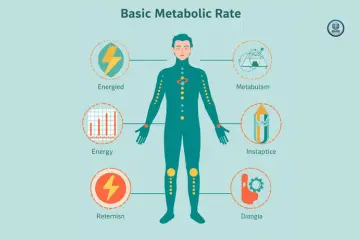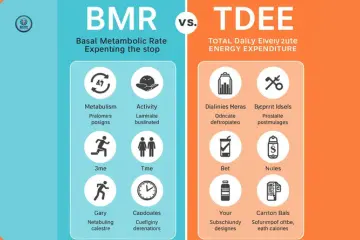

Learning how your body burns energy keeps your health goals on track. Understanding the bmr vs calorie needs distinction helps you set safe daily food targets. While working on a health tool project in Manchester, I saw many people treat these two numbers as identical. Basal metabolic rate measures what you burn at complete rest. Daily calorie needs include all your walking, working, and movement. Knowing how these figures differ ensures you feed your body well every single day.
BMR vs Calorie Needs at a Glance
This quick side by side table breaks down the key traits of resting expenditure and full day energy requirements. Use it to see why your basal rate is only the starting point for your actual food plan.
| Feature | BMR | Daily Calorie Needs |
| Meaning | Basal metabolic rate | Energy needed across the day |
| Measures | Resting energy use | Total or estimated daily energy needs |
| Exercise included? | No | Yes, depending on the calculation |
| Normal movement included? | No | Yes |
| Food digestion included? | No | May be included in total expenditure |
| Typical unit | kcal/day | kcal/day |
| Common tool | BMR calculator | TDEE/calorie needs calculator |
The National Academies describes total energy expenditure as including resting energy expenditure, physical activity, and the thermic effect of food.
What Is BMR?
Basal metabolic rate is the core energy your body burns to stay alive while resting.
What Does Basal Metabolic Rate Mean?
Basal metabolic rate tracks the energy needed for basic cellular life. It is the fuel your organs use when you do not move a single muscle.
What Does BMR Include?
Your resting body performs constant internal work to support essential processes:
- Breathing: Moving your lungs to intake oxygen continuously.
- Heart and circulation: Pumping blood through your veins and arteries.
- Brain activity: Maintaining basic nervous system signals and thought.
- Organ function: Supporting your liver, kidneys, and internal systems.
- Maintaining body temperature: Keeping your core heat balanced near 37°C.
- Basic cellular processes: Building proteins and repairing tissue.
What Does BMR Not Include?
Basal metabolic rate excludes all external physical activities:
- Walking: Strolling around your home or office.
- Cycling: Riding a bike to work or for fun.
- Running: Jogging or sprinting during a workout.
- Gym sessions: Lifting weights or taking fitness classes.
- Household activity: Cleaning, cooking, or gardening.
- Most normal daily movement: Standing, fidgeting, or talking.
- Energy used to digest food: Breaking down meals and processing nutrients.
Why BMR Is Not Your Daily Calorie Need
Your basal rate covers vital organs, not your daily lifestyle. Eating only your basal requirement leaves out the energy needed for walking, working, and moving.
What Are Daily Calorie Needs?
Daily calorie needs describe the total energy required to power your full daily routine.
What Does “Calorie Needs” Mean?
This term means the total calories you must consume to maintain your weight while covering all daily tasks and movement.
What Changes Daily Calorie Needs?
Key lifestyle and biological factors alter your total daily fuel burn:
- Age: Metabolism tends to slow down as you get older.
- Body size: Larger frames require more energy to operate.
- Body composition: Muscle tissue burns more energy than fat tissue.
- Physical activity: Busy jobs increase your baseline energy needs.
- Exercise: Planned workouts raise total calorie burn.
- Normal daily movement: Fidgeting and walking add extra energy expenditure.
- Physiological state: Illness, injury, or stress can raise energy demands.
- Individual differences: Genetics cause variations between similar people.
Calories and Energy Balance
Calories measure energy intake and output. The NHS notes that weight tends to increase when energy intake is consistently greater than energy used, and decrease when intake is lower.
Why Calorie Needs Are Not the Same Every Day
Your energy burn changes based on daily movement. A quiet Sunday on the sofa demands far fewer calories than a busy workday walking across town.
BMR vs Calorie Needs: The Main Difference
Comparing resting needs against whole day demands highlights why basal figures sit lower than total targets.
BMR Is the Resting Starting Point
Basal expenditure forms the foundational base of your daily fuel needs. All physical movement builds on top of this basic number.
Calorie Needs Include More Than BMR
Total daily needs add work, chores, walking, and sports on top of resting processes.
BMR Is Usually Lower Than Total Daily Needs
Because basal rate ignores physical movement, it is naturally smaller than your total daily calorie requirement.
You Should Not Use BMR as Your Full Daily Target
Eating at your basal rate ignores daily movement, which can lead to low energy and poor recovery.
BMR vs Daily Calorie Needs Comparison Table
This practical reference table shows how basal metrics differ from full day energy calculations. Use it to understand how tools estimate energy requirements.
| Question | BMR | Daily Calorie Needs |
| What does it measure? | Resting energy use | Whole-day energy requirement |
| Includes exercise? | No | Usually yes |
| Includes walking? | No | Usually yes |
| Includes digestion? | No | Total expenditure may include it |
| Changes with activity? | Not directly | Yes |
| Main calculator | BMR calculator | TDEE/calorie calculator |
| Best used for | Resting metabolism estimate | Daily energy planning |
How BMR Becomes a Daily Calorie Estimate
Turning a resting metabolic figure into a full daily estimate involves a clear step-by-step mathematical flow.
BMR/REE → Physical Activity → Thermic Effect of Food → Estimated TDEE
Step 1 — Estimate BMR
Calculators use equations to find your resting baseline from age, sex, weight, and height.
Step 2 — Account for Physical Activity
The baseline is multiplied by an activity factor to cover daily walking and workouts.
Step 3 — Consider the Thermic Effect of Food
Digesting meals uses energy, which accounts for roughly 10% of total daily burn.
Step 4 — Arrive at Estimated TDEE
Combining resting burn, movement, and digestion yields your Total Daily Energy Expenditure.
The National Academies identifies resting energy expenditure, physical activity, and thermic effect of food as core components of total energy expenditure.
What Is TDEE?
Total Daily Energy Expenditure is the core metric for understanding overall fuel needs.
TDEE Meaning
TDEE is the total number of calories your body burns across a complete 24-hour period.
BMR vs TDEE
BMR measures energy burned at complete rest, while TDEE accounts for your entire active day.
Why TDEE Is More Relevant to Daily Calorie Needs
When planning meals, TDEE provides the full energy target needed to balance your daily lifestyle.
TDEE Is Still an Estimate
Calculators offer helpful population-based estimates, but individual real-world energy burn varies.
How a BMR Calculator Estimates Energy Needs
Online software uses predictive formulas to calculate baseline resting burn without lab equipment.
Common BMR Calculator Inputs
Most baseline software tools ask for four core inputs:
- Age: Used to adjust for age-related metabolic changes.
- Height: Determines total body surface area.
- Weight: Measures total body mass requiring energy support.
- Sex: Accounts for average baseline differences in muscle mass.
Mifflin-St Jeor Equation
The Mifflin-St Jeor equation is widely used for estimating resting energy expenditure:
Harris-Benedict Equation
The revised Harris-Benedict formula is an older, established alternative:
Why Different BMR Calculators Give Different Results
Calculators yield different outputs when they rely on different formulas, assumptions, or rounding rules.
Check the Formula Before Comparing Tools
Review which mathematical formula a tool uses before comparing results across different health websites.
How Activity Changes Your Calorie Needs
Daily physical movement creates the largest gap between baseline resting figures and total needs.
Sedentary Activity
Desk jobs with limited walking require minimal additional fuel beyond baseline resting needs.
Light Activity
Jobs involving light standing, chores, and short daily walks moderately increase energy demands.
Moderate Activity
Active work, frequent walking, or regular exercise sessions raise total calorie requirements.
High Activity
Heavy physical labor or intense daily athletic training significantly increases overall energy burn.
Why Activity Categories Are Not Exact
Activity categories offer broad general guidelines, but real-world daily movement varies widely between people.
NCBI’s Endotext provides detailed physical activity categories based on daily steps, demonstrating why activity choices alter estimated energy needs.
BMR vs Calorie Needs: Worked Example
This example demonstrates how daily movement builds upon baseline resting values.
Example of Resting Energy Use
A fictional baseline calculation might estimate a person’s resting BMR at 1,500 kcal per day.
Add Normal Daily Movement
Adding light daily walking, desk work, and household tasks adds roughly 300 kcal to the baseline.
Add Exercise and Other Energy Costs
A 45-minute evening workout adds another 300 kcal, bringing total daily burn to 2,100 kcal.
Why the Final Number Is Still an Estimate
Calculated numbers serve as helpful starting targets rather than precise, unchangeable scientific figures.
BMR vs Calorie Needs for Different Daily Routines
Examining daily routines shows how energy demands change based on lifestyle choices.
A Desk-Based Day in London
Sitting at a desk all day burns few extra calories above resting metabolic baseline levels.
A Busy Day With Lots of Walking
Walking across the city for errands and meetings burns significantly more energy across the day.
A Day With Structured Exercise
Adding a morning run or gym session increases overall energy needs further.
Same Person, Different Day
Your resting baseline remains steady, but total daily calorie burn shifts based on physical activity.
What Factors Affect BMR and Calorie Needs?
Multiple physiological factors influence both resting metabolism and total fuel demands.
Age
Resting expenditure and overall energy needs gradually decline as muscle mass decreases with age.
Height and Body Size
Taller and larger individuals require more fuel to support basic biological functions and movement.
Body Composition
Muscle tissue is metabolically active. The National Academies notes a strong relationship between basal energy expenditure and fat-free mass.
Physical Activity
Daily movement and exercise cause the largest variation in total daily calorie expenditure.
Health and Physiological State
Fever, illness, recovery from surgery, or hormonal changes temporarily elevate energy requirements.
Environment and Lifestyle
Extreme cold or heat forces the body to burn additional calories to regulate internal temperature.
How Accurate Are BMR and Calorie Calculators?
Understanding calculator limitations helps keep health goals realistic and flexible.
Prediction Equations Are Estimates
Calculators rely on statistical averages from population studies, which may not match an individual’s exact metabolism.
Mifflin-St Jeor Has Useful Evidence
Research shows Mifflin-St Jeor is one of the most reliable prediction tools, though individual variances remain.
Why Calculator Accuracy Varies
Age, muscle density, sex, and weight can cause calculator outputs to differ from true values.
Indirect Calorimetry vs Calculator Estimates
Indirect calorimetry measures real-time breath gases in a lab, whereas online tools offer mathematical predictions.
Avoid False Precision
Treat calculated figures as helpful working guidelines rather than exact, absolute numbers.
BMR vs Calorie Needs for Weight Maintenance
Balancing energy intake against daily energy expenditure supports stable weight management.
Energy Intake and Energy Use
Matching your consumed calories to your total daily expenditure keeps your weight steady over time.
Why Maintenance Needs Differ Between People
Differences in age, job demands, workouts, and genetics mean maintenance targets vary for everyone.
Why a BMR Number Alone Is Not Enough
Using only resting BMR ignores daily walking and activity, setting targets too low for healthy maintenance.
Use Calculator Results as General Estimates
Use calculator numbers as starting guidelines, tracking progress and adjusting intake based on real-world weight trends.
BMR vs Calorie Needs: Common Calculator Mistakes
Avoid these typical setup errors when calculating your daily energy needs online.
Treating BMR as Daily Calorie Needs
Confusing baseline resting expenditure with total daily requirements is the most common user error.
Choosing the Wrong Activity Level
Selecting “highly active” when your routine is mostly desk-bound leads to overestimating total daily needs.
Mixing Different Calculator Methods
Comparing results from different formulas can create confusion without providing clearer insights.
Assuming More Decimal Places Mean More Accuracy
Displaying exact numbers like 1,842.5 kcal does not remove the underlying equation’s natural margin of error.
Forgetting That Calorie Needs Can Change
Changes in body weight, activity, or age shift your daily energy demands over time.
BMR vs Calorie Needs: What UK Guidance Says
Official public health guidelines offer general framework references for population intake.
NHS Guidance on Daily Calories
The NHS provides general adult guidelines of roughly 2,000 kcal for women and 2,500 kcal for men, adjusted for individual activity.
Why UK Calorie Guidance Is Not a BMR Formula
Public reference values offer broad population benchmarks, whereas BMR calculations estimate individual resting baseline needs.
BMR Calculator vs NHS General Guidance
Online calculators estimate individual resting needs, while NHS guidelines provide broad population averages.
Worldwide Expert Advice on BMR and Calorie Needs
Relying on established scientific research provides clear context for metabolic estimation tools.
National Academies of Sciences, Engineering, and Medicine
Institutional reports highlight that total daily expenditure combines resting metabolism, physical movement, and digestion costs.
Mifflin and St Jeor Research
Original clinical studies validate the Mifflin-St Jeor formula as a accurate option for estimating resting needs.
NHS Guidance for UK Readers
NHS materials emphasize balancing energy intake with physical activity to support long-term healthy weight management.
Quote Policy for the Article
Summarizing published scientific literature provides accurate, evidence-led insights without relying on unverified claims.
Which Number Should You Use: BMR or Calorie Needs?
Selecting the right metric depends on whether you are analyzing resting baseline or full day targets.
Use BMR to Understand Resting Energy Use
See, Use BMR to understand the minimum energy your internal organs burn at complete rest.
Use TDEE or a Calorie Needs Calculator for Daily Energy
Use TDEE when planning daily meals, managing weight, or adjusting for exercise routines.
Check What the Calculator Actually Reports
Read tool labels carefully to ensure you do not confuse resting BMR with total daily calorie needs.
How to Use a BMR and Calorie Calculator Correctly
Following a structured approach ensures clear, accurate results from online tools.
Enter Accurate Information
Input precise measurements for height, weight, age, and sex to generate accurate baseline predictions.
Check the Units
Double-check whether the tool requests height in centimeters or inches, and weight in kilograms or pounds.
Select an Honest Activity Level
Choose the activity multiplier that reflects your typical weekly routine rather than an unusually busy day.
Read the Result Label
Confirm whether the final calculated value represents resting BMR or total daily calorie needs (TDEE).
Treat the Result as an Estimate
Use calculated values as flexible starting baselines, adjusting your intake based on ongoing real-world results.
Frequently Asked Questions About BMR vs Calorie Needs
Is BMR the same as calorie needs?
No. BMR measures baseline resting burn, while calorie needs include all daily activity, work, and movement.
Is BMR lower than daily calorie needs?
Yes. BMR ignores physical activity, making it naturally smaller than your total daily energy requirement.
Can I use my BMR as my daily calorie requirement?
No. Eating only your BMR leaves out the calories required to power daily movement, walking, and tasks.
What is the difference between BMR and TDEE?
BMR tracks energy burned at complete rest, while TDEE estimates total calories burned across the entire active day.
Does exercise affect BMR?
Exercise raises total daily energy expenditure directly, while long-term muscle gains from workouts can gradually increase baseline BMR.
Why does my calorie calculator give a higher number than my BMR?
The higher number includes daily walking, working, chores, workouts, and the energy needed to digest meals.
Why do different BMR calculators give different results?
Calculators rely on different underlying equations, input requirements, rounding methods, and activity multipliers.
Are BMR calculators accurate?
Calculators provide population-based estimates that offer reliable starting points, though personal metabolic rates vary.
What is a calorie needs calculator?
It is a tool that combines resting metabolic rate with physical activity levels to estimate full day calorie needs.
Final Recommendation
Exploring the bmr vs calorie needs distinction during health projects in Manchester showed me why food tracking gets confusing. Your basal rate covers baseline survival burn, while total calorie needs account for your active lifestyle. Use calculator outputs as helpful starting estimates, monitor your energy and weight trends over time, and adjust your daily intake based on your real-world progress.

Ehatasamul Alom is a dedicated health-tech enthusiast and the co-founder of BMRCalculator. With a passion for metabolic science, he focuses on providing accurate health data for the UK community. Ehatasamul ensures that every tool and guide aligns with NHS standards and public health research. His mission is to simplify complex biological data, helping British residents make informed decisions about their fitness, calorie needs, and long-term wellness. When not analyzing health trends, he explores the latest innovations in wearable fitness technology.