Sitting in a quiet clinic room in Birmingham last year, I found out how much energy my body uses at rest. A resting metabolic rate test gives you real facts about your baseline energy needs. Online calculators use formulas to guess your daily burn rate. A proper lab assessment measures your actual breath to get precise results. This UK guide helps you pick between quick tools and professional testing.
What Is a Resting Metabolic Rate Test?
A resting metabolic rate test measures how many calories your body burns at complete rest. Instead of relying on age or weight formulas, it measures your real breath to show your true energy needs.
What Does RMR Mean?
Resting metabolic rate (RMR) represents the energy your body burns while awake and resting. Clinicians often call this resting energy expenditure (REE). These calories keep your lungs, heart, brain, and organs working normally. RMR makes up the biggest share of your total daily energy burn.
RMR vs BMR — Are They the Same?
Basal metabolic rate (BMR) and resting metabolic rate (RMR) are very close, but they use different testing conditions. True BMR requires waking up in a lab after an overnight stay without moving at all. RMR testing is far more practical because you can travel to a local clinic after resting briefly. Web tools often swap these terms, but RMR fits real life much better.
What Does an RMR Test Actually Measure?
The test uses specialized sensors to assess your gas exchange:
- Oxygen consumption (VO₂)
- Carbon dioxide production (VCO₂)
- Resting energy expenditure
- Respiratory exchange ratio
- Primary fuel type burned at rest
How Does a Resting Metabolic Rate Test Work?
The appointment feels simple, calm, and quiet. You sit in a soft chair in a dim room while a machine checks your breathing.
Indirect Calorimetry Explained
Indirect calorimetry is the standard method for clinical metabolic assessments. You breathe through a comfortable mask connected to a metabolic cart system. The cart measures your oxygen intake and carbon dioxide output to calculate your baseline burn rate precisely.
What Happens During the Test?
The full testing process follows clear, calm steps:
- Check in at the clinic desk
- Rest quietly in a soft chair
- Allow your heart rate to settle
- Put on the comfortable mask or hood
- Remain completely relaxed and quiet
- Let the sensors record your breathing
- Ensure measurements reach a steady phase
- Review your detailed RMR summary
What Does the Equipment Feel Like?
The clear face mask fits snugly over your nose and mouth without pinching. The room stays dark, cool, and quiet throughout. You do not exercise or run on a treadmill at all. You simply sit still, breathe normally, and relax.
How to Prepare for a Resting Metabolic Rate Test
Proper preparation ensures clean gas readings. Eating or moving right before your test ruins the baseline measurement.
Should You Fast Before an RMR Test?
Eating food raises your heart rate and energy burn through digestion. You must follow your clinic’s precise fasting guidelines before arriving. Most UK clinics require four to eight hours without food. Some clinical protocols prefer an overnight fast for best accuracy.
Can You Drink Water Before the Test?
You can usually drink plain water before arriving. Water does not trigger digestion or alter your metabolic rate. Avoid flavoured waters, zero-calorie sodas, or sports drinks because they contain additives that affect your body.
Can You Have Coffee Before an RMR Test?
Skip your morning coffee or tea entirely. Caffeine stimulates your nervous system and raises your resting energy burn. Save your hot drink for after your appointment is finished.
Can You Exercise Before the Test?
Avoid heavy workouts for 24 to 48 hours before your appointment. Heavy training raises your resting metabolism for hours afterward. Arrive with rested muscles so the sensors catch your real baseline.
What Else Should You Avoid?
To protect your results, avoid these items:
- Cigarettes and vape pens
- Alcoholic drinks
- Heavy meals the night before
- Energy drinks and supplements
- Rushing to your appointment
- Stressful physical tasks
RMR Test Preparation Checklist
Use this quick checklist to prepare for your appointment:
- Follow all fasting rules
- Avoid heavy exercise
- Skip coffee and tea
- Avoid nicotine products
- Skip alcohol the night before
- Get a good night’s sleep
- Arrive ten minutes early
- Wear comfortable, loose clothes
- Tell staff about any medicines
How Accurate Is a Resting Metabolic Rate Test?
A clinical test offers far higher accuracy than any online formula. However, proper testing protocols must be followed to keep readings clean.
Why a Measured RMR Can Beat an Estimated RMR
Calculators use population averages to guess your daily needs. Indirect calorimetry measures your actual metabolic output directly. The Mifflin-St Jeor equation works well for many people, but individual differences in muscle mass and organ size can cause big errors in generic formulas.
What Can Make an RMR Result Less Reliable?
Several small errors can ruin your test accuracy:
- Eating snacks beforehand
- Morning coffee or tea
- Nicotine or vaping
- Recent heavy workouts
- Fidgeting during the test
- Cold or hot room temperatures
- Leaks around the face mask
- Feeling nervous or stressed
- Failing to rest quietly first
What Does a Good RMR Test Protocol Look Like?
A professional clinic maintains ideal conditions:
- A quiet, private room
- Controlled room temperature
- A mandatory 15-minute rest period
- Clear fasting rules
- Zero movement during testing
- Calibrated gas sensors
- Stable gas measurements
RMR Test vs Online RMR Calculator
Online tools provide fast estimates, while clinical testing delivers measured personal data. The table below outlines how these options compare.
| Feature | RMR Calculator | RMR Test |
| Input | Height, weight, age, sex | Respiratory gases |
| Result | Estimated RMR | Measured RMR |
| Cost | Usually free | Usually paid |
| Convenience | Immediate | Appointment required |
| Individual measurement | No | Yes |
| Equipment | None | Indirect calorimeter |
| Best use | Starting estimate | More personalised assessment |
When Is an RMR Calculator Enough?
An online calculator works fine for general diet planning, fitness beginners, and basic starting estimates. You do not need a paid lab test if standard formulas match your real-world progress.
When Might an RMR Test Be Worth Considering?
A lab test helps if you face unexpected weight stalls, follow intense sport plans, or find that standard calorie formulas fail your goals completely.
Mifflin-St Jeor vs Measured RMR
The Mifflin-St Jeor formula uses your weight, height, age, and sex. It provides a helpful baseline, but only direct gas analysis reveals your true metabolic rate.
What Happens After an RMR Test?
Once your test ends, the practitioner prints a detailed report showing how your body uses energy at rest.
What Does an RMR Result Look Like?
Your final report usually includes:
- Daily calorie burn rate (kcal/day)
- Hourly energy expenditure (kcal/hour)
- Oxygen volume used (VO₂)
- Carbon dioxide produced (VCO₂)
- Respiratory exchange ratio
- Comparison against population averages
Is a High RMR Good?
A high RMR simply means your body burns more calories at rest. Larger bodies and people with high muscle mass naturally burn more energy. A high number is not automatically healthier than a lower one.
Is a Low RMR Bad?
A lower RMR usually reflects a smaller body frame or lower body weight. It does not mean your metabolism is damaged or broken.
How to Use Your RMR Result to Estimate Daily Calories
Your RMR score forms the foundation of your full daily energy footprint.
RMR Is Not Your Daily Calorie Requirement
Eating only your RMR calories leaves you short on fuel. Your total daily energy expenditure (TDEE) includes:
- Baseline resting energy (RMR)
- Digesting food calories
- Everyday steps and movement
- Planned exercise workouts
From RMR to TDEE
To find your total daily calorie needs, apply an activity multiplier to your RMR result:
RMR x Activity Multiplier = TDEE
Select an activity factor that matches your daily lifestyle:
- Desk job with little movement: 1.2
- Light walking and light exercise: 1.375
- Moderate daily activity and gym work: 1.55
- Heavy physical job or hard training: 1.725
RMR for Weight Loss
Do not drop your food intake below your measured RMR. Cutting calories too low causes fatigue and muscle loss. Set your deficit using your TDEE instead.
RMR for Weight Maintenance
To hold your current weight, balance your daily food intake with your calculated TDEE. Track your scale trends over several weeks and adjust your food intake if your weight drifts.
RMR for Muscle Gain
Building lean muscle requires a calorie surplus above your TDEE alongside resistance training. Combine your RMR data with proper protein intake to support recovery.
What Factors Affect Resting Metabolic Rate?
Biological and lifestyle factors shape how much energy your body uses at rest.
Body Size and Lean Mass
Lean tissue burns far more energy than fat tissue at rest. Taller and heavier individuals require more baseline energy to support basic organ function.
Age
Resting metabolic rate often shifts gradually as people age. Much of this shift comes from natural losses in muscle mass rather than aging itself.
Sex
Men often show higher average RMR scores than women due to larger physical frames and higher average muscle mass.
Hormones and Health
Thyroid hormones directly control cellular energy production. Health issues, fever, and healing from injury can temporarily raise your resting energy burn.
Exercise and Training
Regular strength training builds lean muscle mass, which raises your baseline resting energy burn over time.
Sleep, Stress and Daily Behaviour
Poor sleep, high stress, caffeine, and irregular eating habits cause short-term shifts in your daily metabolic readings.
RMR Test Results vs Your Body Composition
Combining RMR data with body composition testing gives you a complete picture of your physical health.
RMR and Muscle Mass
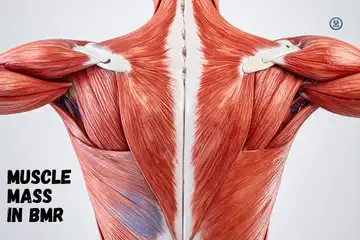
Two people with identical body weights can have very different RMR scores. The person with higher muscle mass burns more calories while resting.
RMR and BMI
BMI compares your weight against your height, but it cannot measure muscle mass or baseline metabolism. An RMR test gives far deeper insight than simple BMI scores.
RMR and Body-Fat Percentage
Assessing your body fat alongside your RMR helps refine your calorie targets. DEXA scans and bioimpedance tools provide extra context for your metabolic score.
How Much Does a Resting Metabolic Rate Test Cost in the UK?
UK prices for RMR tests vary depending on clinic locations and included services.
What Affects the Price?
Test costs depend on key clinic details:
- Private nutrition clinics vs university labs
- London vs regional clinic locations
- Advanced metabolic cart equipment
- Staff clinical qualifications
- Included consultation time
- Bundled body composition scans
What Should Be Included in the Price?
A complete testing package should cover:
- Full indirect calorimetry test
- Clear preparation instructions
- Rest period before testing
- Printed summary report
- Measured RMR score
- Professional result review
- Simple nutrition advice
UK Clinic Questions to Ask Before Booking
Ask these key questions before scheduling your appointment:
- Do you use indirect calorimetry?
- What equipment do you use?
- How long must I fast?
- Can I drink water or coffee?
- How long should I avoid workouts?
- Who explains my final results?
- Do I get a full printed report?
- Is body composition testing included?
Where Can You Get a Resting Metabolic Rate Test in the UK?
You can find metabolic testing across private health facilities, sports centres, and academic labs in the UK.
Private Nutrition Clinics
Private sports clinics and dietitian practices offer comfortable testing settings with full nutrition guidance included.
Sports Performance Centres
University sports labs and performance hubs test endurance athletes and gym members looking for detailed training data.
Hospitals and University Research Centres
NHS-linked research units and university labs conduct clinical indirect calorimetry for specialist health studies.
How to Check Whether a Provider Uses Genuine Indirect Calorimetry
Look for providers that measure real VO₂ and VCO₂ gas exchange using a metabolic cart and face mask. Avoid clinics offering vague “metabolism scans” that rely on thumb sensors or hand grips.
Worldwide Expert Advice on RMR Testing
Clinical research confirms that proper testing protocol is essential for accurate metabolic measurements.
Expert View — Susan Fullmer and Colleagues
Research reviews by Susan Fullmer highlight the need for strict preparation before testing. Following clear fasting rules, avoiding exercise, and remaining completely still ensure clean, usable gas readings.
Expert View — Compher and Colleagues
Systematic reviews by Compher and her team show that food, caffeine, nicotine, and movement inflate resting energy burn. Standardized resting conditions are required to measure true baseline metabolism.
International Clinical Perspective
The ICALIC international position paper recommends indirect calorimetry whenever standard predictive formulas fail to match a patient’s real-world progress.
A Real-Life UK RMR Test Example
Here is how a typical testing morning unfolds at a private UK clinic:
A Typical Morning Before the Appointment
You wake up early, skip your morning coffee, and drink a small glass of water. You travel calmly to the clinic, sign in at the front desk, and sit quietly in a private room for fifteen minutes to let your heart rate settle down.
What the Person Might Notice
The room is dark and cool. The face mask fits comfortably without pinching. Your main job is to sit still, breathe normally, and relax without looking at your phone.
What Happens When the Result Arrives?
After twenty minutes, the practitioner removes the mask and prints your report. You compare your measured RMR against predicted averages, apply an activity factor to calculate your daily TDEE, and set realistic nutrition targets.
Common RMR Testing Mistakes
Avoiding simple testing mistakes protects the accuracy of your baseline readings.
Drinking Coffee Before the Test
Caffeine stimulates your central nervous system and inflates your resting energy burn during testing.
Exercising That Morning
Morning workouts keep your metabolic rate elevated for hours, ruining your true baseline reading.
Eating Too Close to the Appointment
Eating breakfast triggers the thermic effect of food, making your resting energy burn look higher than it really is.
Fidgeting or Talking
Moving around or talking raises your heart rate and distorts the gas sensors on the metabolic cart.
Treating RMR as TDEE
Confusing your resting metabolic rate with your total daily calorie needs leads to underfueling and fatigue.
Comparing Results From Different Machines
Different test equipment and clinic protocols yield slightly different readings. Stick with one clinic system to track your progress over time.
Assuming One Test Reveals a “Slow Metabolism”
A single low reading does not mean your metabolism is broken. Body frame size, muscle mass, and preparation all affect your final score.
RMR Test vs Other Metabolism Tools
Different fitness tools serve different purposes. The table below compares common metabolic options.
| Tool | What it estimates/measures | Main use | Main limitation |
| RMR test | Resting energy expenditure | Personalised RMR | Requires equipment |
| RMR calculator | Estimated RMR | Quick planning | Individual error |
| TDEE calculator | Estimated daily expenditure | Calorie planning | Activity estimate |
| Body-fat scales | Body composition estimate | Tracking | Variable accuracy |
| DEXA | Body composition | Detailed assessment | Cost/access |
| Fitness tracker | Activity estimates | Daily movement | Energy estimates vary |
RMR Test vs Smartwatch Calorie Burn
Smartwatches estimate movement calories throughout the day using wrist heart rate sensors. An RMR test directly measures your baseline breath in a controlled lab setting.
RMR Test vs BMR Calculator
Calculators use general population formulas to guess your burn rate. An RMR test measures your actual gas exchange to yield personal data.
RMR Test vs TDEE Calculator
An RMR test measures resting baseline calories only. A TDEE calculator adds physical movement and activity estimates to find your full daily requirement.
How to Choose a Good RMR Testing Service
Selecting a qualified provider ensures accurate testing and professional result interpretation.
Look for Indirect Calorimetry
Verify that the facility uses a proper metabolic cart system to measure oxygen consumption (VO₂) and carbon dioxide output (VCO₂).
Check Practitioner Credentials
Ensure your results are reviewed by a registered dietitian, sports nutritionist, or qualified exercise physiologist.
Check the Preparation Instructions
A credible testing provider gives you clear, detailed instructions regarding fasting, caffeine intake, and exercise before your visit.
Check What You Receive Afterwards
Your final testing pack should include:
- Measured RMR score in kcal/day
- Detailed testing condition notes
- Comparison against predicted averages
- Professional result review
- Clear action steps for your diet
Is a Resting Metabolic Rate Test Worth It?
A paid test provides valuable insight, but online tools work well for standard fitness goals.
It May Be Useful If…
A clinical test is worth considering if you:
- Want a precise, personalized baseline
- Find online formulas inaccurate
- Work closely with a dietitian
- Train for serious athletic events
- Need exact energy expenditure data
A Calculator May Be Enough If…
An online calculator works well if you:
- Need a quick starting estimate
- Plan general fitness goals
- See consistent scale progress
- Feel fine using standard formulas
When Not to Overinterpret the Result
A single testing score is just one tool in your health routine. Use your measured RMR alongside real-world weight trends, appetite levels, and daily energy.
Frequently Asked Questions About Resting Metabolic Rate Tests
Is a resting metabolic rate test accurate?
Yes. Indirect calorimetry is the clinical standard for measuring resting energy expenditure when proper preparation rules are followed.
How long does an RMR test take?
The full appointment takes about 45 to 60 minutes, which includes rest time, 20 minutes of breathing analysis, and a result review.
Do I need to fast before an RMR test?
Yes. Most UK clinics require four to eight hours without food to prevent digestion from altering your baseline score.
Can I drink water before an RMR test?
Yes. Plain water is permitted because it does not trigger digestion or alter your metabolic rate.
Can I drink coffee before an RMR test?
No. Caffeine stimulates your nervous system and inflates your resting expenditure.
Can I exercise before an RMR test?
No. Avoid heavy exercise for 24 to 48 hours before testing so your body stays at its true baseline.
Does an RMR test tell me how many calories I should eat?
No. An RMR test measures your resting expenditure. You must add an activity multiplier to find your full daily TDEE requirement.
Is RMR the same as BMR?
They are very similar, but true BMR testing requires strict overnight lab stays, whereas RMR testing allows for brief rest in a local clinic chair.
Can an RMR test detect a slow metabolism?
It measures your resting calorie burn, showing whether your baseline sits above or below generic population averages.
Is a resting metabolic rate test worth the money?
It is worth the investment if standard formulas fail your diet goals or if you require precise data for athletic performance.
Practical Resting Metabolic Rate Test Checklist
Before Booking
- Confirm the clinic uses indirect calorimetry
- Ask what testing equipment is used
- Verify staff credentials
- Request pre-test instructions
- Confirm the total service cost
- Check what the report includes
The Day Before
- Follow all fasting rules
- Skip caffeinated drinks
- Avoid alcohol entirely
- Skip heavy gym workouts
- Get a good night’s sleep
On the Morning
- Arrive early at the clinic
- Avoid rushing your trip
- Follow all fasting guidelines
- Keep physical movement light
- Inform staff about any medicines
- Sit quietly and relax
After the Test
- Save your printed report
- Compare measured vs predicted RMR
- Calculate your daily TDEE
- Adjust your diet using TDEE
- Consult a professional for diet advice
Final Practical Guide: What to Remember Before Your RMR Test
A resting metabolic rate test provides measured data regarding your baseline energy burn. Here are the core facts to remember:
- RMR test: Measures your resting energy burn directly.
- Indirect calorimetry: Analyzes respiratory gas exchange.
- Calculator: Guesses your burn rate using average formulas.
- TDEE: Includes physical activity on top of resting needs.
- Preparation: Fasting and resting protect test accuracy.
- Interpretation: Apply an activity multiplier to find your daily calories.
- UK buyers: Choose clinics using genuine metabolic cart systems.
- Best approach: Combine your measured score with real-world progress.
Final Recommendation
Having completed a resting metabolic rate test at a clinic in Birmingham, I know how helpful real data can be when standard formulas fall short. If you struggle to set your calorie goals or face weight stalls, a measured test offers clear guidance. Ensure you pick a clinic that uses genuine indirect calorimetry, follow all pre-test fasting rules, and use your measured score to build an accurate TDEE for your daily plan.

Ehatasamul Alom is a dedicated health-tech enthusiast and the co-founder of BMRCalculator. With a passion for metabolic science, he focuses on providing accurate health data for the UK community. Ehatasamul ensures that every tool and guide aligns with NHS standards and public health research. His mission is to simplify complex biological data, helping British residents make informed decisions about their fitness, calorie needs, and long-term wellness. When not analyzing health trends, he explores the latest innovations in wearable fitness technology.