
Someone sits down with a cup of tea, types their age, height and weight into the first BMR calculator they find, and gets a number back. Then comes the obvious question. Er, what am I supposed to do with that? I’ve watched this exact moment play out with readers more times than I can count, and it’s exactly why finding the best BMR calculator for beginners matters far more than people expect. A genuinely beginner friendly tool shouldn’t just spit out a figure. It should help you understand how that number was worked out, what it actually means, and what to do with it next. Too many calculators stop at the number itself, leaving you to Google the rest, which rather defeats the point of using a calculator in the first place. That’s what this guide sets out to give you, a proper, honest walkthrough rather than another confusing number on a screen.
What Is the Best BMR Calculator for Beginners?
Let’s answer the focus keyword early, since you shouldn’t have to scroll for it. A beginner friendly BMR calculator should feel simple, not like sitting a GCSE maths exam on a Tuesday evening.
The ideal tool should offer simple input fields, clear instructions, metric units such as kg and cm, optional imperial units, a recognised BMR formula, transparent results, plain English explanations, a clear distinction between BMR and daily calorie needs, mobile friendly design, and no unnecessary clutter.
The best calculator should be easy to understand
Simplicity matters hugely for first time users. You shouldn’t need to understand metabolic physiology before you’re even allowed to press Calculate.
It should explain the result, not just show it
A good result page displays your estimated BMR, the kcal per day figure, the formula used, what BMR actually means, and how BMR differs from TDEE. Our own guide on how a BMR calculator works covers this exact process in plain terms.
It should be honest about accuracy
Online BMR calculators provide estimates rather than direct measurements. True BMR measurement needs strict laboratory conditions, while online tools rely on predictive equations instead.
A quick checklist for beginners
| Feature | Why it matters |
|---|---|
| Simple design | Easier for first-time users |
| Clear inputs | Reduces data-entry mistakes |
| Recognised formula | Makes the estimate more transparent |
| Metric and imperial units | Useful for UK and international users |
| Clear explanation | Helps users understand the result |
| TDEE guidance | Prevents confusion about daily calorie needs |
| Mobile-friendly layout | Easy to use on a phone |
| Accuracy disclaimer | Sets realistic expectations |
How Does a BMR Calculator Work?
Before choosing a calculator, it helps to understand what happens behind the screen. There’s no tiny robot inside your laptop measuring your metabolism, sadly, that would be rather impressive. Most online calculators estimate BMR from your personal data run through a mathematical equation.
What information does a BMR calculator need?
The usual inputs are age, sex, height, and weight. Some more advanced tools also ask for body fat percentage or lean body mass.
What is BMR?
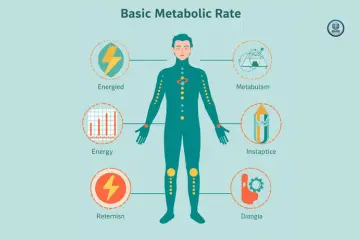
BMR is the estimated energy your body needs to support its basic functions while completely at rest. Think breathing, blood circulation, maintaining body temperature, and supporting your essential organs. Cleveland Clinic describes BMR as the minimum energy your body needs for basic functioning, and stresses that this figure differs from person to person. It’s worth remembering that this happens whether you’re asleep, watching television, or simply staring out of the window on a slow Sunday afternoon.
What happens after you press Calculate?
The process is refreshingly simple: your details go in, a formula processes them, and out comes your estimated BMR as a kcal per day result.
Why your result is an estimate
Mathematical equations predict rather than directly measure your BMR. Individual results can differ from these estimates. A calculator cannot diagnose a “slow metabolism”, and any result you get should be treated as a useful starting point rather than gospel.
Which BMR Formula Is Best for Beginners?
This is where a guide like this earns its keep. You don’t need a lecture on every metabolic equation in existence, but you do need to know that different calculators can use different formulas, and that matters.
Mifflin-St Jeor equation
This formula is widely used in modern nutrition and calorie estimation. It takes your weight, height, age, and sex as inputs. It’s commonly used to estimate resting energy needs, and UK clinical resources also lean on Mifflin-St Jeor for practical energy calculations.
Harris-Benedict equation
This is another well established predictive equation used by online BMR calculators. Cleveland Clinic’s BMR guidance includes the Harris-Benedict equation among its commonly used methods.
Which formula should a beginner choose?
The formula genuinely matters, but clarity and consistency matter just as much. A good beginner calculator should tell you which equation it’s using, rather than hiding the method behind the scenes.
BMR formula comparison table
You don’t need to memorise any of these equations. You simply need to know that calculators can produce different results because their underlying methods differ.
| Formula | Common use | Beginner-friendly? |
|---|---|---|
| Mifflin-St Jeor | BMR/RMR estimation | Yes |
| Harris-Benedict | BMR estimation | Yes |
| Revised Harris-Benedict | Updated predictive approach | Yes |
| Katch-McArdle | Uses lean body mass | Better for users with reliable body-fat data |
What Makes a BMR Calculator Beginner-Friendly?
A calculator can be mathematically sound and still be genuinely awful to use. This section helps you judge the experience, not just the equation behind it.
Clear labels and simple instructions
Look for an age field, a height field, a weight field, sex selection, and unit selection, all clearly labelled without any guesswork.
Metric units for UK users
Kilograms and centimetres are the natural choice for most UK users. That said, imperial options help anyone who still thinks in stone, pounds, feet, and inches.
No confusing jargon
You shouldn’t have to Google “what on earth is RMR” before you can understand your own result. A genuinely beginner friendly calculator explains its terms as it goes, rather than assuming you’ve already studied nutrition science somewhere along the way.
Fast results without unnecessary distractions
A clean interface, minimal form fields, a clear Calculate button, readable results, and no excessive pop-ups all make for a smoother experience.
Beginner usability scoring table
Use this as a practical checklist next time you’re reviewing any BMR calculator online.
| Test | Good beginner experience |
|---|---|
| Inputs | Clear and easy |
| Units | Metric and/or imperial |
| Formula | Stated clearly |
| Result | Easy to read |
| Explanation | Plain English |
| Mobile use | Works smoothly |
| Next step | Explains BMR vs TDEE |
How to Choose the Best BMR Calculator for Your Needs
Not every beginner has the same goal. Someone simply curious about metabolism needs far less detail than someone planning a proper weight loss programme.
Choose a simple calculator for basic learning
This suits first time users, school or personal learning, understanding BMR itself, and quick estimates without much fuss.
Choose a more detailed calculator for calorie planning
Look for one covering BMR, activity level, TDEE, and daily calorie estimates together. Our TDEE calculator and calorie calculator both build on this exact idea.
Choose a body-composition calculator if appropriate
Lean body mass can be useful in some cases, though estimated body fat percentages can themselves be inaccurate. Adding more inputs doesn’t automatically make a calculator more accurate. If you do go down this route, pairing your results with a kitchen scale for food tracking gives you a more complete picture than the calculator numbers alone.
Which calculator is right for you?
| Your goal | Best calculator type |
|---|---|
| Learn what BMR means | Simple BMR calculator |
| Estimate resting energy needs | BMR/RMR calculator |
| Plan daily calories | BMR + TDEE calculator |
| Plan weight loss | TDEE + calorie deficit tool |
| Track body composition | Advanced calculator with body-fat inputs |
If you’re after that last option, our body fat percentage calculator is a sensible next stop.

How to Use a BMR Calculator for the First Time
Let’s make this properly practical. Picture a beginner using the tool on a rainy Tuesday evening in Manchester, phone in one hand and a half finished cup of tea in the other.
Step 1: Check your age
Enter your current age accurately, since even a small error here shifts your result.
Step 2: Enter your sex
Many equations use sex as one of their core inputs, so this field matters more than it might first appear.
Step 3: Enter your height
Use centimetres, or feet and inches if the tool supports it.
Step 4: Enter your weight
Use kilograms, or pounds and stone where the calculator allows it.
Step 5: Check your units
This is a genuinely common beginner mistake. Entering 70 lb instead of 70 kg can dramatically change your result, so double check before you hit that button.
Step 6: Calculate your BMR
Your final number represents an estimated baseline energy requirement, nothing more dramatic than that. From here, the sensible next move is estimating your TDEE, rather than treating this single figure as the finish line. A kitchen scale can wait until you’ve built that fuller picture, but it’s worth having in mind for the steps ahead.
Beginner BMR calculation example
Meet Sarah, aged 30, who lives in Birmingham. She enters an age of 30, a height of 165 cm, and a weight of 65 kg. The calculator returns her estimated BMR. That figure represents her estimated resting energy needs, not the number of calories she should automatically eat each day. Our women’s BMR calculator works through examples exactly like this one.
How Accurate Is the Best BMR Calculator?
This is a genuinely important section for trust. “Best” doesn’t mean “perfect”. Even the best online calculator remains, fundamentally, an estimation tool.
Why online BMR calculators are not exact
These equations use population based data, and people vary hugely in body composition, genetics, hormonal factors, and general health. Input measurements may also not be perfectly exact, since a rushed weigh in or a rounded height figure can quietly shift your result more than you’d expect. This is exactly why a calculator should be treated as a helpful guide rather than a precise diagnostic tool. Even a well built kitchen scale has a small margin of error, and the same honest principle applies here too.
Laboratory testing vs online calculators
BMR can be measured under strict conditions in a laboratory setting. Cleveland Clinic notes that accurate BMR measurement requires controlled conditions, including complete rest and a prolonged fasting period, something no online calculator can replicate.
Does a more complicated calculator mean greater accuracy?
Not always. More inputs can help in some cases, but poor quality or unreliable inputs can just as easily introduce fresh error instead.
How to improve your estimate
Measure your weight consistently, use accurate height data, check your units carefully, use a recognised formula, avoid obsessing over tiny differences between tools, and compare results over time rather than treating any single number as absolute truth. A kitchen scale helps indirectly here too, since accurate portion tracking makes your weekly weight trend far easier to interpret alongside your BMR estimate. Our guide on the limitations of BMR calculators covers this honestly.
BMR vs RMR: What Should Beginners Know?
Many beginners see BMR and RMR used almost interchangeably online. They’re closely related terms, but they aren’t identical.
What is BMR?
This is the strict concept of basal metabolic rate, measured under the most controlled resting conditions possible.
What is RMR?
Resting metabolic rate is measured under somewhat less strict conditions than BMR.
Why the difference matters
Some online tools label their estimate as BMR while technically estimating RMR instead. Cleveland Clinic notes that RMR is similar to BMR but includes some low effort activities, and is typically somewhat higher as a result.
BMR vs RMR vs TDEE table
This is one of the most important tables in this whole guide, since it stops you confusing a resting estimate with your actual total daily calorie needs.
| Term | What it means | Beginner use |
|---|---|---|
| BMR | Basal energy needs at rest | Understand resting metabolism |
| RMR | Resting energy expenditure | Practical resting estimate |
| TDEE | Total daily energy expenditure | Estimate daily calorie needs |
| Calorie target | Planned intake | Used for a specific goal |
Is BMR the Same as Your Daily Calorie Needs?
This is where plenty of beginner calculators create genuine confusion. A BMR result is not a daily food allowance. Your body burns energy while you walk to the bus, climb the stairs, work, exercise, and even digest your dinner.
What BMR does not include
BMR leaves out walking, exercise, household chores, work activity, and food digestion entirely.
What is TDEE?
TDEE stands for total daily energy expenditure, covering your whole day rather than just your resting state.
How BMR contributes to TDEE
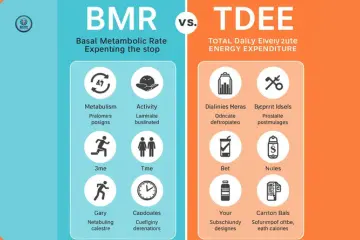
The simple sum runs: BMR plus physical activity plus exercise plus the thermic effect of food plus other expenditure equals your TDEE.
Why beginners should calculate TDEE next
Anyone looking for weight maintenance or weight loss calories needs a broader estimate than BMR alone. Cleveland Clinic describes BMR as an essential starting point for estimating calorie needs, while emphasising it remains just an estimate throughout. Our full BMR vs TDEE guide walks through this relationship properly.
Can Beginners Use a BMR Calculator for Weight Loss?
Yes, though the calculator is a starting tool, not a magic diet plan. Let’s connect this to your likely next question, without encouraging any extreme calorie restriction along the way.
Start with BMR
Calculate your estimated baseline first, using a calculator that clearly states its formula.
Estimate TDEE
Factor in your actual activity level honestly, rather than rounding yourself up to sound more active than you really are.
Set a sensible calorie target
An energy deficit simply means eating a little less than you use. Our calorie deficit calculator can help set a starting figure, and a basic digital kitchen scale makes hitting that target far easier than guessing portions by eye. I’ve found that readers who weigh their meals for even a fortnight tend to stick to their target far more consistently than those relying purely on estimation, since it removes the constant second guessing that trips so many beginners up.
Monitor real-world progress
Track your weight trends, energy, hunger, exercise performance, and general adherence over several weeks rather than days. A digital kitchen scale makes this far easier too, since weighing your meals for a week or two teaches you what your usual portions actually look like, rather than relying on guesswork alone. Pair that with a simple notebook or app, and you’ll build a genuinely honest picture of your progress within a month.
Why you should not simply eat your BMR
BMR was never designed to be your automatic daily intake. Aggressive calorie restriction carries real downsides, and anyone with a medical condition should seek professional advice before making major changes. A kitchen scale is a small, cheap tool that helps you find a sensible middle ground, since accurate portions stop you accidentally eating far below your real needs. Our full BMR for weight loss guide covers this entire process in far more depth.
Worldwide Expert Advice on Choosing a BMR Calculator
Let’s strengthen trust here by connecting calculator advice to recognised medical and nutrition expertise. The message is a practical one: use calculators as tools, not as unquestionable truth carved in stone.
Dr Marcio Griebeler on online calorie estimates
Dr Marcio Griebeler has explained that online tools and wearable devices can provide useful calorie burn estimates, though they remain imperfect rather than exact.
Cleveland Clinic’s advice on BMR
Cleveland Clinic’s medically reviewed guidance explains that BMR is individual, and that predictive equations should always be treated as estimates rather than precise measurements.
What experts would want beginners to understand
A calculator is a starting point, not a diagnosis. BMR is not TDEE. One number does not define your entire metabolism. Real world trends matter far more than any single reading.
The expert rule of thumb
Choose the calculator that’s transparent, simple, and appropriate for your actual goal, rather than the one promising impossible precision it simply cannot deliver.
Common Mistakes Beginners Make With BMR Calculators
This section captures the ordinary, everyday errors people make. Usually, nobody has broken the laws of thermodynamics. They’ve simply entered the wrong unit, misread a field, or trusted a number without questioning where it came from. A little care at this stage saves a lot of confusion further down the line, in exactly the same way that weighing a portion on a kitchen scale once or twice quietly corrects months of guesswork.
Entering the wrong weight unit
Confusing kg and lb is a genuinely common slip, and it throws your entire result off.
Confusing BMR with TDEE
As covered earlier, these are two different numbers answering two different questions entirely.
Assuming a lower BMR means a “broken” metabolism
This is a persistent myth worth challenging directly. Our common BMR myths guide tackles this one head on.
Comparing your BMR with a friend’s
Personal factors make this comparison genuinely unhelpful, since no two bodies are built quite the same way.
Changing calculators every day
Pick one reliable tool and stick with it, rather than jumping between calculators and chasing a slightly different number each time.
Treating the result as exact
Estimates carry uncertainty by their very nature, and that’s fine, provided you treat them accordingly.
Beginner mistake checklist
- Correct age
- Correct height
- Correct weight
- Correct unit
- Correct formula
- Understand BMR vs TDEE
- Do not treat the number as a diagnosis
What Features Should You Avoid in a BMR Calculator?
A beginner friendly tool should make your life easier, not noisier. Here’s how to assess any online tool with a slightly more critical eye, drawing on patterns I’ve noticed across dozens of calculators over the years.
Avoid calculators with unclear formulas
Transparency matters. If a tool won’t tell you which equation it uses, that’s a fair reason to look elsewhere.
Be cautious with unrealistic accuracy claims
Watch for phrases such as “100% accurate”, “perfect metabolism reading”, or “guaranteed calorie burn”. No genuine calculator can honestly promise any of that.
Avoid unnecessary personal data collection
Be mindful of privacy and data minimisation. A calculator asking for far more than age, sex, height, and weight deserves a second look, especially if it isn’t clear why that extra information is needed at all.
Avoid confusing result pages
You shouldn’t have to hunt around the page just to find your actual BMR result.
The ideal beginner result page
A good result page shows your BMR result, the kcal per day figure, the formula used, a simple explanation, a TDEE option, and a clear next step forward.
Best BMR Calculator for Beginners: A Simple Decision Guide
Let’s bring the selection criteria together properly, without turning this into a shallow ranking list. You should now be able to judge any calculator entirely for yourself.
If you want the simplest option
Choose a tool with four or five inputs, clear units, one click calculation, and plain English results throughout.
If you want to understand the science
Choose one that shows the formula name, the inputs used, a proper explanation of BMR, and its own accuracy limitations.
If your goal is weight loss
Choose a calculator that connects BMR with TDEE, activity level, calorie needs, and sensible goal setting all in one place. Our BMR weight loss calculator was built with exactly this in mind.
If you are a complete beginner
Prioritise ease of use, clear language, mobile usability, no confusing jargon, and genuinely helpful next steps. Our BMR for beginners guide is a good companion piece alongside your first calculation.
Best beginner calculator checklist
| What to look for | Why it matters |
|---|---|
| Recognised formula | Supports a sensible estimate |
| Simple inputs | Easy for first-time users |
| Clear units | Reduces errors |
| Transparent method | Builds trust |
| Plain-English result | Improves understanding |
| TDEE connection | Helps with daily calorie planning |
| Privacy-friendly design | Protects user information |
| Mobile-friendly interface | Easy to use anywhere |
Frequently Asked Questions About the Best BMR Calculator
What is the best BMR calculator for beginners?
The best beginner BMR calculator is simple, transparent about its formula, easy to use, and clear about what the result actually means.
Is a free BMR calculator accurate?
A free calculator can provide a genuinely useful estimate, though no online calculator can guarantee a perfectly accurate personal BMR.
Which BMR formula is most accurate?
Mifflin-St Jeor is widely used for estimating resting energy needs, while other formulas such as Harris-Benedict are also common. Results remain estimates either way.
Should beginners use BMR or TDEE?
Use BMR to understand your resting energy needs. Use TDEE when you want to estimate your total daily calorie requirements instead.
Is BMR the same as calories burned per day?
No. BMR covers your basic resting needs. Your total daily calorie expenditure is higher, since it includes activity and other energy costs.
Can I use a BMR calculator to lose weight?
Yes, as a starting point. Calculate your BMR, estimate your TDEE, then use your overall energy needs to guide a sensible plan from there. A kitchen scale alongside your calculator result helps translate that plan into real meals on a real plate.
Why do two BMR calculators give different results?
They may use different equations, different assumptions, or simply different rounding methods behind the scenes.
Should I choose a BMR calculator that asks for body fat?
Only if you have reasonably reliable body fat data and understand why it’s being used. More inputs don’t automatically mean greater accuracy.
Can a BMR calculator diagnose a slow metabolism?
No. A calculator provides an estimate and cannot diagnose any medical condition whatsoever.
How often should I recalculate my BMR?
Recalculate when your weight or other key inputs change significantly, rather than repeatedly checking the number every single day. Our guide on recalculating your BMR explains sensible timing for this.
Sources and Further Reading
For a health related calculator article, strong sources are genuinely part of the product itself. This guide leans on medical organisations and peer reviewed research rather than influencer claims or supplement marketing.
Recommended source types
These include the NHS, Cleveland Clinic, NIDDK, PubMed, NCBI, peer reviewed nutrition research, and registered dietitians or other qualified healthcare professionals. Leaning on these sources, rather than social media claims, is a deliberate choice behind everything written in this guide.
EEAT requirements for the finished article
This guide includes medical or scientific references, a clear explanation of limitations, transparent formula information, no claims of perfect accuracy, a clear distinction between BMR and TDEE, an appropriate health disclaimer, and practical UK context throughout.
If you’d like to explore our wider calculator range, our tools hub lists everything in one place, including our men’s BMR calculator, BMI calculator, macro calculator, protein calculator, daily calorie intake calculator, and general weight calculator. Our about page explains the background of our team, and our FAQ page answers plenty more common questions beyond this guide.
For further reading on related topics, our pieces on BMR calculator alternatives, limits of BMR calculator apps, common BMR calculation mistakes, the most reliable BMR calculator options, when not to rely on BMR, why BMR can change suddenly, why beginners should track BMR, how doctors estimate metabolism, the role of muscle mass in BMR, BMR for athletes versus sedentary people, how age and gender affect BMR, and increasing your BMR naturally are all well worth a read.
Final Recommendation
Having pointed countless readers towards their first BMR result, my honest recommendation is this. The best BMR calculator for beginners is the one that’s simple, transparent about its formula, and honest about being an estimate rather than a diagnosis. Don’t chase the calculator promising perfect precision, chase the one that helps you actually understand your own number.
Pair your result with a sensible TDEE estimate, a kitchen scale for honest portions, and a bit of patience, and you’ll get far further than anyone obsessing over decimal points. Start simple, stay consistent, and let your BMR guide you rather than rule you. If you take one thing away from this whole guide, let it be that a number on a screen is only ever the beginning of the story, never the end of it.

Ehatasamul Alom is a dedicated health-tech enthusiast and the co-founder of BMRCalculator. With a passion for metabolic science, he focuses on providing accurate health data for the UK community. Ehatasamul ensures that every tool and guide aligns with NHS standards and public health research. His mission is to simplify complex biological data, helping British residents make informed decisions about their fitness, calorie needs, and long-term wellness. When not analyzing health trends, he explores the latest innovations in wearable fitness technology.