It’s 7:15 on a rainy Tuesday morning in Leeds. You haven’t moved off the sofa yet, you’re still in your dressing gown, and your body is already burning fuel just to keep you alive. That quiet, constant burn is your BMR, and understanding it is the real starting point for BMR for weight loss. Your basal metabolic rate tells you how much energy your body needs at rest, but on its own, it won’t tell you what to eat for dinner or how many calories to cut. In this guide, I’ll walk you through the full path from a BMR number to a weight loss plan you can actually stick to.
Here’s the simple route we’ll follow together:
BMR → TDEE → calorie deficit → food and activity plan → progress tracking → adjustments
Grab a cuppa and let’s get into it.
What Is BMR and Why Does It Matter for Weight Loss?
Before we talk diets, let’s get the basic science sorted. Once you know what your BMR number really represents, you’ll stop treating it like a strict food budget.
What does BMR mean?
Basal metabolic rate is the energy your body needs just to stay alive at complete rest. It powers your organs, your brain, and every cell in your body while you do nothing at all. This is why your body burns calories even in deep sleep. BMR is usually shown in kcal per day, and it forms the base layer of your total energy needs.
What does BMR include?
Your BMR covers only the essentials:
- Breathing
- Heart function
- Brain activity
- Blood circulation
- Keeping your body temperature stable
- Basic cellular repair and processes
What does BMR not include?
BMR does not account for:
- Walking
- Cycling
- Gym workouts
- Household chores
- Work related movement
- Digestion, known as the thermic effect of food
The important point for weight loss
BMR is a starting point, not your weight loss calorie target. Many people open a calculator, see their BMR number, and try to eat exactly that much. This is one of the fastest ways to end up hungry, tired, and ready to quit within a fortnight. Your BMR ignores movement entirely, so eating at BMR level almost always creates too large a gap for comfort.
BMR vs TDEE: The Number You Need for Weight Loss
This is the most important bridge in the whole article. If you want BMR for weight loss to actually work, you need to understand your total daily energy expenditure, not just your resting number.
What is TDEE?
TDEE stands for total daily energy expenditure. It’s everything your body burns across a full day, resting energy included. Think of it as your BMR plus all the extra movement layered on top.
TDEE is made up of:
- BMR, or resting energy expenditure
- Physical activity
- Structured exercise
- Non-exercise activity thermogenesis, often shortened to NEAT
- The thermic effect of food
Why BMR alone is not enough
Picture two people who both have a BMR of 1,500 kcal. One works from home and barely leaves the desk. The other walks 10,000 steps a day and cycles to work. Their BMR is identical, yet their daily energy needs are worlds apart. This is exactly why our BMR vs TDEE comparison guide is worth a proper read if this distinction feels new to you.
BMR vs TDEE comparison table
I built this table to clear up the confusion before you start calculating your own calories. It’s the same reference I point clients towards when they mix up these terms.
| Measure | What it tells you | Useful for weight loss? |
|---|---|---|
| BMR | Energy needed at rest | Starting point |
| RMR | Resting energy expenditure | Starting estimate |
| TDEE | Total daily energy use | More useful for calorie planning |
| Calorie intake | Energy consumed from food and drink | Must be considered alongside expenditure |
If you want to see how BMR sits next to other related terms, our guides on BMR versus your metabolism, BMR compared with active calories, and BMR versus AMR all cover slightly different angles of the same puzzle.
The simple weight-loss equation
Weight loss generally needs an energy deficit over time. You eat a little less than your body uses, and over weeks, that gap adds up to fat loss. What this equation does not do is predict an exact number on the scale each Friday. Bodies are not spreadsheets.
How to Use Your BMR Result for Weight Loss
Right, let’s get practical. You’ve got a BMR number sitting in front of you. Here’s what happens next, step by step, in the same order you’d move through a calculator and into a diet plan.
Step 1: Calculate your BMR
Most calculators use one of these tried and tested formulas:
- Mifflin-St Jeor
- Revised Harris-Benedict
- Katch-McArdle
Use a calculator that tells you which formula it applies, so you know what you’re working with. Our own BMR calculator explained in plain terms walks through exactly how these sums work behind the scenes.
Step 2: Estimate your TDEE
Once you have your BMR, pick an activity level and be honest about it. This means you should:
- Choose an activity level that matches your real week
- Factor in daily movement, not just workouts
- Include any structured exercise sessions
- Resist the urge to round yourself up
Be careful with activity multipliers
Going to the gym three times a week does not automatically make you highly active. I’ve seen plenty of people select “very active” purely because they train hard, while spending the other 21 hours mostly seated. Think about your daily step count, whether your job is desk based, if you walk or cycle to work, whether your job involves physical effort, your weekend habits, and how often you genuinely train.
Step 3: Create a sensible calorie deficit
A calorie deficit simply means eating less energy than you use over time. A smaller, steadier deficit tends to be far easier to stick with than a drastic one. Everyone’s needs differ here, so there’s no single universal number that suits every reader. Our calorie deficit calculator can help you set a starting figure based on your own TDEE.
Step 4: Track and adjust
Keep an eye on:
- Body weight trends over several weeks
- Waist measurements
- Energy levels
- Hunger patterns
- Gym or exercise performance
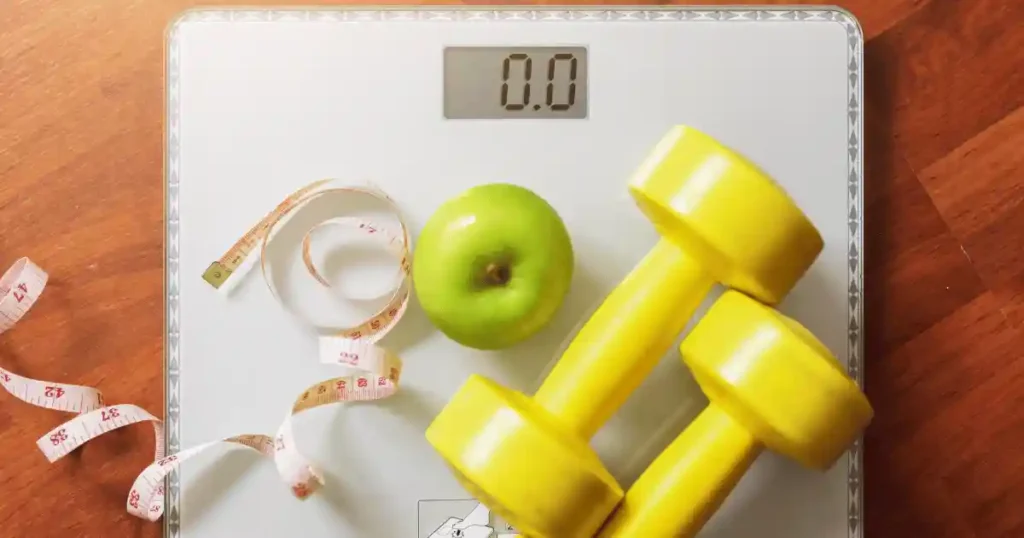
A simple digital kitchen scale like this one makes portion tracking far more accurate than eyeballing your plate, and it removes a lot of guesswork from Step 3 and Step 4 alike. I keep one on my own worktop, and it’s genuinely changed how honestly I track meals from week to week.
How Much of a Calorie Deficit Should You Create?
This section probably matters most to you right now. People want a firm number, but I’d rather help you avoid turning weight loss into a race to eat as little as humanly possible. NICE recommends an individualised approach that reduces energy intake while keeping nutrition balanced and properly supported.
What is a calorie deficit?
Here’s a simple worked example:
- Estimated TDEE: 2,200 kcal
- Food intake: 1,900 kcal
- Approximate energy gap: 300 kcal
Real world weight change is messier than a simple daily subtraction, thanks to water shifts, hormones, and daily variation. Getting that 1,900 kcal figure right matters more than people expect, and this is where a set of digital kitchen scales genuinely earns its keep. Guessing portion sizes by eye tends to underestimate intake, sometimes by a fair margin.
Should everyone use the same calorie deficit?
Not at all. Your ideal deficit depends on your body size, starting weight, activity, age, sex, general health, any medical conditions, personal food preferences, and your history with dieting.
Why a bigger deficit is not always better
Cutting too hard tends to bring on hunger, low energy, poor performance in the gym, difficulty meeting your nutrient needs, patchy adherence, and a real risk of losing muscle alongside fat.
Avoid the “eat as little as possible” trap
Very low energy diets are not a casual do-it-yourself strategy. NICE recommends low and very low energy diets only in specific circumstances, delivered within specialist weight management services with proper clinical support. They are not designed for long term, unsupervised use.
A BMR Weight-Loss Calculation Example
Numbers make more sense with a real example, so let’s build one together using a fictional UK adult.
Meet the example person
- Age: 35
- Sex: Female
- Height: 170 cm
- Weight: 80 kg
- Office based job
- Walks most days
- Trains three times a week
Calculate estimated BMR
Using the Mifflin-St Jeor equation for women:
(Basal metabolic rate) BMR = (10 × weight in kg) + (6.25 × height in cm) − (5 × age) − 161
BMR = (10 × 80) + (6.25 × 170) − (5 × 35) − 161
BMR = 800 + 1,062.5 − 175 − 161
Estimated BMR: roughly 1,527 kcal per day
Estimate TDEE
With a moderately active lifestyle applied to that BMR, her estimated TDEE lands somewhere around 2,100 to 2,300 kcal per day. This is not a lab measured figure, just a sensible working estimate to plan around.
Create a starting calorie target
A moderate deficit of around 300 to 400 kcal would put her starting target near 1,800 kcal per day. That number is a starting point, not a promise of an exact weekly result on the scale.
What happens next?
- Follow the plan consistently
- Track your progress
- Review the trend every couple of weeks
- Adjust the target if needed
How to Choose the Right Activity Level for Your BMR Calculator
This section matters more than people expect. It’s easy to overestimate exercise and underestimate everyday movement. You might smash a 45 minute spin class, then sit still for the other 23 hours of the day. Your calculator needs the full picture, not just the gym bit.
Sedentary
Signs you fit here include desk based work, little structured exercise, a low daily step count, and limited movement outside work hours.
Lightly active
This usually looks like regular walking, light exercise, some active commuting, and the odd gym session.
Moderately active
Think regular training, frequent walking, and an active lifestyle that goes beyond the gym itself.
Very active
This covers physically demanding work, frequent training sessions, and consistently high daily movement.
How to avoid overestimating your activity
Check your average daily steps, consider what your job actually involves, count your weekly training sessions honestly, think about what weekends look like, and avoid counting the same workout twice in your head.
How BMR Changes During Weight Loss
Weight loss is rarely a perfectly straight line. As your body changes, your energy needs shift too, which is exactly why a calorie plan that worked in week one might need reviewing by week ten.
Why your estimated BMR may fall as you lose weight
A smaller body generally needs less energy. Lower body mass, changes in lean tissue, and a drop in overall energy expenditure all play a part here. Our piece on why BMR slows down over time covers this pattern in more depth.
Why weight loss often slows down
Several things contribute to this: a smaller body size, lower energy needs, natural changes in activity, metabolic adaptation, and shifts in appetite and behaviour that creep in without you noticing.
Why the “3,500 calorie rule” is too simple
The body is dynamic, not static. Researchers at America’s National Institute of Diabetes and Digestive and Kidney Diseases have shown that the old fixed calorie rule doesn’t capture how energy expenditure and body weight change together over time. Their Body Weight Planner tool uses a dynamic model instead of a flat number.
What to do when progress slows
Check your food tracking accuracy, review your portion sizes, look again at your activity levels, review weekly weight averages rather than single readings, recalculate your numbers after a meaningful weight change, and avoid making drastic cuts in a panic.
How to Track Weight Loss After Using Your BMR
The bathroom scale can be a noisy little thing. One morning it says 80 kg, the next it seems to have changed its mind entirely. Trends matter far more than single readings.
Track your weight consistently
Weigh yourself at a similar time of day, in similar clothing, under similar conditions, and only as often as feels comfortable for you.
Use weekly averages
A weekly average smooths out daily noise from water, salt, and food volume, giving you a far more honest picture than any one reading alone.
Track other progress markers
Beyond the scale, keep an eye on your waist measurement, hip measurement, how your clothes fit, your fitness levels, your strength in the gym, your energy, and your general wellbeing.
What if your weight does not change?
Ask yourself: has enough time actually passed? Is your calorie intake being tracked accurately? Has your activity changed without you noticing? Are weekends throwing things off? Could water retention be masking real progress? Is your calorie estimate simply too high? If you’ve been estimating rather than weighing, pulling out a kitchen scale for a week is usually the quickest way to find the honest answer.
What to Eat When Using BMR for Weight Loss
A calorie deficit is only half the story. Food quality still matters hugely. A diet built from tiny portions of ultra processed snacks might technically fit your calorie target on paper, yet leave you hungry and miserable by four in the afternoon.
Prioritise protein
Protein rich foods support satiety and help protect your muscle while you’re in a deficit. Good UK options include eggs, Greek yoghurt, chicken, fish, beans, lentils, and tofu. Our protein calculator can help you work out a sensible daily target based on your goals.
Eat plenty of fibre-rich foods
Vegetables, fruit, wholegrains, and pulses all bring bulk and nutrients without a huge calorie cost.
Choose filling foods
Look for meals with good volume, decent protein, plenty of fibre, and water rich ingredients such as soups and salads.
Keep favourite foods in the plan
Flexible dieting, sensible portion awareness, and steering clear of all or nothing thinking will keep you sane over the long haul. A digital kitchen scale is genuinely useful here too, since weighing your favourite treats occasionally teaches you what a realistic portion actually looks like.
A simple UK weight-loss plate
Aim for half your plate in vegetables or salad, a solid source of protein, a portion of wholegrain or starchy carbohydrate, and a small amount of healthy fat.
Can Exercise Boost Weight Loss Based on Your BMR?
Exercise is genuinely useful, but it’s not a magic calorie eraser. Movement supports weight management, fitness, and general health, without you needing to “earn” every single meal.
Walking and everyday movement
Brisk walking, active commuting, taking the stairs, gardening, and household tasks all add up across a week far more than people expect.
Strength training
Strength work helps protect your muscle mass during weight loss and improves your overall strength and daily function.
Cardio exercise
Cycling, swimming, running, rowing, and group fitness classes are all solid options depending on what you actually enjoy.
Why exercise is valuable even without immediate weight loss
NICE recommends increasing physical activity for its wider health benefits, even on weeks when the scale refuses to budge.
BMR for Weight Loss: Common Mistakes to Avoid
Let’s have a bit of a laugh with this one, because there are plenty of easy ways to accidentally turn a useful BMR calculator into a source of confusion. Most of these are quick fixes once you spot them.
Mistake 1: Eating exactly at your BMR
Your BMR ignores all movement, so eating exactly at that number nearly always creates too big a gap. Our guide on when not to rely on BMR alone explains this trap in more detail.
Mistake 2: Choosing “very active” because you visit the gym
Structured exercise and total daily activity are two very different things, as covered earlier in this guide.
Mistake 3: Expecting exact weekly weight loss
Individual variation is real, and a calculator cannot promise a precise number each week.
Mistake 4: Cutting calories too aggressively
This tends to bring hunger, fatigue, poor adherence, and nutritional gaps that catch up with you eventually.
Mistake 5: Trusting the scale after one day
Water, salt, carbohydrate intake, your menstrual cycle, and food volume can all shift a single reading without any real fat loss involved. Weigh your food rather than your worry, using a kitchen scale for meals and letting the bathroom scale settle into a weekly trend instead of a daily verdict.
Mistake 6: Recalculating BMR every morning
Daily fluctuations rarely mean enough to justify recalculating constantly. Our common BMR calculation mistakes guide covers several more traps worth knowing about.
How to Adjust Your BMR-Based Weight-Loss Plan
A good plan stays flexible. If your progress runs faster, slower, or simply different from what you expected, the answer is usually to review your data calmly, not to panic and bin the calculator altogether.
If you are losing weight steadily
Keep going. Maintain your nutritious food choices, keep your activity sustainable, and monitor your energy and general wellbeing along the way.
If weight loss is slower than expected
Check your actual food intake, review portion sizes, look at weekend eating habits, review your activity, check your tracking accuracy, and consider whether enough time has genuinely passed. A quick week spent weighing meals on a kitchen scale often reveals where the extra calories were hiding all along.
If weight loss is too fast
Consider increasing your energy intake slightly, check your food quality, review your exercise load, and speak with a healthcare professional if you’re at all concerned.
When to recalculate BMR
Worth recalculating after a significant weight change in either direction, a major shift in body composition, or a large change in your activity levels. Our guide on when to recalculate your BMR sets out the details clearly.
A simple adjustment rule
Change one thing at a time, then give it enough time before judging the result.
BMR Weight-Loss Plan: Example Weekly Routine
Let’s make this feel a bit more lived in, rather than like a spreadsheet wearing a lab coat. Here’s how a calorie estimate might sit alongside a normal week.
Monday to Friday
A typical weekday might include a solid breakfast, general movement through the working day, a filling lunch, a short walk, an evening meal, and an optional training session. Weighing your breakfast and dinner on a digital kitchen scale for a fortnight is one of the fastest ways to learn your usual portions without much effort at all.
Weekend
Weekends can include a social meal out, a longer walk, more flexible food choices, and steering well clear of the “I’ve ruined everything” mindset after one bigger meal.
Example weekly tracking table
Here’s the simple tracking system I recommend to readers who want structure without obsessing over every gram on the plate. It pairs well with a basic kitchen scale, a notebook or app, and about five minutes a day, nothing more elaborate is really needed.
| Metric | What to track | How often |
|---|---|---|
| Body weight | Scale reading | Several times weekly or weekly |
| Waist | Circumference | Every 2 to 4 weeks |
| Activity | Steps and exercise | Daily |
| Food intake | Calories and meal pattern | As useful |
| Energy | Personal rating | Daily or weekly |
| Progress | Weekly trend | Weekly |
A set of kitchen scales sat on your worktop makes the food intake row in this table far easier to complete honestly, especially in the early weeks while you’re still learning portion sizes.
The human bit
Birthdays, rainy Sundays, holidays, and the occasional slice of cake all exist in real life. A sustainable plan needs room for all of it.
Worldwide Expert Advice on Using BMR for Weight Loss
I want to bring in a genuinely credible voice here, rather than an invented quote, because BMR for weight loss deserves proper grounding in real research.
Expert perspective on BMR and weight loss
BMR is an estimate, not a diagnosis. TDEE is far more useful for day to day calorie planning, weight change is a dynamic process, and individual response varies considerably from person to person.
Expert perspective on sustainable calorie deficits
The consistent advice across the research is to avoid extreme restriction, preserve nutritional adequacy, support long term adherence, and combine diet with physical activity rather than relying on either alone.
Suggested expert reference: Kevin D. Hall, PhD
Kevin D. Hall, PhD, a researcher associated with the Integrative Physiology Section at America’s National Institute of Diabetes and Digestive and Kidney Diseases, is a credible reference point for the dynamic nature of body weight change. His research behind the Body Weight Planner focuses on mathematical modelling of how food intake and activity interact with a changing body and metabolism over time.
Is BMR Enough to Predict How Much Weight You Will Lose?
Let’s answer this one directly, because I get asked it constantly. If you eat 500 calories below your estimated needs, exactly how many pounds will you lose? Honestly, a BMR calculator cannot tell you that with real precision.
Why BMR cannot predict exact weight loss
BMR is estimated rather than measured directly. TDEE carries its own uncertainty, individual metabolism varies, body composition shifts over time, water fluctuates daily, and metabolic adaptation changes the picture as weeks pass. Our limitations of BMR calculators guide covers these gaps in far more detail.
Why dynamic models can be more useful
Tools such as the NIDDK Body Weight Planner model how body weight and energy expenditure change together over time, rather than relying on one fixed calorie rule that never adjusts.
What BMR is best used for
BMR works well as a starting estimate, a planning tool, a way to understand your energy needs, and a baseline figure for building your TDEE calculation.
When Should You Speak to a Healthcare Professional?
A BMR calculator is not a medical test. If your weight changes seem unexplained, or you have a condition that affects nutrition or metabolism, proper professional support beats endlessly tweaking a calculator.
Seek professional advice if you have
Unexplained weight gain or loss, persistent fatigue, suspected thyroid problems, diabetes, a history of eating disorders, pregnancy or breastfeeding needs, complex medical conditions, or medication related weight changes.
Who can help?
Your GP, a registered dietitian, a registered nutritionist, another qualified healthcare professional, or a specialist weight management service.
Important safety note
This article offers general information, and a genuinely personalised calorie target may need a proper professional assessment behind it.
Frequently Asked Questions About BMR for Weight Loss
Can BMR help me lose weight?
BMR helps you estimate your resting energy needs, but planning weight loss properly usually needs a TDEE estimate and a sensible energy deficit built on top of it.
Should I eat below my BMR to lose weight?
No, this isn’t recommended as a daily target. Your total energy needs should guide your plan, not your resting number alone.
How do I turn my BMR into a calorie deficit?
Follow the same route we’ve used throughout this guide: BMR, then estimate TDEE, then choose a sensible deficit, then track progress, then adjust as needed.
How much weight can I lose with my BMR?
BMR alone cannot predict an exact weight loss figure, as we covered earlier in this guide.
Why has my weight loss stopped even though I am eating below my BMR?
A few common reasons: your BMR is only an estimate, your real TDEE may be lower than assumed, food intake may be underestimated, water changes could be hiding fat loss, and energy expenditure naturally shifts as weight falls.
Does a higher BMR mean I will lose weight faster?
Not necessarily. Your deficit, consistency, and total daily activity all matter just as much as your resting number.
Does walking increase calorie burn enough to help weight loss?
Yes, regular walking contributes meaningfully to your total daily energy expenditure and genuinely supports weight management over time.
Should I recalculate my BMR after losing weight?
It’s worth doing after a meaningful weight change, since your updated estimate will be more accurate than your original figure.
Can I use a BMR calculator if I have a medical condition?
Calculators can offer a general estimate, though professional advice is often more appropriate for truly personalised planning if you have a medical condition.
For more common questions like these, our full FAQ page covers a wider range of BMR and calorie topics in one place.
Sources and Evidence for BMR and Weight Loss
I’ve tried to lean on solid, credible sources throughout this guide, rather than influencer claims or generic diet blog opinions.
Recommended evidence sources
NHS weight management information, NICE guidance on overweight and obesity, the NIDDK Body Weight Planner, peer reviewed research on energy balance, and published research on predictive metabolic equations all sit behind the advice in this article.
UK guidance to reference
NICE’s current guidance supports an individualised approach to dietary intervention, recommending that energy deficit approaches stay nutritionally balanced and properly supported, while low and very low energy diets remain reserved for specific specialist contexts only.
If you’d like to see how this fits into our wider content and the team behind it, our about page explains our background, and our tools hub lists every calculator we offer, including our BMR weight loss calculator, TDEE calculator, macro calculator, daily calorie intake calculator, body fat percentage calculator, step calculator, women’s BMR calculator, men’s BMR calculator, and general weight calculator.
For a wider view of common misunderstandings, our common BMR myths and BMR for beginners guides are a good next stop, alongside our notes on the role of muscle mass in BMR, BMR for athletes versus sedentary people, how age and gender affect BMR, how doctors estimate metabolism, signs of a low or high BMR, why beginners should track BMR, increasing your BMR naturally, eating based on your BMR, low calorie British snacks, BMR calculator alternatives, limits of BMR calculator apps, the most reliable BMR calculator, why BMR can change suddenly, and BMR versus calorie maintenance.
Final Recommendation
After years of working through this exact process with readers across the UK, my honest advice is simple. Treat your BMR as a starting point, not a rulebook. Build your TDEE properly, choose a modest deficit, and give it a fair few weeks before judging results. Keep protein and fibre on your plate, keep moving in ways you actually enjoy, and use tools like a kitchen scale to learn real portion sizes rather than guessing forever.
BMR for weight loss works best as one part of a bigger, kinder plan, not a strict number to chase. Be patient with your body, track trends rather than single days, and adjust calmly when progress stalls. Small, steady steps beat drastic short lived efforts almost every single time, and that’s the approach I’d genuinely stand behind for anyone starting out today.

Ehatasamul Alom is a dedicated health-tech enthusiast and the co-founder of BMRCalculator. With a passion for metabolic science, he focuses on providing accurate health data for the UK community. Ehatasamul ensures that every tool and guide aligns with NHS standards and public health research. His mission is to simplify complex biological data, helping British residents make informed decisions about their fitness, calorie needs, and long-term wellness. When not analyzing health trends, he explores the latest innovations in wearable fitness technology.