
Right, this mix-up trips up almost everyone who first opens a calorie calculator. Bmr vs sedentary sounds like two versions of the same idea, but they’re actually answering completely different questions. One describes the energy your body needs while doing absolutely nothing. The other describes how active your normal week actually looks. I remember a client in Manchester who kept eating far too little because she thought her “sedentary” label was her BMR result. It wasn’t, and once she understood the difference, her whole plan finally made sense. This guide walks through both terms properly, with worked examples, so you can use a calculator with genuine confidence rather than guesswork.
What Does BMR Mean?
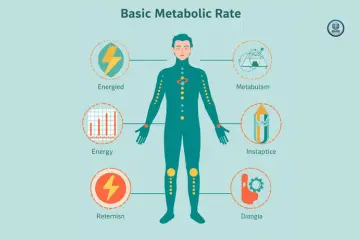
BMR stands for Basal Metabolic Rate. It’s an estimate of the energy your body needs to keep basic life functions running while you’re at complete rest.
Think of it as the energy your body spends behind the scenes. Your heart keeps beating, your lungs keep working, your brain stays busy and your body holds its temperature steady, even while you’re lying perfectly still. You can check your own estimate with our BMR calculator.
What your BMR includes covers breathing, heart function, blood circulation, brain activity, maintaining body temperature, supporting your organs and tissues, and basic cellular activity. It doesn’t represent the calories you need for a normal day of actual living, a point covered well in our guide on what BMR does not measure.
BMR is not your daily calorie requirement. A person may have a BMR of 1,500 kcal a day, but that doesn’t mean they should eat only 1,500 calories. You still spend energy getting out of bed, walking to the shops, climbing stairs, working, cooking dinner, exercising and digesting food. Your real daily energy needs sit well above your BMR, which is exactly why our piece on BMR vs TDEE is worth reading alongside this one.
What Does Sedentary Mean?
In the world of BMR and calorie calculators, sedentary describes a low level of physical activity. It’s an activity category, not a type of metabolism.
A sedentary person still has a BMR. The difference is that their total daily energy use includes relatively little extra activity on top of it.
What a sedentary lifestyle looks like includes sitting at a desk for most of the working day, driving or using public transport, doing little planned exercise, taking few daily steps, spending much of the evening seated, and rarely doing physically demanding work. Picture someone working from home in Manchester. She walks to the kitchen for tea, sits at a laptop for eight hours, drives to the supermarket and relaxes on the sofa after dinner. Her lifestyle fits a sedentary activity category, even with the odd weekend walk thrown in.
Sedentary does not mean completely inactive. This distinction matters. You can be sedentary without spending every minute in bed. Someone may walk around the house, do household chores and climb a few stairs while still having a largely sedentary daily routine overall. Our BMR for beginners guide covers this activity-level confusion in more depth.
BMR vs Sedentary: The Key Difference
The easiest way to remember this is simple. BMR describes energy needs at rest. Sedentary describes activity level. One is a metabolic estimate. The other is a lifestyle category.
| Feature | BMR | Sedentary |
|---|---|---|
| What it describes | Basic energy needs | Physical activity level |
| Main purpose | Estimates resting energy use | Estimates daily activity |
| Includes exercise? | No | Usually very little |
| Includes normal movement? | No | Yes, at a low level |
| Changes with body size? | Yes | Not directly |
| Used in calorie planning? | Yes | Yes, as an activity factor |
| Is it a lifestyle? | No | Yes |
| Is it the same as TDEE? | No | No |
Many BMR calculators ask you to choose an activity level, which can make sedentary look like part of your BMR. It isn’t. The calculator first estimates your resting energy needs, then uses your activity level to estimate how much energy you might need across a typical day. Our article on BMR vs metabolism covers a closely related confusion if this theme interests you.
How BMR and Sedentary Activity Work Together
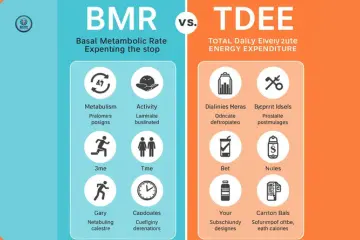
BMR is often used as the starting point for estimating your Total Daily Energy Expenditure, commonly shortened to TDEE.
A simple approach looks like this: BMR × Activity Factor = Estimated Daily Calorie Needs. For a sedentary person, many online calculators use an activity multiplier around 1.2, though exact methods vary between tools and equations, as explained in our BMR calculator accuracy explained article.
Suppose a BMR calculator estimates 1,500 calories a day. Using a sedentary factor of 1.2, that gives 1,500 × 1.2, which equals 1,800 calories a day. The result estimates daily energy needs for a sedentary lifestyle. It is not a new BMR.
If you confuse BMR with sedentary calorie needs, you may underestimate your daily energy needs, set an unnecessarily low calorie target, misread your results, expect weight changes that don’t match your sums, and become frustrated when the scales do something unexpected. And yes, scales have a funny habit of ignoring our carefully prepared spreadsheets. A decent smart scale from Amazon at least keeps your weekly readings consistent while you work through this.
BMR vs Sedentary vs TDEE
BMR is only one piece of the energy puzzle. To understand calorie needs properly, it helps to see how BMR fits alongside your total daily energy expenditure.
TDEE reflects the energy your body uses across an entire day. It can include resting metabolism, movement, exercise and the energy used to digest food. Your daily energy use breaks down into four main parts. First, BMR, the energy required for basic body functions. Second, NEAT, meaning Non-Exercise Activity Thermogenesis, such as walking around and doing chores. Third, exercise activity, meaning planned physical activity and workouts. Fourth, the thermic effect of food, the energy used to digest and process what you eat. The exact contribution of each part differs from person to person, which our BMR vs active calories guide explores in more detail.
| Term | Main question it answers | Example |
|---|---|---|
| BMR | How much energy does my body need at basic rest? | Energy for vital body functions |
| Sedentary | How active is my usual lifestyle? | Mostly sitting with little exercise |
| TDEE | How much energy might I use in a whole day? | BMR plus daily movement and activity |
| NEAT | How much energy comes from non-exercise movement? | Walking, standing, chores |
| Exercise | How much energy comes from planned activity? | Cycling, swimming or gym sessions |
How to Calculate BMR Before Using a Sedentary Factor
If you want to understand the maths rather than simply click a button, start with a recognised predictive equation, covered fully in our BMR calculator works guide.
The Mifflin-St Jeor equation is widely used to estimate resting metabolic rate and factors in age, body weight, height and sex. Research has found it to be one of the more reliable commonly used predictive equations, though it still cannot perfectly predict any one person’s measured metabolic rate.
For men: BMR = (10 × weight in kg) + (6.25 × height in cm) − (5 × age) + 5
For women: BMR = (10 × weight in kg) + (6.25 × height in cm) − (5 × age) − 161
Imagine a 35-year-old woman weighing 70 kg who stands 165 cm tall. The sum runs like this: 10 × 70 equals 700. 6.25 × 165 equals 1,031.25. 5 × 35 equals 175. Add and subtract these together, 700 + 1,031.25 − 175 − 161, and you land on roughly 1,395 kcal a day. This estimates her resting energy expenditure. It is not automatically her daily calorie target, a point our BMR for women calculator explains clearly on the results page.
How to Estimate Sedentary Daily Calories
Once you have a BMR estimate, an activity factor helps estimate your daily energy needs. This is where the word sedentary earns its keep.
A common simplified method reads: Estimated TDEE = BMR × 1.2. For the example above, 1,395 × 1.2 equals roughly 1,674 kcal a day. This gives a rough estimate of daily energy needs for a sedentary lifestyle. Different calculators may use slightly different assumptions, so two tools can produce different results even with identical inputs, a frustration we unpack in our why online BMR calculators differ article.
| Step | Calculation | Result |
|---|---|---|
| Weight | 70 kg | 70 kg |
| Height | 165 cm | 165 cm |
| Age | 35 years | 35 |
| Estimated BMR | Mifflin-St Jeor | ~1,395 kcal |
| Sedentary factor | 1.2 | 1.2 |
| Estimated daily needs | 1,395 × 1.2 | ~1,674 kcal |
The figures above are estimates for learning the method, not personalised medical or dietary advice. A simple kitchen food scale from Amazon helps turn these numbers into something practical at mealtimes.
Is Sedentary BMR the Same as a Low BMR?
No. These describe two completely separate ideas.
Someone can have a relatively low estimated BMR because of their body size, age or other factors, and still be physically active. Another person may have a higher BMR yet live a fully sedentary lifestyle.
Body size affects BMR through factors including body weight, height, age, sex, body composition and fat-free mass. Muscle and other metabolically active tissue contribute to energy expenditure, so two people of the same weight can still have different energy needs, a point explored fully in our role of muscle mass in BMR guide.
Activity level is a separate issue entirely. Your activity level reflects what you actually do throughout the day. Someone might have a desk job but cycle to work. Another might work from home and rarely leave their chair. Both have a BMR. Their total daily energy use may look very different, which is exactly the distinction our BMR for athletes vs sedentary people comparison was built to explain.
BMR vs Sedentary for Weight Loss
If your goal is weight loss, BMR helps you understand your energy needs. It should never be treated as a magic calorie limit, though.
Weight loss planning generally looks at estimated daily energy expenditure, calorie intake, activity and changes in body weight over time, all covered together in our calorie deficit calculator guide.
Should you eat below your BMR? This question comes up constantly. A BMR number is not a universal minimum calorie target for everyone. Calorie needs depend on many factors, and individual dietary plans should consider health, nutritional needs and personal circumstances. Avoid assuming that eating below a calculated BMR is automatically safe or unsafe, since a calculator is an estimate, not a clinical assessment, a theme our not to rely on BMR article covers thoroughly.
Using BMR more sensibly means estimating your BMR, selecting the activity level that best matches your real routine, estimating your TDEE, setting a sensible calorie target for your goal, monitoring your weight trend over several weeks, and adjusting gradually based on real-world results. That last step gets skipped constantly, yet it’s one of the most useful of the lot. A fitness tracker from Amazon makes tracking your actual movement far easier than guessing at it from memory.
How Accurate Are BMR and Sedentary Calculators?
Online calculators are convenient, but they don’t measure your metabolism directly.
Most rely on predictive equations built from population data, so your personal result can land higher or lower than the estimate. Factors affecting accuracy include age, body composition, body size, sex, ethnicity, health status, the equation used, and how accurately you enter your own measurements, all discussed in our limitations of BMR calculators guide. Research on energy expenditure notes that predictive equation accuracy can vary with factors such as age, sex, ethnicity and BMI category.
If you need a more direct assessment, indirect calorimetry measures oxygen consumption and carbon dioxide production to estimate resting energy expenditure. This differs enormously from typing your height and weight into an online calculator. For most people, though, a calculator remains a practical starting point rather than a laboratory measurement, a balance our most reliable BMR calculator article tries to strike honestly.
Why Your Sedentary Calorie Estimate May Be Wrong
Sometimes the issue isn’t your BMR calculation at all. It may be your activity category, and this is where honest self-assessment helps enormously.
You may be less sedentary than you think if you walk 8,000 steps most days, cycle to work, stand for long periods, have a physically active job, or exercise several times a week. Choosing sedentary in that case may underestimate your actual energy expenditure.
You may be more sedentary than you think, on the other hand, if you exercise for 30 minutes but spend the other 15 hours sitting. One gym session doesn’t always turn an otherwise inactive day into a highly active one.
Picture someone in Birmingham who sits at a desk from 9am to 5pm, drives home, then lifts weights for an hour three times a week. Their activity level isn’t automatically “very active”. The full week matters, and daily movement matters just as much. The calculator’s categories are broad estimates, not precise labels, something our common BMR calculation mistakes guide covers in detail.
BMR vs Sedentary for Different Goals
The same BMR figure gets used differently depending on what you’re trying to achieve.
For weight maintenance, use BMR as a starting point to estimate TDEE, then compare your estimated needs with your real-world weight trend, a topic covered by our BMR vs calorie maintenance guide. For weight loss, estimate your daily energy needs first, then consider a sustainable calorie deficit rather than treating BMR as a hard ceiling, as detailed in our BMR for weight loss article.
Also, For weight gain, you may need to consume more energy than you currently use, while also considering protein intake, resistance training and overall diet quality, something a protein calculator can help with directly. For fitness planning, BMR provides useful background, but performance also depends on training load, nutrition, recovery and sleep.
How to Choose the Right BMR Calculator
Not every calculator is built the same way, so it pays to be a little choosy.
If you’re comparing BMR tools in the UK, look for one that clearly explains its method rather than simply presenting a mysterious number, exactly the standard we aim for with our own BMR calculator.
Features of a good BMR calculator include a clearly stated formula, use of Mifflin-St Jeor or another recognised equation, metric units such as kg and cm, age and height inputs, weight input, clear activity-level definitions, BMR and TDEE shown separately, calorie estimates explained in plain English, and no exaggerated promises of perfect accuracy.
What to avoid includes calculators that claim to know your exact metabolism, hide the formula they use, treat BMR as your recommended daily calorie intake, use vague activity categories, or give highly precise results without explaining the uncertainty behind them. A result of 1,674 kcal can look wonderfully scientific. The final three digits don’t make the estimate magically precise, a caution we repeat throughout our BMR calculator seems wrong guide.
Expert Advice on BMR and Sedentary Calorie Estimates
Understanding a calculator’s limits matters just as much as understanding its formula.
The evidence base supports using predictive equations as estimates, while recognising that individual error can still be meaningful. A systematic review found Mifflin-St Jeor to be among the more reliable commonly used equations, but also noted that errors remain at the individual level.
A useful expert perspective comes from the work of Marilyn M. Frankenfield and colleagues, whose systematic review examined commonly used resting metabolic rate prediction equations. The key lesson isn’t that any one formula is perfect. It’s that Mifflin-St Jeor performed better than several other commonly used equations across the populations studied, while individual errors still existed.
For a general-purpose online BMR tool, use a recognised equation, treat the number as an estimate, avoid confusing BMR with TDEE, be honest when selecting your activity level, watch your actual weight trend over time, and avoid making large changes based on a single calculator result. Our doctors estimate metabolism article expands on how clinical settings handle this differently from a quick online tool.
Common BMR vs Sedentary Mistakes
Small misunderstandings can create surprisingly large calorie errors, so it’s worth running through the usual suspects.
Mistake one is thinking sedentary is your BMR. The fix is remembering BMR is your estimated resting energy requirement, while sedentary is an activity category. Mistake two is eating exactly your BMR. The fix is recognising that BMR was never designed to represent the energy you use during a normal day. Mistake three is overestimating your activity. The fix is looking at your whole week, not just your hardest workout. Mistake four is assuming the calculator is exact. The fix is treating the number as a starting estimate and comparing it against real-world results. Mistake five is comparing your BMR with someone else’s. The fix is remembering BMR depends on personal characteristics, so comparing numbers without context can genuinely mislead you. Our common BMR myths guide runs through several more of these in detail.
How to Use BMR and Sedentary Results in Real Life
The best way to use a calculator is as a guide, never as a command.
Picture checking your results on a rainy Tuesday morning in Leeds. You enter your height, weight and age. The calculator gives you a BMR. Then you select sedentary. That second choice tells the calculator something about your lifestyle. It doesn’t change your underlying BMR at all.
A simple weekly tracking method works well here. Record your estimated BMR, record your estimated sedentary TDEE, track your average calorie intake, weigh yourself under similar conditions, look at weekly trends rather than daily fluctuations, and review the pattern after two to four weeks. Our beginners track BMR guide covers this exact routine in more depth.
Your body is not a spreadsheet. Sleep, appetite, movement, food intake and daily routine can all vary. A calculator gives you a useful starting point, while your real-world trend provides the feedback that actually matters. A reliable smart scale from Amazon makes this weekly habit far easier to stick with than guessing.
BMR vs Sedentary: Frequently Asked Questions
These are the questions people ask most often when they first see the word sedentary sitting next to their BMR result.
Is BMR the same as sedentary calories? No. BMR estimates energy used at rest. Sedentary calories usually estimate total daily energy needs for someone with a low activity level.
Does sedentary mean I have a slow metabolism? No. Sedentary describes your activity level, not the speed of your metabolism.
Should I use sedentary on a BMR calculator? Use the sedentary category if it genuinely reflects your usual daily activity. Consider your whole routine, not just planned exercise.
Is BMR or TDEE better for calorie planning? TDEE is generally more useful for estimating daily calorie needs because it accounts for activity. BMR is simply the starting point, as explained fully in our BMR vs TDEE guide.
Can my BMR change? Yes. Your estimated BMR can shift as factors such as body weight, age and body composition change. Our recalculate BMR article explains when it’s worth running the numbers again.
Why do two BMR calculators give different results? They may use different equations, rounding methods or activity factors. Check which formula each calculator uses before comparing the numbers, a common source of confusion covered in our BMR calculator alternatives explained guide.
Final Practical Guide to BMR vs Sedentary
The simplest way to remember this whole topic goes like this. BMR equals the energy your body needs at rest. Sedentary equals a low level of daily physical activity. TDEE equals an estimate of your total daily energy expenditure.
For a useful BMR tool, calculate your resting needs first, then apply a realistic activity level to estimate your daily energy needs. Treat the result as a starting point, never as a perfect measurement of your metabolism. Our BMR calculator app limitations guide and our low or high BMR article both sit nicely alongside this piece if you want to keep reading.
Final Recommendation
Having built calculators and talked through results with people right across the UK, my honest advice on bmr vs sedentary is this. Never treat your BMR as a calorie target, and never assume sedentary means lazy or unhealthy, since it’s simply an activity label. Work out your BMR first, choose your activity level honestly, then estimate your TDEE for genuine daily planning.
In my experience, the people who succeed long term track consistently, often with something as simple as a smart scale or fitness tracker, rather than obsessing over one calculator result. If your numbers ever feel confusing or don’t match how you actually feel, that’s completely normal, and a quick chat with your GP will always give you better context than another online tool.

Ehatasamul Alom is a dedicated health-tech enthusiast and the co-founder of BMRCalculator. With a passion for metabolic science, he focuses on providing accurate health data for the UK community. Ehatasamul ensures that every tool and guide aligns with NHS standards and public health research. His mission is to simplify complex biological data, helping British residents make informed decisions about their fitness, calorie needs, and long-term wellness. When not analyzing health trends, he explores the latest innovations in wearable fitness technology.