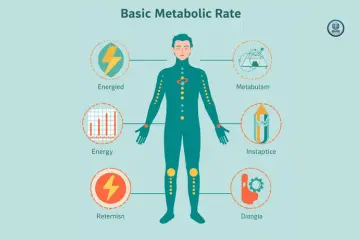
A couple of years ago, I downloaded four different fitness apps on the same morning, typed in my exact same height, weight, and age, and watched them give me resting calorie numbers nearly 350 calories apart. That frustrating experiment forced me to figure out are bmr apps accurate in the real world, or if we are all just blindly trusting glorified guessing machines.
When a single 250-calorie error can erase an entire week of dieting effort, knowing how much to trust your phone screen matters a lot. In this guide, I am sharing what I discovered when I compared app estimates against actual metabolic lab testing, why mobile algorithms miss the mark, and how you can calibrate any app to fit your real body.
Are BMR Apps Accurate Compared to Real Metabolic Lab Testing?
Most mobile apps rely on population math rather than direct biological measurements, which means they deliver a solid ballpark estimate rather than pinpoint precision.
How Mobile Apps Estimate Your Resting Burn Behind the Scenes
When you type your stats into an app, it does not actually measure your metabolism; it plugs your numbers into a textbook equation.
Almost every fitness app on your phone uses predictive formulas like the Mifflin-St Jeor equation or the older Harris-Benedict formula. These equations take your age, biological sex, height, and scale weight to guess how much energy your organs use while lying completely still. Because the math is built on group averages from hundreds of past study participants, it predicts what an “average” person of your size burns—not necessarily what your unique body burns today.
What Happens When You Compare App Numbers to Indirect Calorimetry
Clinical studies comparing predictive equations against indirect calorimetry—the gold-standard breath test used in labs—show that apps land within 10 percent for roughly 60 to 75 percent of adults.
Out of curiosity and frustration over a stubborn weight plateau, I finally paid for an indirect calorimetry test at a local sports lab. I lay quietly on a reclined chair breathing into a mask for twenty minutes while a machine measured my oxygen intake and carbon dioxide output. My favorite app had predicted a resting burn of 1,780 calories, while the lab machine measured 1,610 calories. That 170-calorie daily gap explained why my carefully planned diet had felt like running in quicksand for two months.
| Measurement Method | How It Works | Real-World Accuracy |
| Standard BMR App | Uses height, weight, age, and sex formulas | Within ±10% for about 60–75% of adults |
| Lean-Mass BMR App | Uses body fat percentage via Katch-McArdle | Sharper for athletes if body fat input is true |
| Indirect Calorimetry | Measures oxygen and carbon dioxide in a lab | Gold-standard clinical precision |
Why Two Different BMR Apps Give You Completely Different Numbers
If you have ever felt confused watching two apps disagree on your daily calorie needs, the culprit is usually hidden behind the settings menu.
Different Equations Running Under the Hood
Apps rarely tell you on the main screen whether they are running modern 1990 math or century-old 1918 math.
When I checked the fine print on those four apps I downloaded, two were running Mifflin-St Jeor, one was using Harris-Benedict, and the fourth was quietly adding a 1.2 sedentary multiplier without labeling it clearly. Older equations like Harris-Benedict frequently overestimate resting calorie burn for modern lifestyles. Until you know which formula an app runs, comparing two apps side by side feels like comparing apples to bowling balls.
How Body Composition Breaks Weight-Only App Formulas
Two people who both weigh 175 pounds can have completely different resting metabolisms if one carries heavy muscle and the other carries higher body fat.
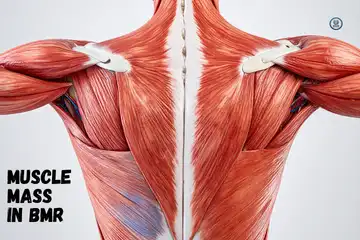
Most basic apps only ask for total scale weight, treating every pound on your frame as equal. However, lean muscle tissue demands noticeably more energy at rest than stored fat tissue does. If you carry extra body fat or have spent years lifting weights, weight-only apps will either overestimate or underestimate your baseline burn. Apps that let you enter a body fat percentage and switch to the Katch-McArdle equation solve much of this problem—provided your body fat estimate is reasonably close.
| App Formula | Required Inputs | Where It Struggles Most |
| Mifflin-St Jeor | Age, sex, height, total weight | Very muscular or higher body fat builds |
| Harris-Benedict | Age, sex, height, total weight | Often overestimates modern resting burn |
| Katch-McArdle | Lean body mass (requires body fat %) | Inaccurate if you guess your body fat wrong |
Hidden Factors That Throw Off Mobile BMR Predictions
Even the cleanest mathematical formula cannot see inside your bloodstream, your sleep tracker, or your dieting history.
Unexplained Individual Biology and Genetics
Research shows that roughly 20 to 26 percent of person-to-person variation in resting metabolic rate cannot be explained by weight, height, age, or muscle mass alone.
Some people simply have slightly faster or slower cellular engines due to genetics, organ size differences, and natural nervous system activity. When people ask are bmr apps accurate for everyone, the honest answer is no, because no smartphone app can read your DNA or measure how hard your liver and kidneys work at rest.
Thyroid Hormones, Medications, and Dieting History
Hormonal shifts and past crash diets can push your real resting burn well below what an app predicts on paper.
If you have an underactive thyroid, take certain medications, or spent months slashing calories aggressively, your body adapts by dialing down energy output to conserve fuel. A static app has no idea you just came off a brutal 1,200-calorie diet, so it keeps handing you an optimistic textbook number that no longer matches your adapted metabolism.
| Biological Factor | Effect on Real BMR | Can a Basic App Detect It? |
| Thyroid Function | Hypothyroidism lowers resting energy burn | No, requires blood work and doctor review |
| Adaptive Thermogenesis | Prolonged dieting temporarily lowers burn | Only adaptive apps tracking weight trends |
| Menopause & Age | Muscle loss gradually lowers baseline burn | Partially, via standard age deductions |
| Chronic Poor Sleep | Disrupts recovery and lowers daily movement | No, apps assume normal recovery states |
Mistakes I Made Trusting BMR Apps Blindly
Having a sleek fitness app on my phone made me feel organized, yet misreading what the numbers actually meant cost me months of wasted effort.
Confusing Resting BMR With Total Daily Calorie Needs
Eating right at my app’s resting BMR number left me freezing cold, irritable, and exhausted within two weeks.
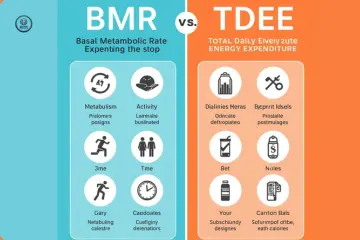
Early on, I saw my app list a BMR of 1,750 calories and treated that number as my daily weight-loss target. What I missed was that BMR only covers lying completely motionless in bed all day. Once you add walking around the house, working at a desk, digesting meals, and exercising, your Total Daily Energy Expenditure (TDEE) is hundreds of calories higher. Eating at your bare resting floor starves your body of basic living energy.
Letting Smartwatch Calorie Rings Double-Count Workouts
Syncing my wrist tracker to my nutrition app quietly added hundreds of phantom calories back into my daily food budget.
Research from Stanford and other universities has shown that while smartwatches track heart rate well, they routinely overestimate calories burned during exercise by wide margins. When I told my app I was “Lightly Active” and also let my watch add workout calories on top, I was counting my gym sessions twice. Turning off automatic exercise calorie add-backs fixed my stalled progress almost immediately.
| Mistake Made | Better Approach |
| Eating at or below raw BMR | Base food intake on TDEE minus 300–500 calories |
| Eating back smartwatch workout calories | Keep daily calorie target steady regardless of watch rings |
| Trusting smart-scale body fat blindly | Use tape measurements or multi-week visual trends |
| Changing app settings every three days | Hold one steady target for 14 to 21 days |
How to Calibrate Any BMR App to Your Real Metabolism
You do not need an expensive lab visit to find your true daily burn; your own kitchen scale and bathroom scale can teach any app the truth in two weeks.
Running a Simple Two-Week Real-World Check
Treating your app’s starting number as a two-week test hypothesis turns a rough guess into personalized data.
Pick one reliable app, enter your stats honestly using a conservative activity setting, and eat close to that daily calorie target for fourteen days. Weigh yourself every morning after using the bathroom and look strictly at your weekly average weight rather than scary single-day water spikes. If your weekly average stays flat over two weeks, you just discovered your real maintenance calories—no matter what the formula originally predicted.
Upgrading to Adaptive Apps That Learn From Your Scale
Modern adaptive apps remove the guesswork by recalculating your metabolic rate automatically from your real weight trends.
Instead of locking you into a static formula forever, newer tools like MacroFactor compare the calories you log against how your weekly trend weight actually moves. If you are losing weight slower than expected, the algorithm realizes your real burn is lower than the initial textbook guess and gently adjusts your daily target. That feedback loop turns an imperfect starting formula into a remarkably accurate personal compass.
| Two-Week Scale Trend | What It Tells You | Practical Next Step |
| Weekly average stays completely flat | You found your true maintenance burn | Subtract 300–400 calories for steady fat loss |
| Losing 2+ pounds weekly with low energy | App underestimated your daily burn | Add 150–200 calories to protect lean muscle |
| Weight creeps up on a planned deficit | App overestimated resting or active burn | Trim 200 calories daily and retest for 2 weeks |
Common Questions About BMR App Accuracy
Clearing up a few frequent questions makes using metabolic apps much calmer and keeps you from chasing unrealistic precision.
Are Smart Scale BMR Readings More Accurate Than Mobile Apps?
No, smart scales rely on mild electrical currents that fluctuate wildly based on how much water you drank that morning.
Because bioelectrical impedance scales estimate body fat from hydration levels, stepping on the scale dehydrated can make your BMR reading drop by 100 calories overnight. Stick with a clean equation inside a trusted app and judge your progress by multi-week scale trends instead of daily smart-scale metabolic numbers.
How Close Does a BMR App Need to Be for Weight Loss?
Landing within 10 to 15 percent of your true resting burn is plenty accurate to start losing fat safely.
You do not need lab-grade perfection to change your body. An app’s only job is to give you a sensible starting line so you are not wildly overeating or starving yourself. Once you start tracking consistently and watching how your weight responds over three weeks, small 150-calorie adjustments dial in the rest effortlessly.
| Common Question | Straightforward Answer |
| Which app formula is most accurate for most people? | Mifflin-St Jeor predicts within ±10% for most healthy adults |
| Should I pay for an indirect calorimetry lab test? | Helpful if stuck on a long plateau, unnecessary for beginners |
| How often should I update my weight in a BMR app? | Update every 10 to 15 pounds lost to reflect lower body mass |
| Do free BMR apps use the same math as paid ones? | Yes, both rely on standard Mifflin-St Jeor or Katch-McArdle math |
So, are bmr apps accurate enough to trust with your health goals? They are accurate enough to give you a smart starting point, typically within 10 percent for most healthy adults, but they are still educated guesses based on population averages rather than direct measurements of your unique biology.
Use your app as an opening rough draft instead of a rigid rulebook. Log your food honestly for two weeks, watch how your weekly average scale weight responds, and adjust your numbers gently based on real-world feedback from your own body.

Ehatasamul Alom is a dedicated health-tech enthusiast and the co-founder of BMRCalculator. With a passion for metabolic science, he focuses on providing accurate health data for the UK community. Ehatasamul ensures that every tool and guide aligns with NHS standards and public health research. His mission is to simplify complex biological data, helping British residents make informed decisions about their fitness, calorie needs, and long-term wellness. When not analyzing health trends, he explores the latest innovations in wearable fitness technology.