When I first looked into a bmr calculator for child nutrition, I honestly thought I was just doing some harmless research to understand my pre-teen’s daily energy needs. Like many parents, I wanted a clear, mathematical answer to make sure my kid was getting the right fuel for sports, school, and rapid growth.
Instead, I tumbled down a rabbit hole of adult fitness formulas that nearly caused me to make some serious parenting mistakes with food. In this guide, I want to share what I wish I knew from the start about pediatric energy requirements and why standard online tools are entirely unsuited for growing kids.
Why I Used a Bmr Calculator for Child and Why It Backfired
Relying on internet fitness tools for children sounds harmless on paper, but it quickly leads you down a confusing and misleading path.
The Moment I Realized Adult Formulas Do Not Work
When the numbers came back looking impossibly low, I realized I was trying to fit a growing child into a box meant for grown-ups.
I remember sitting at my kitchen table, plugging my twelve-year-old child’s height and weight into a standard online tool. The result spat out a tiny daily calorie number that barely covered a toddler, let alone an active pre-teen who played soccer three days a week. Panic immediately set in. I wondered if my child was eating too much, completely forgetting that kids are in a constant state of biological expansion. That single moment taught me how dangerous it is to apply adult logic to pediatric nutrition.
| Issue | Real-World Impact | Prevention Strategy |
| Using adult calculators | Suggests dangerously low calories | Consult pediatric growth charts |
| Ignoring growth phases | Fails to account for bone development | Focus on intuitive, balanced meals |
| Treating kids like adults | Promotes early unhealthy food anxiety | Keep food talk positive and neutral |
Treating Growing Bodies Like Mini Adults
Children are not just miniature versions of adults; their bodies are active building sites requiring entirely different metabolic considerations.
Adults are generally trying to maintain weight, lose fat, or build muscle within a static skeletal structure. Children, however, are lengthening bones, expanding organ systems, and developing complex neural networks every single day. When you look for a bmr calculator for child health tracking, you discover that standard equations completely ignore these massive energy sinks. Treating a child like a small adult ignores the biological cost of simply growing taller.
| Metric | Adult Focus | Child Focus |
| Primary Goal | Maintenance or fat loss | Continuous growth and development |
| Energy Demand | Stable baseline | Spiked by rapid growth spurts |
| Metabolic Rate | Relatively constant | Fluctuates with developmental phases |
How Pediatric Energy Needs Differ From Adults
Understanding how children burn energy requires looking past standard fitness metrics and recognizing the unique demands of childhood biology.
The Hidden Cost of Rapid Growth and Development
A massive chunk of a child’s daily calorie intake goes straight into building new tissue rather than just keeping organs running.
During major growth spurts, a child’s body undergoes intense cellular division and bone elongation. This process requires a significant amount of surplus energy that adult formulas never account for. When I spoke to a pediatric dietitian later, she explained that children actually need a high percentage of their daily energy dedicated solely to growth thermogenesis. Restricting calories during these windows can disrupt everything from hormonal balance to skeletal maturation.
| Biological Factor | Impact on Energy Expenditure |
| Bone Elongation | High energy cost during growth spurts |
| Brain Development | Consumes up to half of resting energy in young kids |
| Organ Maturation | Requires constant baseline cellular turnover |
Why Activity Levels Play a Massive Role in Kids
Unlike adults who sit at desks all day, kids bounce between sports, recess, and spontaneous running, making their daily energy burn wildly unpredictable.
My child could go from sitting quietly in a classroom for six hours to sprinting across a soccer field, climbing trees, and riding bikes until sunset. Adult calculators often use neat multipliers like sedentary, lightly active, or heavy training. Kids do not fit into these neat boxes because their physical activity is spontaneous, high-intensity, and erratic. Trying to capture that with a static formula is like trying to nail jelly to a wall.
The Science Behind Equations Used for Children
Scientists do not use standard adult equations for youth; instead, they rely on specialized formulas designed for pediatric physiology.
Why the Schofield Equation Replaces Mifflin-St Jeor
The Schofield equation is the clinical standard healthcare professionals use because it factors in age, weight, and sex specifically for children and adolescents.
Unlike the Mifflin-St Jeor equation used for adults, clinical pediatric formulas were derived from studies specifically tracking children from infancy through their teenage years. They recognize that metabolic rate per kilogram of body weight is much higher in youth than in adults. When you look under the hood of these clinical equations, you realize that estimating a child’s energy needs requires specialized pediatric datasets, not random internet widgets.
| Equation Type | Best Suited For | Main Limitation for Kids |
| Mifflin-St Jeor | Adult weight management | Ignores developmental tissue growth |
| Harris-Benedict | Older historical estimates | Overestimates modern youth activity |
| Schofield Equation | Pediatric clinical use | Requires professional interpretation |
Understanding Total Energy Expenditure in Youth
Calculating basic resting rate is only half the puzzle because total daily energy includes the heavy caloric cost of daily play and growth.
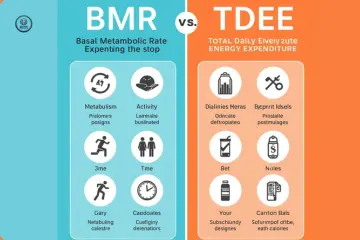
Total Daily Energy Expenditure in children consists of their basal metabolic rate, the thermic effect of food, physical activity, and the immense caloric tax of growth. When I tried to calculate all of this manually, I realized how futile it was. A child’s metabolism is a moving target that adjusts daily based on how fast they are growing and how much energy they burned during play.
The Dangers of Restricting Calories in Growing Kids
Dabbling in calorie counting or restriction for children based on online calculators can trigger severe long-term developmental consequences.
How Miscalculated Diets Harm Bone Density and Growth
Denying a growing body enough fuel can permanently stunt growth and compromise peak bone mass accumulation during critical adolescent years.
One of my biggest fears when I first went down the calorie-tracking rabbit hole was that I might accidentally underfeed my child. Research clearly shows that chronic energy deficits in youth can lead to delayed puberty, lower bone mineral density, and compromised immune function. Children need an abundance of energy, not a restrictive budget. Protecting their physical development means letting go of arbitrary numbers and focusing on abundance.
| Mistake Made | Better Approach |
| Tracking kids’ calories | Focusing on nutrient-dense whole foods |
| Restricting portion sizes | Allowing intuitive eating and natural hunger cues |
| Worrying over scale weight | Tracking height-to-age growth curves |
The Psychological Toll of Tracking Food Too Early
Introducing numbers and macro-tracking into a child’s world creates unhealthy mental habits around food that can last a lifetime.
When we obsess over numbers, calories, and grams, kids pick up on that anxiety immediately. Food stops being a source of pleasure, connection, and fuel and turns into a source of stress or moral judgment. I had to step back and ask myself what kind of relationship with food I wanted my child to have. Shielding kids from diet culture is just as important as feeding them nutritious meals.
What Pediatric Experts Look At Instead of Online Tools
Pediatricians do not punch numbers into an online tool for child health assessments; they look at much broader clinical pictures.
Tracking Growth Charts Over Single Day Metrics
A child’s growth curve over months and years tells a vastly more accurate story than any daily calorie calculation ever could.
Instead of counting calories, pediatricians plot height and weight on standardized growth charts during annual check-ups. If a child tracks steadily along their individual curve, their energy intake is almost certainly appropriate. This long-term perspective completely cured my obsession with daily tracking. Growth velocity is the ultimate report card for pediatric nutrition.
| Clinical Metric | What It Actually Tells You |
| Height-for-Age Percentile | Long-term skeletal growth consistency |
| Weight-for-Height Ratio | Short-term nutritional balance |
| Pubertal Development Stage | Shifts in metabolic demand |
Listening to Biofeedback, Mood, and Energy Levels
Children communicate their nutritional needs through their energy, focus at school, and emotional stability rather than spreadsheets.
When my child was well-fueled, they had stable moods, slept soundly, and had plenty of energy for school and sports. When they were growing rapidly, they naturally ate more without needing any external direction. Learning to read these natural behavioral cues taught me more about proper fueling than any calculator ever could. Biofeedback beats math every single time when it comes to raising healthy kids.
Practical Ways to Support Healthy Nutrition at Home
Shifting away from calculators allowed me to build healthy, stress-free kitchen habits that actually supported my child’s active lifestyle.
Shifting Focus From Numbers to Whole Foods
Providing a diverse array of nutrient-dense meals naturally covers all energy bases without needing to measure a single gram of food.
Instead of worrying about calorie counts, I started focusing on food quality. We stocked up on colorful fruits, vegetables, quality proteins, complex carbohydrates, and healthy fats. When kids have access to wholesome, satisfying foods, their innate internal hunger cues usually do the rest of the work. You do not need a spreadsheet to serve a nourishing dinner.
Building Balanced Plates Without Obsession
Making meals colorful, satisfying, and stress-free teaches kids to listen to their own internal hunger and fullness cues.
Family meals became a time to connect rather than police portion sizes. By offering balanced plates and letting my child decide how much of it to eat, we removed the power struggle around food entirely. This approach fostered a peaceful household where food was celebrated as fuel for adventures rather than scrutinized through a mathematical lens.
Navigating the world of pediatric nutrition taught me that trying to apply adult metrics like a bmr calculator for child health tracking is a recipe for unnecessary stress. Children thrive when we focus on steady growth, joyful movement, and nourishing whole foods rather than rigid calorie math.
My biggest takeaway is to trust pediatric professionals and the natural wisdom of a child’s body instead of random internet algorithms. Give your kids the space to grow, play, and eat without turning mealtime into a spreadsheet exercise.

Ehatasamul Alom is a dedicated health-tech enthusiast and the co-founder of BMRCalculator. With a passion for metabolic science, he focuses on providing accurate health data for the UK community. Ehatasamul ensures that every tool and guide aligns with NHS standards and public health research. His mission is to simplify complex biological data, helping British residents make informed decisions about their fitness, calorie needs, and long-term wellness. When not analyzing health trends, he explores the latest innovations in wearable fitness technology.